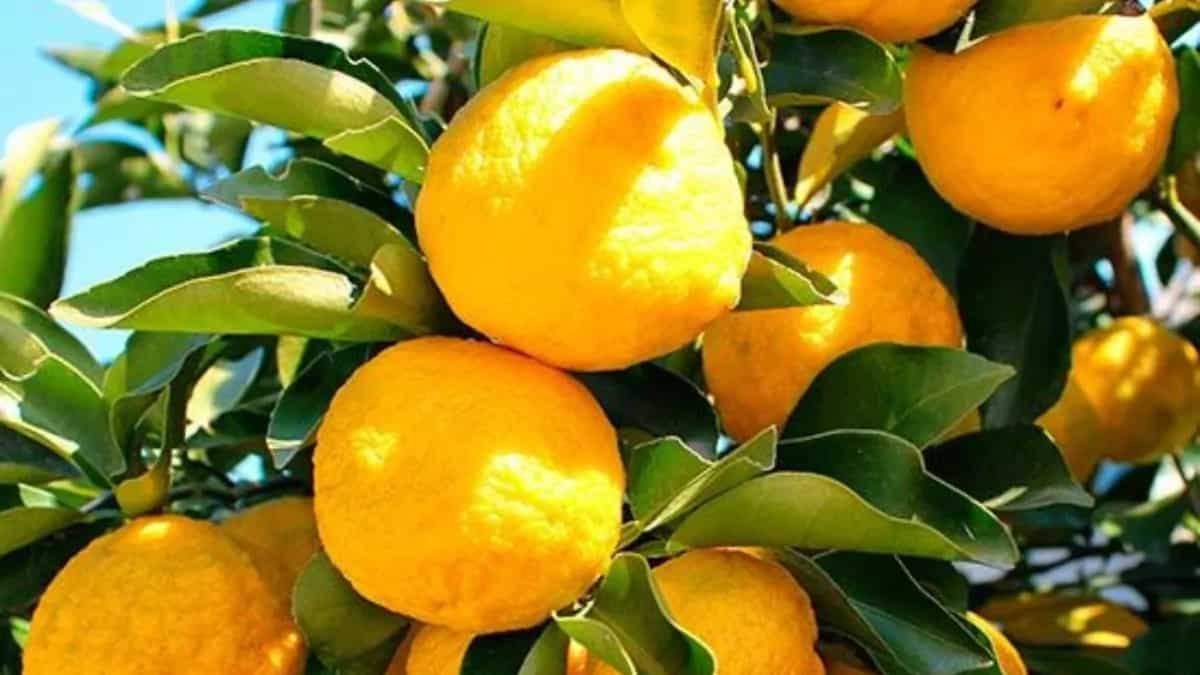
Farming is still tightly linked to the soil, climate, and seasonal cycles in Northeast India, which is sometimes referred to as one of the nation's purest agricultural belts. Crops that depend on natural soil health rather than extensive intervention thrive in the area because of its hills, copious rainfall, and mostly chemical-light farming methods. In this context, Manipur's Kachai village is notable for a single crop that serves as the cornerstone of its economy–lemons. Grown on undulating slopes, Kachai lemons flourish in the chilly environment and high altitude of the area, giving them a unique scent and high juice content. What started as small-scale farming has developed into an organised agricultural system that sustains livelihoods, changes the local environment, and establishes Kachai as one of Manipur's most significant citrus-growing spots.
Image Credit: Wikimedia Commons
A Village Built On Lemons
Hundreds of farmers in Kachai, a small village in the Ukhrul district of Manipur, make their living from growing lemons. The lemons produced here have developed a solid reputation across the area and beyond over the years. Because of their excellent antioxidant qualities and naturally high ascorbic acid content, which gives them a distinct scent and sharp flavour, they are regarded as some of the best in India.
These lemon groves have been meticulously grown over many years; they are not accidental. Thousands of lemon trees are supported by the mountainsides, which were either forested or unutilised but have gradually been transformed into productive agricultural land. These trees' steady production gives farming households a reliable source of income and establishes Kachai as a significant hub for Manipur's lemon production. Beyond earnings, lemon cultivation influences the village's seasonal rhythm and local ecology.
Image Credit: Wikimedia Commons
The hills are home to native birds and wild walnut trees, resulting in a scene that blends nature and agriculture. The sunlight hits the lemons across the slopes in a way that comes to symbolise Kachai itself and how it is an agricultural backbone that supports the village, preserves traditions, and cements Manipur's reputation for high-quality citrus. Known locally as Kachai champra, this unusual cultivar thrives in the village's mountainous terrain and chilly temperatures. The soil, rainfall, and customary farming methods used by the community all have a direct impact on the quality of these lemons. Kachai champra became the first lemon variety in India to obtain a Geographical Indication (GI) tag, designating it as a product with strong ties to its place of origin, in acknowledgement of its unique qualities and regional significance.
The fruit has become essential to the local economy due to the village's distinct microclimate and topography. During the day, kachai has humid temperatures; at night and in the early morning, there is fog and mist. According to the locals, the mist's precipitation improves the flavour of the lemons by acting as drip irrigation. Today, every household in Kachai has lemon groves.
The Long Road That Brought Lemons Home To Kachai
The narrative of these lemons actually begins in Shillong, the capital of Meghalaya, even though they are cultivated with great care in a little, peaceful village along NH 102. One of the early Christian pioneers in the region, S. Paisho of Thikhor Kachai, suffered a severe injury in 1947 that nearly rendered him blind in one eye. Medical assistance was scarce at the time, and his condition continued to deteriorate. A Naga revolutionary leader and missionary called Suisa Rungsung stepped in and offered to take Paisho to Jorhat in Assam for surgery. But when they reached the hospital, the doctors refused to operate, saying the eye could not be saved.
Image Credit: Wikimedia Commons
With no real options left, Suisa decided to travel on to Shillong, which was then the administrative capital of undivided Assam and included the Naga Hills. Paisho went along, hoping that a local healer there might be able to help. To everyone's amazement, Paisho recovered miraculously. An indigenous herb was used by a local healer to treat his eye. Furthermore, he returned to Kachai with more than just his sight.
There are currently around 2,00,000 lemon trees in that same village, which has about 500 homes. Together, they yield around 400 tonnes of lemons annually. What started as a trip motivated by luck and desperation has subtly developed into a way of life that has shaped the hamlet and made lemon cultivation its primary source of strength. Five lemon seeds, a present from Suisa, were among the items he brought from Shillong. Compared to the wild lam champra that flourished in Kachai, these seeds were from the Khasi lemon, which was bigger, juicier, and had a far more balanced flavour. The future of the village was subtly changed by these seeds.
When Live Gives Kachai Lemons, It Builds An Economy
5 lemon seeds were the beginning of it all. Even though just two of them became trees, that was sufficient. When the town began harvesting lemons in the 1950s, they soon discovered how delicious the fruit was. Families soon started planting lemon trees in their own backyards. In order to go forward together, the villagers established the Kachai Fruit Farming and Processing Co-operative Society in 1976. Each house contributed, and each family was asked to plant at least 50 lemon trees, making lemon farming a collaborative activity.
Image Credit: Wikimedia Commons
Kachai became a significant lemon-growing village because of its strong feeling of community. As the demand for lemons continued to rise, local self-help groups began learning new uses for lemons with assistance from ICAR and the Krishi Vigyan Kendra. This decreased waste and increased farmers' income. The harvest is even more valuable because practically every portion of the lemon can be used for pickles, candies, or zest.
Lemon farming is still expanding today. The terraces have helped farmers improve their groves by retaining nutrients and facilitating harvesting. Nevertheless, farming has become less predictable due to insect issues and shifting weather patterns. Still, the residents continue to adapt by harnessing both scientific evidence and centuries-old wisdom. For them, lemons are more than merely a plant; they are their biggest source of pride, confidence, and livelihood. What started with a few seeds has developed into a future that nurtures the village as a whole.