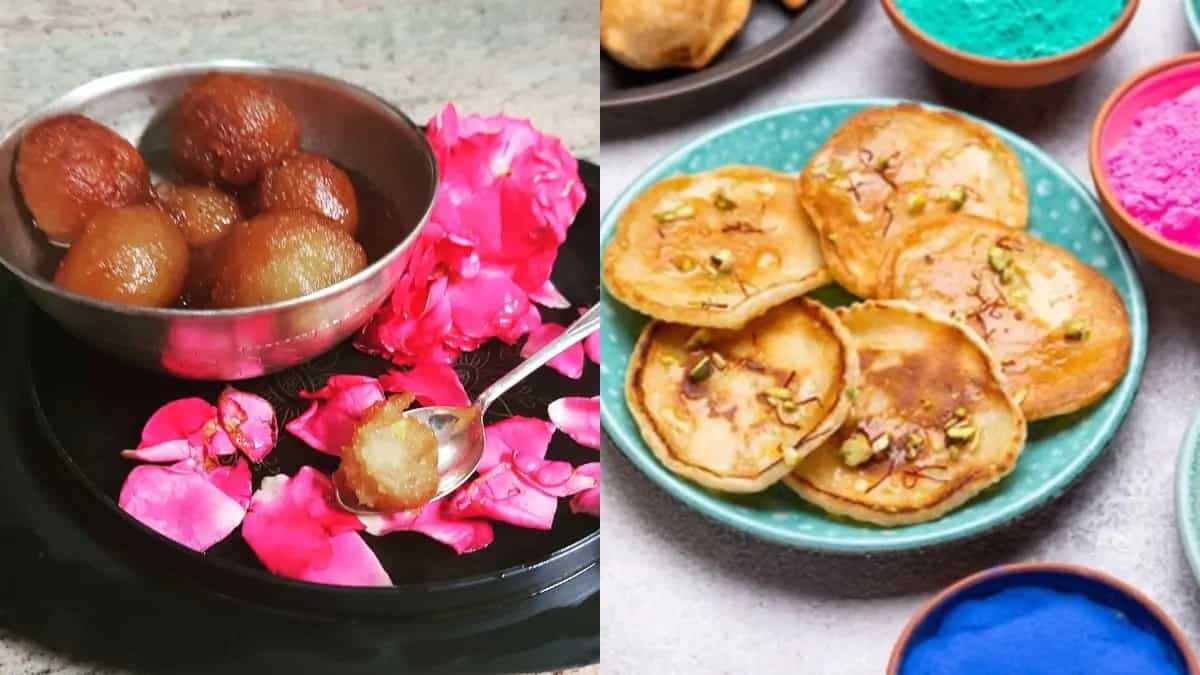
While the rest of the world might look at Holi through a lens of vibrant powders and water balloons, the Indian soul looks at it through the kitchen window. For many, Holi is synonymous with gujiya or malpua. However, if you travel into the mineral-rich forests of Jharkhand or the golden rice bowls of Chhattisgarh, the festive narrative changes. Here, the celebration is incomplete without two specific delicacies: Dudhauri and Dehrori. These are not just sweets; they are cultural markers that tell a story of agrarian wisdom, resourcefulness, and a deep-rooted love for dairy and grain.
Dudhauri: The Milk-Soaked Gem Of Jharkhand
Dudhauri is a traditional sweet that finds its home in the state of Jharkhand and parts of Bihar. At its core, it is a testament to the simplicity of rural Indian cooking. If you were to describe it to a stranger, you might call it a rice-based sibling of the gulab jamun, but that would be an oversimplification. The preparation of Dudhauri begins with rice, specifically a variety that can turn soft and mushy when cooked. Traditionally, this rice is boiled in milk rather than water. This step is crucial because it ensures that the grain absorbs the richness of the fat and the natural sweetness of the dairy from the very beginning. Once the rice is cooked to a point where it loses its individual structure, it is mashed into a smooth, dough-like consistency.
Image credit: Wikipedia
Small, oblong or round balls are then shaped from this mixture. These are deep-fried in ghee until they achieve a deep, sunset-gold colour. The final act involves dunking these fried morsels into a warm sugar syrup infused with cardamom. The result is a sweet that is slightly crisp on the outside, incredibly soft and creamy on the inside, and dripping with syrup that has a distinct milky undertone.
Dehrori: The Fermented Pride Of Chhattisgarh
Travel slightly south-west into Chhattisgarh and you will encounter Dehrori. To the untrained eye, it looks remarkably similar to Dudhauri. However, the soul of Dehrori lies in its fermentation. Chhattisgarh is often referred to as the rice bowl of India, and its cuisine reflects a masterful command over this grain. To make Dehrori, rice is soaked and then ground into a coarse paste. This paste is mixed with curd and left to ferment overnight. This fermentation process is what sets Dehrori apart from almost any other Indian festive sweet. It introduces a subtle tanginess that cuts through the heavy sweetness of the syrup, providing a complex flavour profile.
Image credit: Adobe Stock
After the batter has fermented and developed a slight aerated texture, it is shaped and fried. Because of the fermentation, Dehrori often has a more porous structure than Dudhauri. When these porous balls are dropped into sugar syrup, they act like tiny sponges, soaking up the liquid into every nook and cranny. The texture is often described as slightly chewy yet succulent, offering a delightful contrast to the smooth creaminess of its Jharkhandi counterpart.
The Deep Correlation Between Dudhauri And Dehrori
When we examine these two sweets side by side, it becomes clear that they are two branches of the same ancestral tree. Their correlation is not just about ingredients but about the geography and the socioeconomic history of Eastern and Central India.
1. The Supremacy of Rice
Both sweets originate from regions where rice is the undisputed king of crops. In Jharkhand and Chhattisgarh, rice is not just a meal; it is a way of life. Using rice to create a dessert for the most significant festival of the year is a way of honouring the land. While urban India moved towards flour and khoya for its sweets, these regions stayed true to their harvest.
2. The Dairy Connection
The names themselves offer a clue to their shared heritage. Dudhauri obviously stems from the word doodh, meaning milk. Both sweets rely heavily on dairy, whether it is milk for boiling or curd for fermentation. This reflects the traditional lifestyle of these states where cattle rearing and agriculture went hand in hand. The use of dairy was a sign of prosperity and a way to make a festive offering more auspicious.
Image credit: Freepik
3. The Zero-Waste Philosophy
Historically, these recipes also served as a brilliant way to use surplus or leftover rice. In a rural household, nothing was ever wasted. By mashing cooked rice or fermenting a rice paste, the community created a luxury product out of a daily staple. This resourcefulness is a common thread that binds the culinary traditions of Jharkhand and Chhattisgarh.
4. The Geometry of Frying and Soaking
The technique of frying a starch-based dough and then soaking it in syrup is a classic Indian confectionery move. However, Dudhauri and Dehrori correlate through their specific texture. Unlike the maida-based gulab jamun which is uniform, these rice sweets have a rustic, slightly grainy texture that reminds the eater of their earthy origins.
Image credit: Adobe Stock
Subtle Differences: The Nuances Of Flavour
While they are correlated, they are certainly not identical. The primary difference lies in the mouthfeel and the acidity.
• Texture: Dudhauri tends to be smoother and more melt-in-the-mouth because the rice is boiled in milk until it is completely broken down. Dehrori has a bit more character and bite due to the coarse grinding of the rice and the air bubbles created during fermentation.
• Taste Profile: Dudhauri is purely sweet and creamy. Dehrori, thanks to the curd and the overnight rest, has a fermented tang that makes it unique. This acidity makes Dehrori feel slightly lighter on the palate, even though both are deep-fried and syrup-soaked.
• Preparation Time: Dudhauri can be made relatively quickly once the rice is cooked. Dehrori requires patience, as the fermentation cannot be rushed without losing the authentic flavour that defines the Chhattisgarhi kitchen.