


 Share
Share

Holi has always been a festival that engages every sense. We see the riot of colours, we feel the splash of water, we hear the rhythmic beats of the dhol, and most importantly, we taste the incredible diversity of festive treats. As we move towards Holi 2026, there is a growing realization that the beauty of the festival should not come at the cost of our health or the environment. The shift towards organic celebrations has moved beyond just the gulal we throw: it has entered our kitchens. Creating a menu based on natural, colour-themed foods is a brilliant way to bring the spirit of the festival to the dining table. By using ingredients like beetroot, turmeric, spinach, and saffron, you can replicate the brilliant hues of the rainbow without a single drop of artificial food colouring.
The Radiant Reds And Pretty Pinks
Red is the colour of energy and love, often the first shade we reach for when the festivities begin. In the culinary world, beetroot is your greatest ally for achieving this. To create a stunning pink hue for your snacks, you can boil chopped beetroot in a small amount of water until the liquid becomes deep and concentrated.
One fantastic idea for your Holi 2026 spread is Beetroot Nimki or Namak Pare. By replacing the water in your dough with beetroot juice, you create flaky, diamond-shaped crackers that are a shocking shade of magenta. They look spectacular when served in a glass jar and offer a subtle earthy sweetness that pairs perfectly with a spicy mint chutney.
For those with a sweet tooth, think about Pink Coconut Laddoos. By adding a splash of beetroot reduction or hibiscus tea to the condensed milk and desiccated coconut mixture, you get laddoos that look like rose quartz. Hibiscus is another wonderful natural dye; dried petals steeped in hot water yield a tart, deep red liquid that is perfect for making a refreshing cold tea or a vibrant syrup for your malpuas.
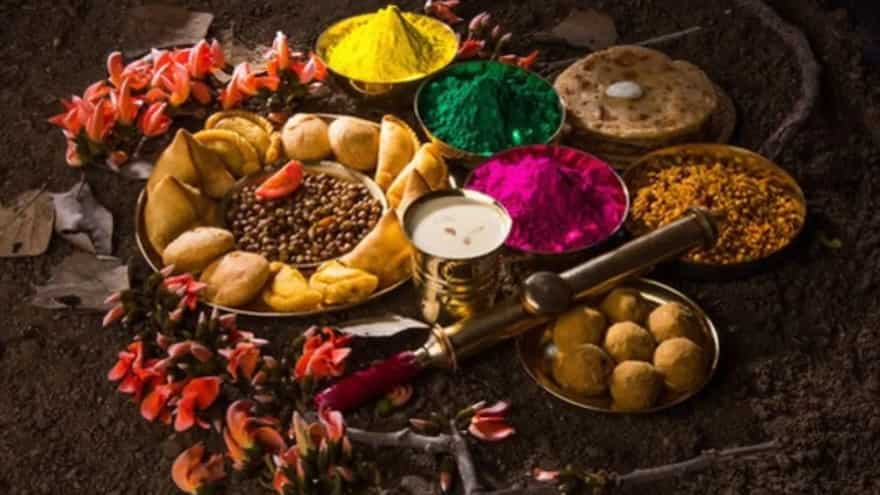
Image credit: Adobe Stock
Golden Yellows And Sunshine Oranges
Yellow is arguably the most iconic colour of Holi, representing prosperity and the warmth of the spring sun. Saffron and turmeric are the traditional heavyweights here. Saffron, or kesar, provides a sophisticated, royal yellow and an incomparable aroma. For your Holi 2026 drinks, a classic Kesar Thandai is essential. By soaking saffron strands in warm milk before blending them with almonds, peppercorns, and fennel seeds, you create a drink that is as golden as it is cooling.
If you are looking for something more orange, the humble carrot and the vibrant marigold flower can step in. Carrot Kanji is a fermented North Indian classic that is naturally purple-orange. It is made by fermenting black or orange carrots with mustard seeds and water. By the time Holi arrives, the drink is tangy, probiotic-rich, and brilliantly coloured.
For a solid snack, consider Turmeric infused Mathris. Turmeric is not just for colour; its anti-inflammatory properties are a welcome addition to a day spent outdoors. A generous teaspoon of high-quality turmeric in your flour mix will result in golden, crispy discs that practically glow on the serving plate.
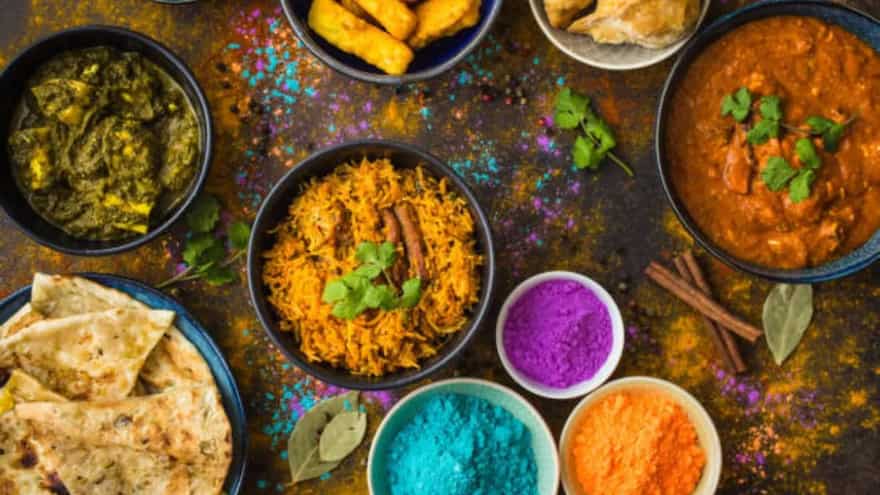
Image credit: Adobe Stock
Verdant Greens For A Fresh Start
Green represents new beginnings and the lushness of nature as winter fades. Spinach is the most effective way to go green in the kitchen. To get a vivid emerald shade, blanch fresh spinach leaves and blend them into a very fine puree. You can use this puree to make Palak Puri or Spinach Kachoris. When these deep-fried breads puff up, they look like little green clouds and are a massive hit with children who might otherwise avoid their greens.
Another way to incorporate green is through your drinks. A Mint and Coriander Cooler, often called a Spiced Jaljeera, provides a bright lime-green tint. It is the perfect antidote to the heavy, fried snacks typical of the festival. You can even experiment with Matcha if you want to give your Holi 2026 menu a modern, fusion twist. Matcha-infused white chocolate bark, sprinkled with dried rose petals and nuts, creates a stunning green and red contrast that looks like a piece of edible art.
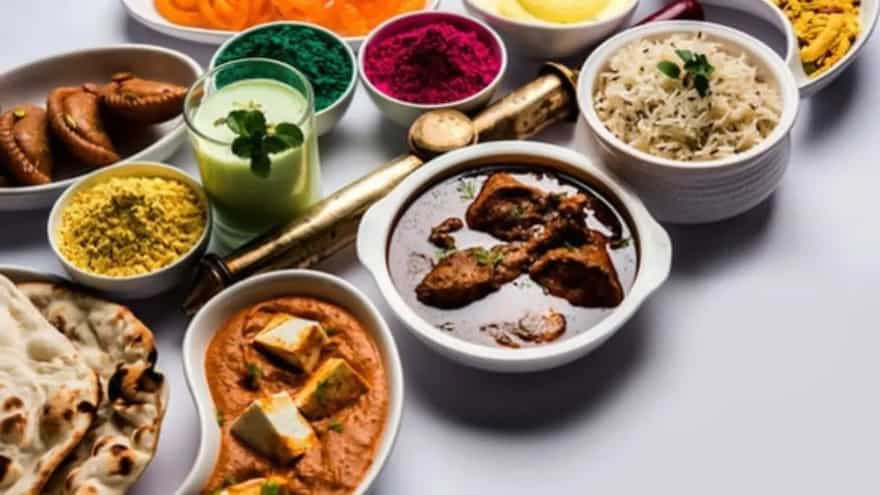
Image credit: Adobe Stock
Royal Purples And Mystical Blues
Purple and blue are perhaps the most difficult colours to find in a traditional Indian pantry, but they add an undeniable wow factor. For purple, look no further than the Jamun fruit or even black grapes. Jamun shots are a popular modern addition to Holi parties. The deep indigo-purple of the fruit is naturally striking. You can blend the pulp with a bit of black salt and lime, serving it in salt-rimmed glasses for a tangy, astringent treat that cleanses the palate.
Blue can be achieved using the Butterfly Pea flower, which has become a staple in modern tea rooms. By steeping these dried flowers, you get a bright cobalt blue liquid. If you add a squeeze of lemon to it, the pH levels change, and the blue magically transforms into a royal purple. This is a fantastic trick for a live drink station at your Holi party. Imagine serving a Blue Pea Lemonade that changes colour right in front of your guests; it perfectly captures the transformative spirit of the day.
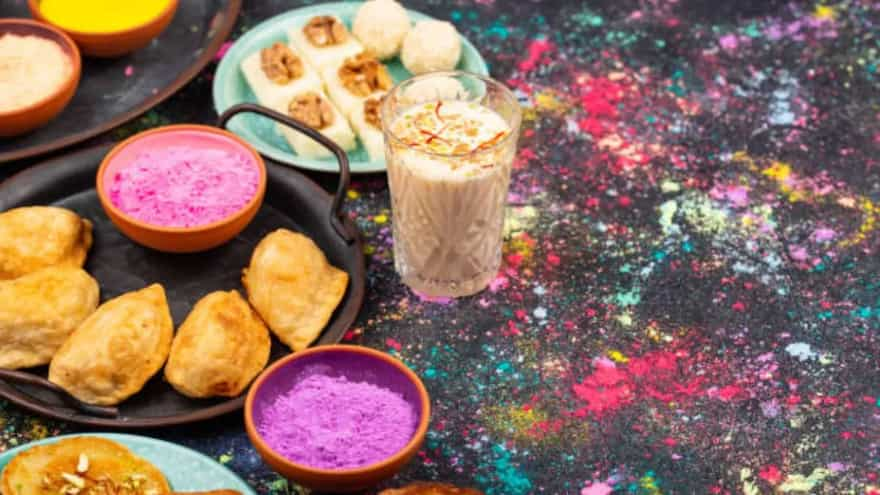
Image credit: Freepik
The Neutral White Base
While we focus on the colours, we must not forget the importance of white. In the context of Holi, white is the canvas upon which all other colours are splashed. Foods like Dahi Bhalla, with its creamy white yoghurt base, provide a visual rest for the eyes. You can garnish your Dahi Bhalla with bright green mint chutney, deep red tamarind glaze, and yellow sev to create a miniature version of the festival on a plate.
Coconut-based desserts also serve this purpose well. A simple white Rabri, garnished with just a few strands of saffron or a scattering of emerald-green pistachios, feels incredibly luxurious. Using white as a base makes your natural food colours pop even more.
Bringing It All Together
When planning your Holi 2026 menu, think about the balance of flavours as much as the colours. The goal is to create a spread that is visually stunning but also light enough to keep people energized throughout the day. Natural dyes from vegetables and flowers often come with their own subtle flavours: earthiness from beetroot, bitterness from spinach, or the floral notes of hibiscus. Use these to your advantage by pairing them with complementary spices.
Using natural ingredients also makes the post-festival cleanup much easier. We have all experienced the dread of synthetic dyes that refuse to leave our skin or our kitchen counters. With plant-based colours, a simple rinse is usually enough. More importantly, you can serve these foods to guests of all ages knowing that there are no hidden chemicals or artificial additives.
This year, let the vibrancy of your food reflect the joy of the season. Whether it is a glass of purple jamun juice or a plate of golden turmeric mathris, the effort you put into sourcing natural colours will be noticed and appreciated. It is a way of celebrating that respects tradition while embracing a healthier, more sustainable future.




