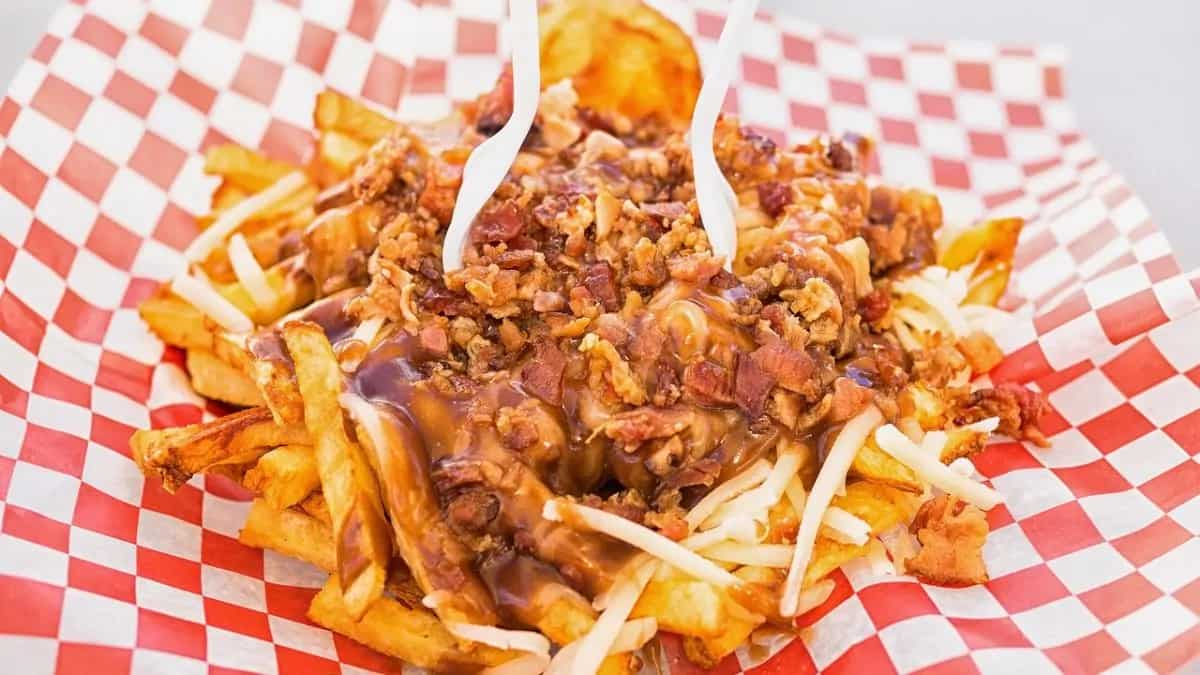
Poutine is a dish that most Canadians have tried at least once in their lifetime. The preparation is an essential staple of Québécois fare and one of the most popular foods in the country. What is poutine, you ask? Poutine is a delectable combination of French fries and cheese curds topped with a meat-based gravy or sauce. The cheesy concoction is Canada's national dish and also the most popular menu item in restaurants across the Canadian province of Quebec. To get you up to speed with everything you need to know about this delicious dish. It is commonly believed that ‘poutine’ originated from the English word pudding (or pouding in French).
The word was used to refer to a messy mixture of various foods, and is slang for mess in Québec. People were unaware of poutine until the mid-20th century. It was only in the late 1950s that French fries topped with cheese curds and gravy appeared on menus at snack bars in rural Quebec. The true origins of poutine are debated, as it was developed in stages. How did it turn into Canada’s most delicious dish and the national dish of the country? Here area a few interesting facts on poutine’s journey to global fame!
A Cheesy History Of Canadian Poutine
It is believed that the poutine was first concocted in 1958 by Jean-Paul Roy, the owner of Le Roy Jucep, a restaurant located in Drummondville, Quebec. Although his claim has been contested by several other outlets in the area, most food historians credit Roy with inventing the dish, as he was the first to serve it with gravy, which is considered a key component of the dish. This is also implied in a framed copyright registration certificate that adorns the restaurant's wall. The restaurant is still in business today and sells over 23 different types of poutine.
Also Read: The Interesting History Of Food Trucks
Another theory goes that Centre-du-Québec’s proximity to fromageries (cheese factories) producing cheese curds had a role to play in the inception of poutine. Several families and towns in the area claim to have invented the dish. When a regular customer, Eddy Lainesse, requested that his fries be topped with curds, Fernand Lachance of Café Ideal did so in Warwick in 1957. Lachance exclaimed that it would create a mess and served his customer the requested mixture in a paper bag. The combination grew in popularity, and diners began to make it their own by adding ketchup and vinegar. In 1963, Lachance started serving the dish on a plate to manage the mess left on tables. His patrons complained that the fries were quickly becoming cold, and so he covered them in curds and gravy to keep them warm.
Image Credit: Pixabay
After it became popular in towns in Quebec, poutine reached Quebec City in 1969 and Montreal in 1983. It became available as street food at most snack bars and food trucks. Poutine crossed borders and reached the US, the UK, Russia and Korea by the 1970s. Today, chefs add different toppings like bacon and minced beef to poutine. Some chefs have even given the dish gourmet status. In 2002, chef Martin Picard of Au Pied de Cochon in Montreal created foie gras poutine, which has gone on to be imitated by others. Chefs have also raised objections about poutine being called ‘Canadian’; they believe it’s Québécois.
Restaurants across the country began buying bags of French fries, which were fairly inexpensive, and serving them at equally economical prices to patrons, which led to the item becoming immensely popular. Restaurants would further capitalise on this success by serving the fries with cheese curds and gravy, thereby popularising poutine all over the country. Chefs would start tinkering with the dish’s fundamentals to create recipes that would help them stand out from the competition. The changes made were low-effort and low-cost, with restaurants changing the meat used in their gravy or frying the cheese curds. Meats that were popularly used for such substitutions included chicken, pork, and even salted cod. In the late 80s and early 90s, poutine restaurants saw a massive boost in popularity during Quebec’s fast-food invasion. Most restaurants began featuring multiple recipes, different gravies, and cheese curds that were melted or fried. This phenomenon led to poutine establishing itself as a pan-Canadian staple by the late 1990s.
Popularity Of Poutine Beyond Canada In Today’s World
Restaurants innovated yet again, serving poutine with meats prepared in different styles, sometimes without the gravy, and cheese curds prepared in a manner to complement the meat, whether fried, melted, or raw. These contemporary iterations of the dish would sometimes go so far as to feature another cuisine; even older establishments like Le Roy Jucep would hop on this bandwagon, serving several Asian-inspired poutines.
Image Credit: Wikimedia Commons
The poutine served in most parts of Quebec today is almost a whole other dish owing to this arc. Many believe this is what made the dish so popular, especially amongst the several immigrants who would move into the country over the next decade. Others argue that the dish was always popular and that it just wasn't in the news until there was a good reason. Whatever the case, poutine is still a beloved dish all over Canada today, and you'll be pleased to know that it is one that is extremely easy to concoct.
From luxurious lobster poutine to innovative vegetarian and vegan renditions, each variation offers a unique twist while paying homage to the original comfort food. Embraced by diverse regions within Canada, regional adaptations like smoked meat poutine and butter chicken poutine showcase the nation's rich culinary tapestry. Undeniably, the global poutine phenomenon proves that this beloved dish is a true embodiment of culinary fusion and cross-cultural delight.