The crescendo of the monsoon brings with it the vibrant festival of Hariyali Teej, a celebration deeply rooted in regional cultural traditions that revere the natural world. The word hariyali translates to green, symbolising the lush, rain-washed landscapes that emerge after the harsh summer heat, alongside themes of new beginnings and fertility. The festival commemorates the reunion of Lord Shiva and Goddess Parvati after her century-long penance. In 2026, the auspicious occasion of Hariyali Teej falls on Saturday, August 15, aligning perfectly with the zenith of the holy Shravan month. The most auspicious time for the morning puja falls between 6:00 AM and 8:30 AM, while the evening prayers, known as Pradosh Kaal, should be conducted between 6:30 PM and 8:00 PM. The primary ritual involves worshipping clay idols of Lord Shiva and Goddess Parvati, offering them fresh bel patra, datura flowers and homemade sweets.
On this day, married women gather to pray for marital harmony and the general health and prosperity of their families. They dress in vivid green saris, wear glass bangles of the same colour, and apply intricate henna designs to their hands. Communities come together to set up swings on large, ancient trees, where women sing traditional folk songs celebrating the rainy season and divine love. Many women observe a strict fast throughout the day, abstaining from food and water, which they break only after sunset with a grand feast. This festive spread is a magnificent display of regional culinary heritage, featuring rich sweets made with generous amounts of ghee and comforting savoury snacks that perfectly complement the heavy monsoon showers.
1. Traditional Rajasthani Ghevar
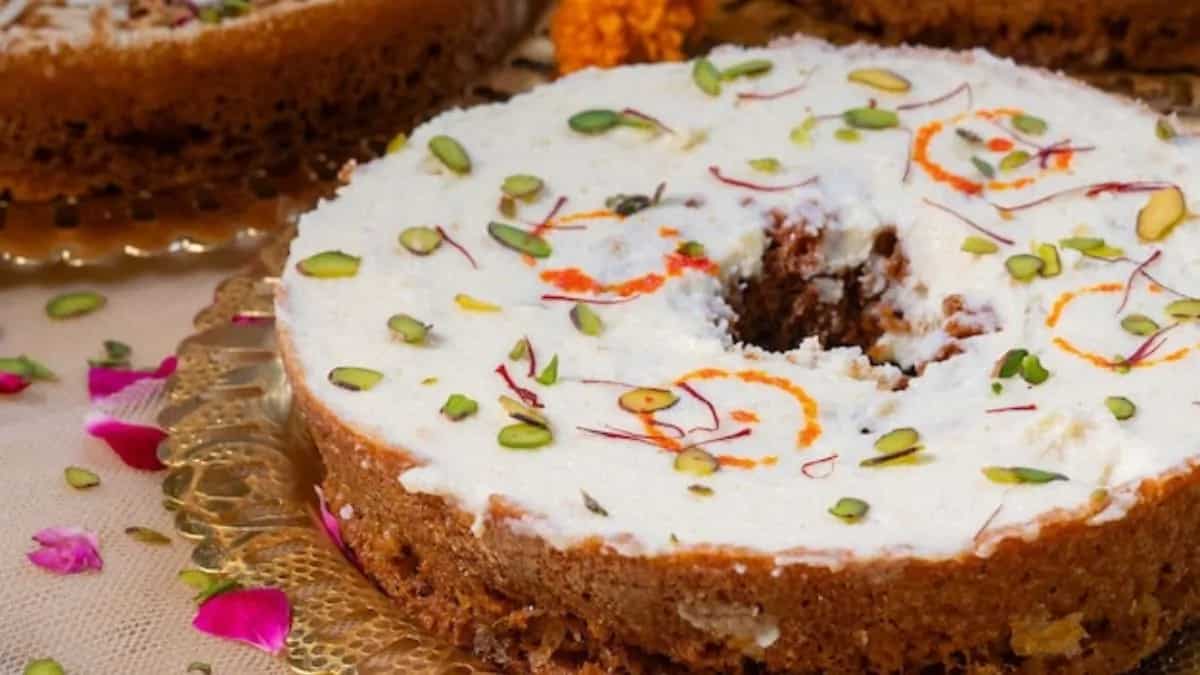
Ghevar remains the undisputed centrepiece of Teej celebrations and making it at home requires precise temperature control and patience. To create this intricate honeycomb dessert, begin by taking 1/2 cup of solidified ghee in a large, wide mixing bowl and add 3 to 4 tablespoons of ice-cold water. Vigorously rub the ghee and cold water together using your palms in a circular motion until the ghee completely transforms into a white, fluffy, and creamy texture that resembles whipped butter. Gradually incorporate 2 cups of sifted plain flour and 3 cups of ice-cold water in small, alternating batches, whisking continuously to ensure a completely smooth and lump-free batter with a thin, pouring consistency. Heat a deep, heavy-bottomed cylindrical pan filled slightly more than halfway with ghee on a high flame until it is smoking hot. Fill a ladle with the cold batter and pour a very thin, continuous stream into the exact centre of the hot ghee from a height of about six to eight inches. The batter will vigorously bubble and spread to the edges. Allow the bubbles to subside completely before pouring another stream in the centre, repeating this process ten to twelve times to build the characteristic porous, layered structure. Use a wooden skewer to keep the centre hole clear during the frying process.
Once the Ghevar achieves a uniform golden-brown colour, carefully lift it out with the skewer and let it rest on a wire rack so all the excess ghee drains away completely. Prepare a sugar syrup by gently boiling 1.5 cups of sugar with 1 cup of water until it reaches a sticky, one-string consistency, which means a single thread should form when you pinch the cooled syrup between your thumb and forefinger. Pour the warm syrup evenly over the cooled Ghevar and garnish generously with 2 tablespoons of slivered almonds, 2 tablespoons of chopped pistachios, and edible silver leaf before serving.
2. Khasta Ajwain Mathri
Mathri provides a delightful savoury crunch and is traditionally one of the first items consumed to break the day-long fast. In a large, wide mixing plate, combine 3 cups of plain flour, 1/2 cup of fine semolina, 1 tablespoon of lightly crushed carom seeds, 1 teaspoon of coarsely ground black pepper, and 1 teaspoon of salt. The secret to an exceptionally flaky and crisp texture lies in the moyan process, which involves adding 1/2 cup of melted ghee to the dry ingredients and rubbing it thoroughly between your palms for several minutes until the mixture resembles coarse, damp sand that holds its shape tightly when you compress a handful of it. Gradually add about 3/4 cup of chilled water, just a few tablespoons at a time, to knead an extremely stiff and tight dough that barely comes together.
Cover the dough tightly with a damp muslin cloth and let it rest for at least thirty minutes to allow the gluten to relax and the semolina to absorb moisture. Pinch off small, lime-sized portions of the dough and roll them out into thick discs, roughly a quarter of an inch in thickness, without worrying about perfectly smooth edges as rustic cracks add to the texture. Thoroughly prick both sides of every disc with a fork to prevent them from puffing up like a puri while frying. Heat oil in a wide kadhai over a medium flame, but lower the heat to the absolute minimum before carefully sliding in a batch of the dough discs. Deep fry them undisturbed on this very low heat for twelve to fifteen minutes, turning them only occasionally, until they achieve a deep, rich golden colour and are cooked completely through to the centre. Allow the mathris to cool entirely on a wire rack before transferring them to an airtight container, where they will remain fresh and crisp for several weeks.
3. Rabri Malpua
Malpua captures the essence of the monsoon with its rich flavour profile and soft, syrup-soaked centre surrounded by crispy edges. Create a rich batter by whisking together 1 cup of plain flour, 1/2 cup of unsweetened milk powder, and 1 tablespoon of lightly crushed fennel seeds. Gradually pour in 1.25 cups of lukewarm milk while whisking vigorously to form a completely smooth, thick, and lump-free batter that drops easily from the spoon. Cover the bowl and allow the batter to rest in a warm place for at least an hour, which ferments it slightly and helps develop deeper flavours and a lighter texture.
While the batter rests, prepare the sugar syrup by boiling 1 cup of sugar with 3/4 cup of water, a pinch of saffron strands, and 1/2 teaspoon of cardamom powder until it turns slightly thick and sticky, stopping just before it reaches a one-string consistency. Keep the syrup warm on the lowest heat setting. Heat a shallow, flat-bottomed pan with a half-inch layer of ghee over a medium flame. Pour a small ladle of the rested batter directly into the centre of the hot ghee, allowing it to spread naturally into a circular pancake without spreading it manually. Fry on a medium-low heat until the underside turns a deep golden brown and the edges become lacy and crisp, then carefully flip it with a slotted spoon to cook the other side for another two minutes. Drain the fried malpuas, pressing them gently between two spatulas to remove excess ghee, and immediately submerge them into the warm sugar syrup. Let them soak for three to four minutes so they absorb the sweetness thoroughly, then serve them piping hot with a generous, thick layer of creamy, chilled rabri spread over the top.
Image credit: Freepik
4. Bedmi Puri With Raseele Aloo
A festive lunch is incomplete without the classic combination of crisp, spiced bread and a tangy, runny potato curry. For the bedmi puris, thoroughly wash and soak 1 cup of skinless urad dal in water for four hours, then drain it completely and grind it into a coarse paste alongside 2 green chillies and a 1-inch piece of ginger, using as little water as possible. In a large bowl, mix the coarse dal paste with 3 cups of whole wheat flour, 1 tablespoon of coarsely ground fennel seeds, 1 teaspoon of coriander powder, 1/2 teaspoon of asafoetida, a pinch of red chilli powder, 1 teaspoon of salt, and 2 tablespoons of oil. Knead this mixture into a very stiff dough using minimal water, cover it with a damp cloth, and set it aside to rest for twenty minutes while you prepare the potato curry.
For the raseele aloo, boil 5 large potatoes until they are fork-tender, peel them, and roughly crush them with your hands into uneven chunks rather than cutting them into neat cubes, as the mashed bits help thicken the gravy naturally. Heat 2 tablespoons of mustard oil to smoking point in a deep pan, lower the heat, and add 1 teaspoon of cumin seeds followed by 3 finely pureed tomatoes. Cook the tomatoes down until the raw smell disappears and the oil begins to separate from the edges of the pan, then stir in 1/2 teaspoon of turmeric, 1 tablespoon of coriander powder, 1 teaspoon of Kashmiri red chilli powder, and salt to taste. Add the hand-crushed potatoes to the spice base, pour in 3 cups of water, and bring the curry to a rolling boil before lowering the heat and letting it simmer vigorously for fifteen minutes so the flavours meld and the gravy achieves a slightly thick, starchy consistency. Finish the curry with a sprinkle of dry mango powder and roasted fenugreek leaves. Roll the rested puri dough into small, slightly thick discs and deep fry them in smoking hot oil, pressing them gently with a skimmer until they puff up beautifully into golden, crisp spheres, and serve them immediately alongside the piping hot, spicy potato curry.
Image credit: Freepik
5. Sattu Ki Kachori
These hearty kachoris offer a robust and earthy flavour profile that perfectly balances the sweetness of the other festive dishes. Prepare a firm outer casing by rubbing 1/4 cup of melted ghee into 2.5 cups of plain flour with a generous pinch of salt, working the mixture until it resembles breadcrumbs. Knead it into a pliable but firm dough using 3/4 cup of ice-cold water, cover it, and allow it to rest for thirty minutes to ensure the gluten relaxes, which prevents the kachoris from shrinking when rolled. For the highly spiced filling, take 1.5 cups of sattu and mix it thoroughly with 2 tablespoons of pungent raw mustard oil, 1 tablespoon of finely grated ginger, 6 cloves of minced garlic, 1 teaspoon of onion seeds, 2 finely chopped green chillies, 1/2 cup of fresh coriander leaves, 1 teaspoon of salt, and 1 tablespoon of fresh lemon juice. Sprinkle just a few drops of water over the mixture and rub it with your fingers until the filling resembles wet sand and can hold its shape slightly when pressed together in your palm.
Take a small, lemon-sized portion of the rested dough, flatten it slightly, and use your thumbs to hollow it out into a small cup shape with thinner edges and a thicker centre. Place 2 teaspoons of the prepared sattu filling into the cavity, bring the edges together, and seal them very tightly to ensure the filling does not spill out during frying. Flatten the stuffed dough ball gently between your palms to a thickness of about half an inch, ensuring the filling is distributed evenly without tearing the outer layer. Heat oil in a deep pan on a low flame and gently slide in the kachoris, frying them patiently on the lowest possible heat for fifteen to twenty minutes per batch. Turn them only when they float to the surface and the bottoms have lightly browned, continuing to fry until they are completely crisp, beautifully golden, and hollow-sounding when tapped.
Image credit: Freepik
6. Crispy Sweet Anarsa
Anarsa is a deeply traditional sweet flatbread made specifically during monsoon festivals using an intricate process that transforms simple soaked rice and jaggery into a textural masterpiece. Begin by washing 2 cups of short-grain starchy rice thoroughly and soaking it in water for three full days, ensuring you drain and replace the water every twenty-four hours to prevent any unwanted fermentation or sour smells. On the fourth day, drain the rice completely and spread it out evenly on a clean cotton cloth in a shaded room for two to three hours. The rice must not dry out completely; it needs to retain a slight amount of internal moisture and feel cool and slightly damp to the touch. Grind the damp rice in a mixer until it forms a very fine powder and sift it through a fine-mesh sieve to remove any gritty pieces.
Image credit: Freepik
In a large bowl, mix the freshly ground rice flour with 1 cup of finely grated, high-quality dark jaggery. Begin kneading the mixture together using your hands without adding a single drop of water or milk. The natural moisture retained in the rice flour and the heat from your hands will slowly melt the jaggery, binding the ingredients together into a pliable, slightly sticky dough. Place this dough in an airtight container and allow it to mature at room temperature for a minimum of two days, which allows the flavours to deepen and the texture to develop correctly. When you are ready to fry, knead the matured dough lightly, pinch off small portions, and press them onto a clean surface generously sprinkled with 2 tablespoons of white poppy seeds. Flatten each portion with your fingertips into a thin, round disc, ensuring the poppy seeds adhere strictly to one side. Heat a shallow pan with ghee over a medium-low flame and carefully slide the disc into the pan with the poppy seed side facing upwards. Do not flip the anarsa. Instead, continuously splash the hot ghee over the top surface using a ladle until the edges turn a deep golden brown, the sugar caramelises perfectly, and the entire flatbread becomes incredibly crisp.