Gatari Amavasya is an annual celebration that marks the joyous intersection of culinary indulgence and spiritual preparation. Falling on the new moon day of the Ashadha month in the traditional Hindu lunar calendar, this day is highly anticipated across Maharashtra and neighbouring regions. Because India follows different lunar calendars, the exact dates for these religious observances can sometimes cause a bit of confusion. In North India, which generally follows the Purnimanta calendar, the holy month of Shravan begins earlier, starting on the 30th of July in 2026. Conversely, South and West India, including Maharashtra, adhere to the Amavasyanta calendar, meaning the sacred month of Shravan officially begins on the 13th of August 2026. Consequently, Gatari Amavasya, which is always celebrated on the exact day before Shravan commences in Maharashtra, falls on Wednesday the 12th of August in 2026.
Shravan is a period characterised by deep devotion, rigorous fasting, and strict adherence to a vegetarian diet that is entirely free of onion and garlic. Knowing that a long stretch of dietary discipline lies ahead, food lovers seize this final opportunity to enjoy all their favourite meat delicacies and spirited beverages. The atmosphere is vibrant, local markets are bustling with fresh seafood and premium cuts of meat, and homes are filled with the intoxicating aromas of roasted spices and rich curries simmering over warm stoves.
Image credit: Pexels
What Is Gatari Amavasya And Decoding The Meaning Behind The Gatahari Festival
To truly understand the essence of this festival, one must look at the linguistic roots of the terminology. The word Gatari is actually a colloquial distortion of the original Sanskrit and Marathi word Gatahari. Gatahari roughly translates to the diet that is to be given up or left behind. Over the decades, linguistic shifts and regional cultural adaptations morphed the word into Gatari.
Unfortunately, this subtle change led to a popular misconception linking the festival to gutters or extreme intoxication, suggesting that people drink until they physically fall into the street drains. This is entirely a myth and holds absolutely no cultural or religious backing. The core philosophy of Gatahari is simply about relishing a heavy and satisfying meal, bidding a proper farewell to tamasic foods. Tamasic foods are those that are believed to induce lethargy, such as heavy meats and alcohol. The purpose is to satisfy these cravings entirely before transitioning into a sattvic lifestyle, which focuses on pure, light, and energising foods for the upcoming holy month. It is a day of balance that acknowledges the very human desire for rich and robust flavours before willingly submitting to spiritual austerity and bodily detoxification.
Image credit: Adobe Stock
Traditional Food Customs And Feasting Rituals Practised Across Maharashtrian Households
The preparation for Gatari Amavasya begins days in advance, transforming the entire week into a flurry of culinary excitement. Families organise large gatherings to invite relatives, friends, and neighbours for a communal meal that stretches late into the evening. The local meat shops and fish markets witness an unprecedented rush, with people queuing up early in the morning to secure the best catch of the day or the most tender cuts of goat and poultry.
In many traditional Maharashtrian households, the cooking process is a collective and joyous effort. Women and men join hands to roast the dry coconut, pound the aromatic spices, and slow cook the meats over traditional wood fired stoves, which add a distinct smoky flavour to the food. The culinary focus is heavily on intense and fiery flavours that leave a lingering taste, ensuring that the cravings for such indulgent food are thoroughly satisfied for the next thirty to forty days of abstinence. Regional variations also play a massive role in how the feast is prepared and enjoyed. Coastal communities, particularly those in the Konkan belt, lean heavily towards marine harvests like fish, crabs, and prawns. Meanwhile, the inland areas of Maharashtra, such as Kolhapur and Pune, focus their energies on rich poultry and mutton preparations.
Image credit: Unsplash
Must Try Authentic Dishes For Gatari Amavasya From Mutton Sukka To Bombil Fry
A typical Gatari menu is nothing short of a royal banquet that is meticulously planned to ensure maximum satisfaction and variety. The spread usually features a grand array of dry appetisers, rich gravies, and traditional breads designed to soak up all the robust and spicy flavours. The secret to the exceptional taste lies primarily in the preparation of the fresh masalas. Many families still rely on heavy stone grinders to crush their spices, releasing essential oils and deep aromas that factory ground powders simply cannot replicate.
Image credit: Adobe Stock
Among the absolute favourites is the classic Mutton Sukka, a dry preparation where tender pieces of meat are coated in a fiery blend of roasted spices, grated coconut, and fresh coriander. The meat is often slow cooked for hours to ensure it falls off the bone effortlessly. This is frequently paired with Tambda Rassa, a vibrant red and spicy mutton broth, and Pandhra Rassa, a soothing white coconut milk based meat soup. These two gravies hail from the historical Kolhapur region and are absolutely essential to a traditional Maharashtrian meat thali. The contrast between the fiery red broth and the mild aromatic white soup creates a perfect harmony on the palate.
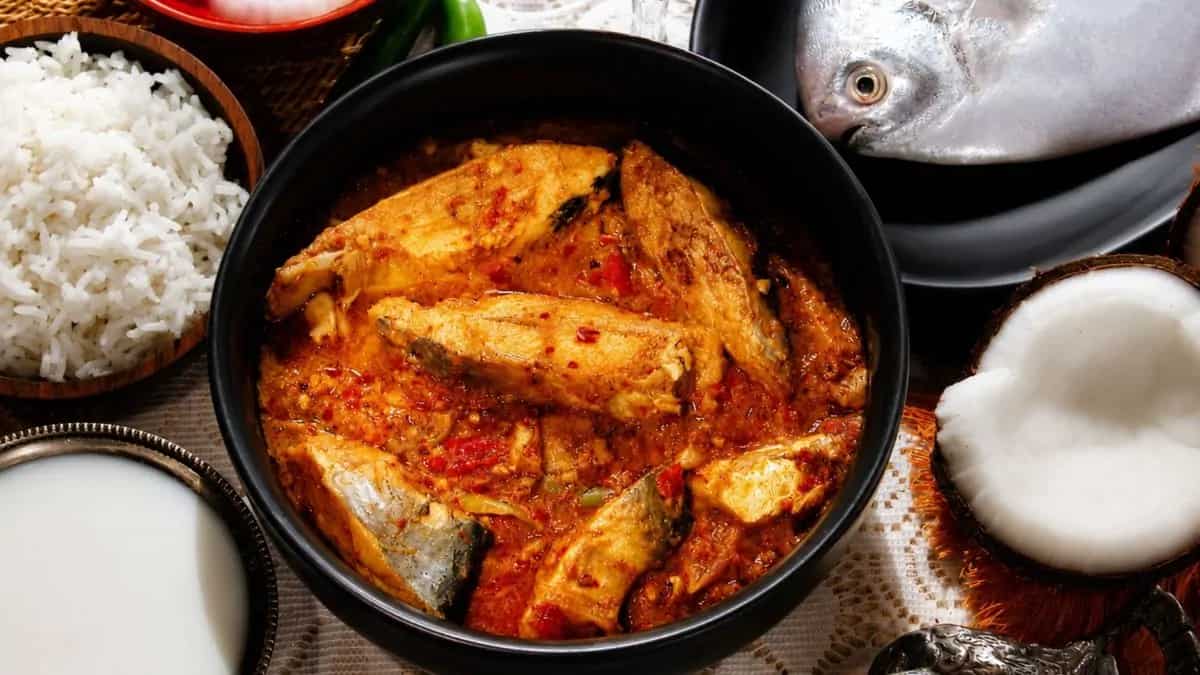
Seafood lovers go all out with Bombil Fry, which consists of Bombay Duck coated in a seasoned mixture of rice flour and semolina, then shallow fried to a crisp golden brown. The exterior remains incredibly crunchy while the fish inside melts in the mouth seamlessly. Surmai, also known as Kingfish, and Pomfret are marinated in fiery red chilli paste and tangy kokum extract before being pan fried to absolute perfection. For the main course, chicken curries made with freshly ground Malvani masala take centre stage, served alongside fluffy steamed basmati rice or piping hot Bhakris. Bhakri is a rustic flatbread made from jowar, bajra, or rice flour, and it serves as the perfect vessel for scooping up the thick and spicy gravies.
To balance the immense heat of the spices, Solkadhi is served as a digestive beverage. Made from fresh coconut milk and the tart extract of kokum, spiced lightly with green chillies and crushed garlic, this vibrant pink hued drink cools the stomach lining and completes the heavy meal flawlessly.
Authentic Food Rituals And Kitchen Purification Customs Before The Start Of Shravan
While the primary focus of the day is on consumption and enjoyment, there are specific unwritten rules and rituals that guide the feasting process. The grand meal is usually served on a freshly washed banana leaf or in a large traditional stainless steel thali with multiple small bowls for the different gravies. It is customary to start the meal with a small pinch of salt, followed closely by a taste of the dry appetisers. The heavy curries are eaten sequentially, usually starting with the lighter chicken dishes, moving on to the heavier mutton preparations, and finishing with rice mixed with a flavourful broth to settle the stomach.
Image credit: Pexels
Another essential and deeply respected ritual is the concept of clearing the kitchen at the end of the night. Since the very next morning marks the beginning of the holy Shravan month, families ensure that absolutely no trace of meat, fish, or alcohol remains anywhere in the house. By the end of the night, the kitchen is thoroughly scrubbed, utensils are rigorously washed with soap and hot water, and the cooking spaces are sometimes purified with turmeric water or cow dung in more traditional rural households. This physical cleansing perfectly mirrors the spiritual cleansing that the family members will undergo in the coming weeks of fasting.
Image credit: Unsplash
Important Things To Keep In Mind When Celebrating Gatari Amavasya 2026
If you are planning to host or attend a Gatari celebration in 2026, there are a few practical considerations to keep in mind to ensure a smooth experience. Firstly, since the date falls on the 12th of August, which is a Wednesday, you might need to plan your work schedule and household chores accordingly. Many people choose to prepare the marinades and spice blends a day in advance to save precious time on the actual day of the feast.
Secondly, you must source your ingredients early. The demand for premium seafood and meat skyrockets, and prices often double on the morning of the festival. Pre ordering from your trusted local vendor is highly recommended so you do not miss out on the best quality produce available.
Thirdly, whilst the day is definitely meant for indulgence, it is vital to practise moderation, especially when it comes to the consumption of alcohol. The true spirit of the festival is about joyful gathering and savouring culinary delights, not about excessive inebriation that leads to health hazards or public nuisance.
Image credit: Adobe Stock
Lastly, ensure that your transition to the Shravan diet is smooth and gentle on your body. A sudden shift from a highly spicy and heavy diet to a strictly vegetarian and light diet can sometimes cause digestive shock or discomfort. Staying well hydrated with natural coolers like buttermilk and Solkadhi during the Gatari feast can significantly help prepare your digestive system for the dietary changes ahead.