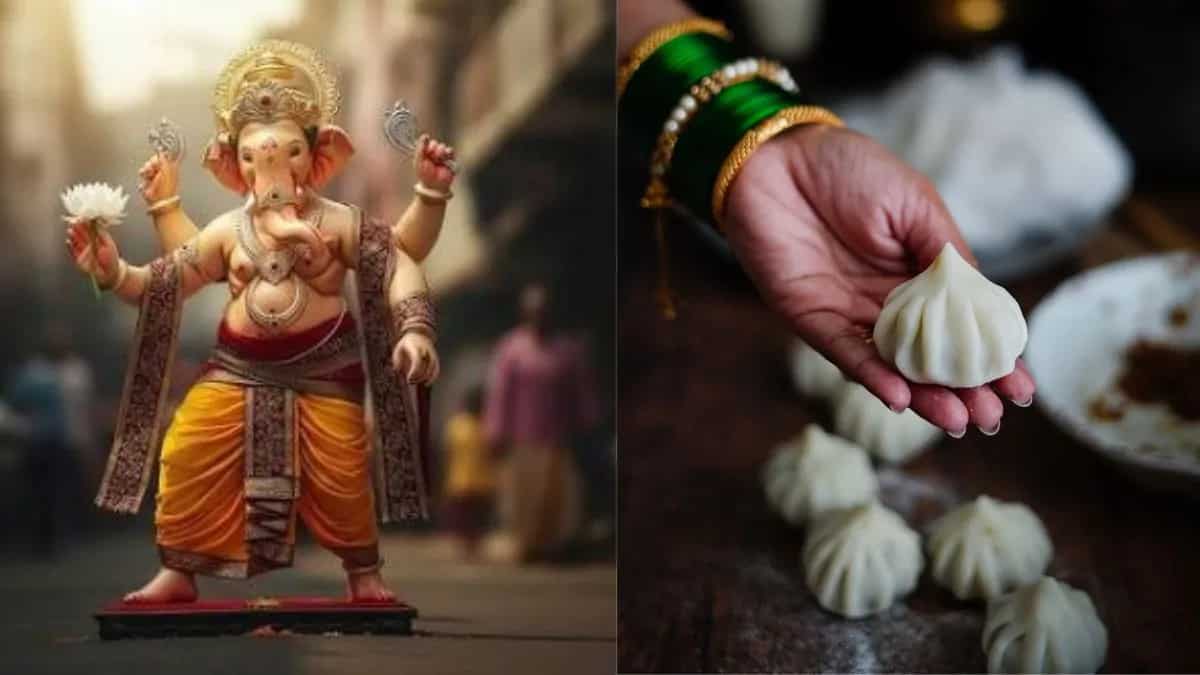
The festival of Ganesh Chaturthi is just around the corner and is observed on the fourth day of the Hindu month of Bhadrapada and celebrates the birth of Lord Ganesha. In Maharashtra, Ganpati celebrations have a remarkably strong cultural presence, as the festival is celebrated at home as well as at pandals that have the idols of Lord Ganesha.
Food remains an essential part of this period, especially the bhog that is offered during the puja. Modak is the most common among these offerings, but festive meals often have many other regional preparations as well. However, beyond the usual celebrations, the festival has a long history and several traditions linked to it that explain why its arrival is celebrated with such enthusiasm across the country.
Ganesh Chaturthi 2026: Date & Time
In 2026, Ganesh Chaturthi will be celebrated on Monday, September 14. The Chaturthi tithi will start at 7:06 am on September 14 and will come to an end at 7:44 am on September 15. Since the puja timings rely on the location, it is advised to check the local Panchang before planning the murti sthapana and the puja rituals. The duration of the festival also differs from one household to another. While some families perform visarjan after a day and a half, others continue their worship for five, seven or 11 days.
Why Is Ganesh Chaturthi Celebrated?
Ganesh Chaturthi honours the birth of Lord Ganesha, who is worshipped as Vighnaharta, or known as the remover of obstacles. He is also linked with wisdom and learning. This is why Lord Ganesha is the first among all other deities to be worshipped before any important beginnings or auspicious ceremonies.
For devotees, welcoming Ganesha at home is hence more than just bringing an idol to the home alone. It is a way of seeking blessings to start a new phase, ask for guidance in difficult times and start an important period on an optimistic note.
(image credit: Freepik)
What Foods Are Prepared For Ganesh Chaturthi?
Ganesh Chaturthi bhog varies from one household to another, but Maharashtrian celebrations have a recognisable display of favourites. Ukadiche modak is the signature preparation, while festive meals also include puran poli, varan bhaat, batata bhaji, matki usal and kothimbir vadi. Karanji, shrikhand and other sweets are also for Ganesh Chaturthi.
The distinction between naivedya and the rest of the meal is important to know here. Food is first offered to Lord Ganesha during the puja and is then distributed as prasad to everyone. The offering is intentionally simple rather than an elaborate spread, with coconut, jaggery, bananas and other fruits accompanying the other cooked dishes. In some Maharashtrian homes, the bhog follows the family's standard festive menu rather than just a fixed list of foods.
Why Is Modak Prepared For Ganesh Chaturthi?
Modak's association with Lord Ganesha is rooted in the deity's traditional identity as Modakpriya, which means one who loves modak. This association has made the sweet a typical bhog for Ganesh Chaturthi. Hence, no Ganesh Chaturthi can be fulfilled without offering bhog to Lord Ganesha.
The Maharashtrian ukadiche modak also has a preparation that sets it apart from other Indian sweets. Rice flour is first cooked into a dough and is then shaped into a thin outer covering that is filled with a mixture made of fresh coconut and jaggery. The filled modaks are steamed rather than fried, giving them a soft outer shell while keeping the coconut-jaggery mixture moist inside.
At present, the same festive association has extended to fried, dry-fruit, chocolate and other contemporary versions of modak, but the steamed coconut-jaggery modak is the classic Maharashtrian preparation for Ganpati bhog.