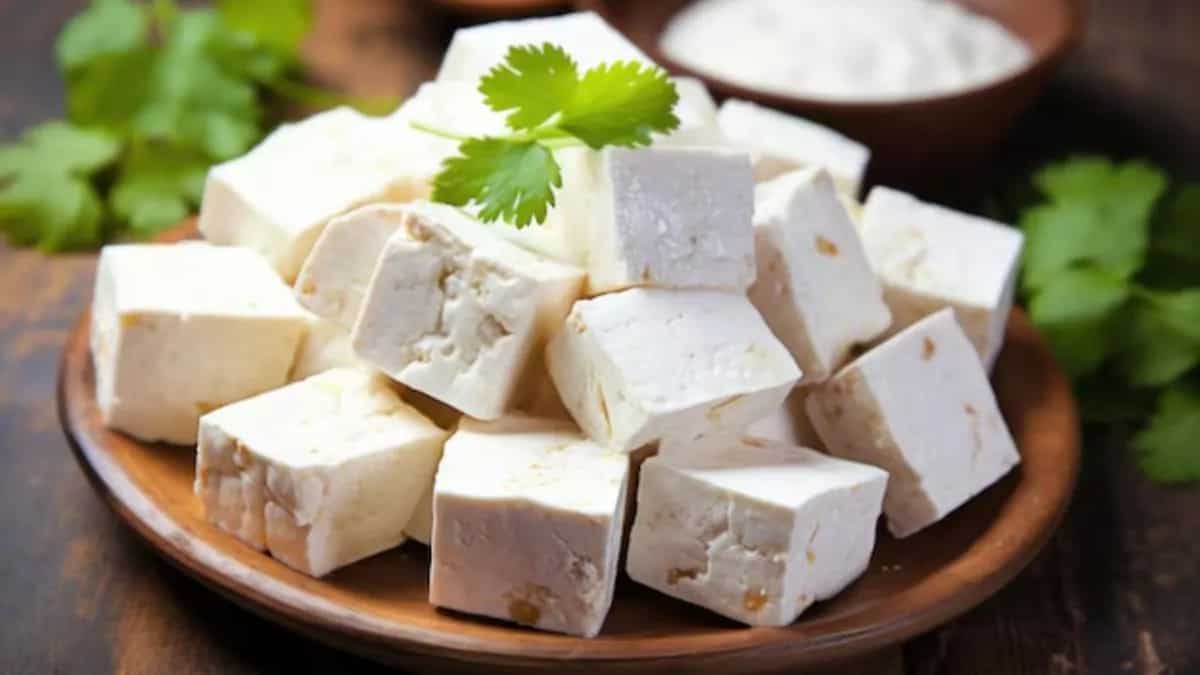
A block of paneer can appear to be perfectly normal on the plate, i.e. white, firm and ready to absorb the curry it is put into. However, as per the recent headlines, food authorities in Maharashtra and Gujarat are now asking a more critical question to the food joints, cafes and restaurants: is it actually paneer that is being used? The two states have moved beyond the analogue or non-dairy paneer, fetching renewed awareness of a replacement that has entered restaurants, catering services and also the food-service supply chains.
The issue is more significant than just a cheaper option substituting a familiar dairy ingredient. At the core of the crackdown is what consumers are being advised they are buying and eating. FSSAI's West Region had already published a public notice in April 2026 saying that selling cheese analogue as paneer is a breach and leading food-service organisations to keep vigilance over incoming raw materials. Not only this, but it also guided that centrally approved establishments using such products should mention them clearly on the menus.
So, What Exactly Is Analogue Paneer?
To answer your query, analogue paneer is created to look and act just like paneer without making it in the same way as traditional paneer is made. FSSAI's own food-safety digest defines paneer analogues as products made by combining ingredients such as vegetable fats, starches, milk solids and plant proteins to make a lower-cost replacement with a texture and appearance comparable to paneer.
That distinction is important as paneer has a described identity under India's food norms. FSSAI's dairy criteria specify the names under which paneer and chhana can be traded and define compositional needs, including requirements around milk fat.
An analogue, hence, cannot be considered the same thing as adulterated paneer, but it is a different kind of product. The regulatory issue occurs when that difference vanishes somewhere between the manufacturer, restaurant kitchen and the consumer.
(Image credit: Freepik)
Why Are Maharashtra And Gujarat Cracking It Down?
The recent move shows two overlapping situations: food safety as well as consumer deception. In April, FSSAI's West Region particularly warned that cheese analogue provided to food-service organisations must not be sold as paneer. It also suggested that restaurants, hotels, caterers and fast-food businesses train procurement teams and chefs, verify the incoming raw materials and keep records.
The concern is especially relevant because a customer ordering “paneer tikka” or “kadhai paneer” will expect a dairy-based ingredient unless the menu says otherwise.
Maharashtra's latest action goes differently, with the state imposing a one-year ban on the manufacture, holding, distribution and even the sale of unstandardised analogue or non-dairy paneer. In the same line, Gujarat has also declared action against analogue versions of paneer, cheese and also butter.
The message is obvious: a cheaper replacement cannot simply borrow the uniqueness of the dairy product it compares.
Why Are Businesses Using It In The First Place?
The answer is largely economic and also practical. Paneer is a milk-based product, and milk costs, processing expenses, storage needs and supply fluctuations all affect the price. An analogue can be prepared to provide similar cooking features at a comparatively lower price. FSSAI's food-safety publication identifies cost-cutting, demand for options and functional or sensory properties among the main reasons behind the growing use of dairy analogues.
For commercial kitchens serving large portions of gravies, rolls, sandwiches, snacks and catering meals, character and cost can be important considerations.
That does not mean every analogue product is unsafe to consume. The bigger trouble is whether it complies with relevant standards and whether the customer is informed about what they are consuming.
Can You Tell Paneer And Analogue Paneer Apart?
This is where you need to be more careful as a customer. There is no dedicated home test that can definitively confirm whether a piece of paneer is an analogue.
Colour, softness, smell and price can offer hints, but none should be considered as proof. Analogue products are especially formulated to imitate the appearance, texture and cooking behaviour of the dairy products, which is why visual assessment alone can be tricky.
A better first step is to review the packaging and product name when purchasing packaged paneer. Ingredients can also indicate whether vegetable fats, starches or plant proteins are being used rather than a conventional milk-based formulation.
Ultimately, laboratory testing remains the reliable way to verify composition when there is a real food-safety or mislabelling concern.
(Image credit: Freepik)
What The Crackdown Really Means For Consumers
The analogue paneer argument is not simply about banning something that looks like paneer. It raises a larger question about how much knowledge consumers receive when food alternatives become increasingly refined.
There is nothing intrinsically confusing about an alternative product when it is sold under an exact name and its composition is adequately communicated. The problem starts when cost-saving substitutions become hidden to the person who is paying for the meal.
For consumers, the primary lesson is simple: when buying packaged paneer, don't forget to read the label; when eating out, pay attention to menu definitions; and when a product is marketed as paneer, the expectation of a real dairy product is not unreasonable.