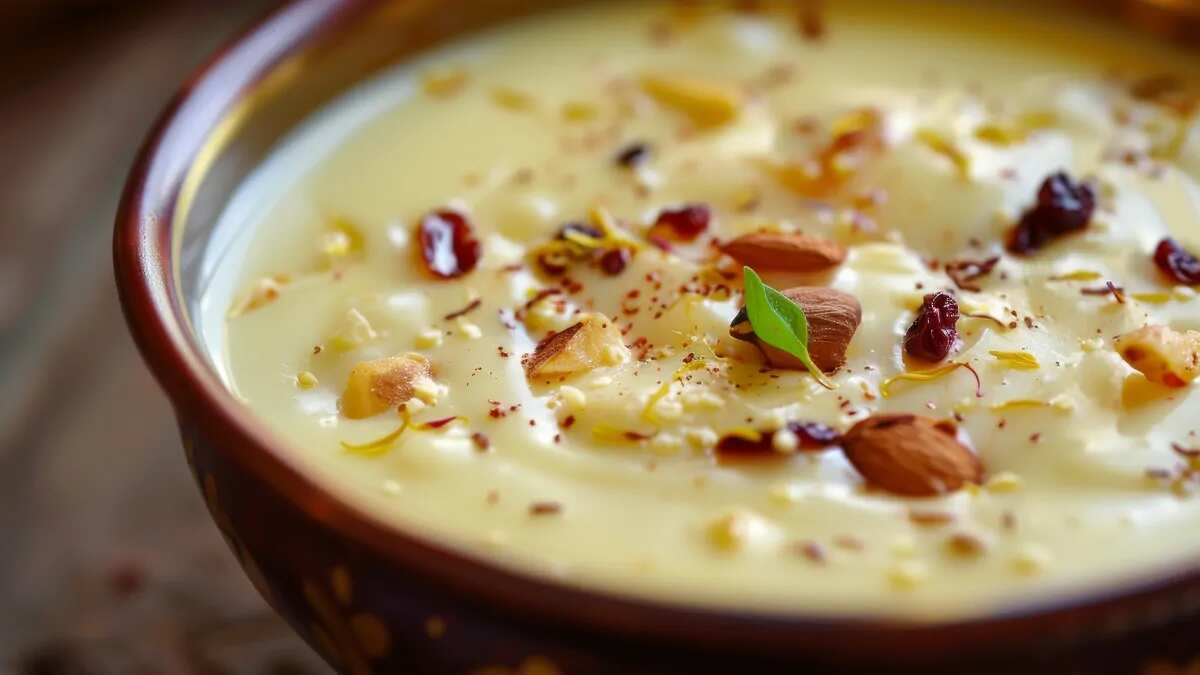
Payesh, auspiciously named ‘Paramanna’ in Bengali households, is a mandatory part of any occasion. When in Bengal, you will mostly hear about Chaal Er Payesh or Rice Pudding as well as Nolen Gur er Payesh (available in winter), prepared during birthdays, weddings, religious festivals, and any auspicious occasion.
As every Bengali mom would mention, ‘having a spoonful of payesh on your birthday brings you good luck for a lifetime’. But the variety of payesh is not restricted to only rice. From rice to vegetables, Bengalis have the expertise of making payesh from garden produce, fruits, and so on. Be it Lau Kheer or Ranga Alur Payesh, a number of varieties, grandmoms and mothers prepare at home throughout the year.
In Bengali culinary heritage, the tradition of Payesh goes beyond the classic grain-based recipes lies a sophisticated sub-genre of Vegetable Payesh, the ingenuity of the Bengali kitchen where humble garden produce is taken to the level of royal confectionery.
Bengali Home Chefs Share Heirloom Recipes Of Vegetable Payesh
Image Courtesy: Adobe Stock
Slurrp reached out to some of the Bengali home chefs who shared their heirloom payesh recipes made with vegetables. The following collection brings together four distinguished culinary voices, including Chef Samita Halder, Moumita Mukherjee, Joyadrita R. Chatterjee, and Rohitashwa Guha. All of them offer a glimpse into their personal history, sharing recipes that transform ingredients like bottle gourd, sweet potato, raw papaya, and even onions into creamy, cardamom-scented delicacies.
Lau Er Payesh (Bottle Gourd Kheer): Chef Samita Halder Shares Her Memories
An English Honours graduate who turned to the ladles out of necessity, Chef Samita has become a renowned name in five-star pop-ups and culinary columns across India.
She mentioned, "My grandmother used to make lau er payesh every winter, and I have never tasted anything quite like it since. She would always use fresh, tender bottle gourd from her own kitchen garden, which made it incredibly special. The payesh was slowly cooked for hours over a low flame in a large bell-metal hari, allowing the flavours to deepen and the milk to thicken beautifully." According to her, the aroma, the patience, and the love her grandma brought into the Lau kheer, made the dish unforgettable.
Lau er Payesh (Bottle Gourd Kheer)
Apart from shukto or chechki, Bottle gourd is also a core ingredient of a delicate, cooling dessert where the mild sweetness of bottle gourd (lau) is infused into thickened milk. It is connected with the oldest Bengali tradition of using seasonal garden produce for payesh.
Ingredients:
- Grated bottle gourd: 2 cups (tender)
- Milk: 1 litre
- Sugar or jaggery: To taste
- Bay leaf: 1
- Green cardamom: 2–3
- Cashews & raisins: A few
- Ghee: 1 teaspoon
Method:
- Peel the bottle gourd, remove the seeds, and grate it. Ensure the gourd is tender.
- Place the grated gourd in a muslin cloth and squeeze firmly to strain out all excess water.
- Heat a pan with ghee and lightly sauté the grated gourd for 3–4 minutes to remove the raw smell.
- In a separate heavy-bottomed pot, boil the milk and let it reduce until it thickens slightly.
- Add the sautéed gourd, bay leaf, and cardamom to the milk.
- Cook on medium flame for 10–15 minutes, stirring occasionally, until the gourd is soft and blends perfectly with the milk.
- Add sugar or jaggery to taste and simmer for a few more minutes.
- Garnish with cashews and raisins, then switch off the flame.
Onion Kheer and Sweet Potato Kheer By Home Chef Moumita Mukherjee
An IT professional with a heart for culinary research, Moumita explores the adventurous side of Bengali and Bangladeshi cuisines through her experimental home cooking.
Moumita presents two unique variations: one using onions—a rare savoury-to-sweet transformation—and another using sweet potatoes, a recipe passed down through generations from Uttar Dinajpur.
Peyaj er Paayesh (Onion Kheer)
Ingredients:
- Medium onions: 250g
- Milk: 750ml
- Sugar: To taste
- Chopped pistachio: 2 tbsp
- Green cardamoms: 2
- Rose water: A few drops
Method:
- Cut the onions into quarters and separate them into individual petals.
- Boil the petals in 2 cups of water for several minutes, then strain and rinse thoroughly.
- Crucial Step: Repeat this boiling and rinsing process at least 4 times (or until the petals are translucent and the water no longer turns yellow). In the final boil, add a few drops of rose water to neutralize the onion scent.
- Meanwhile, boil the milk with cardamom and sugar until it reduces to half its volume.
- Add the processed onion petals and boil for another 5 minutes.
- Garnish with pistachios.
Rangalu r Payesh (Sweet Potato Kheer)
As Moumita mentioned, "My tryst with Rangalu r payesh started somewhere during my early career. One of my friends brought a bevy of pithey just after Poush Sankranti. Along with the usual paraphernalia, there was this thick kheer. When she said it was made of sweet potatoes, we looked at it as if it was a travesty. But a spoonful changed our opinions immediately. It was creamy with a mild note from the sweet potatoes. And utterly delicious."
Ingredients:
- Sweet potato: 250g
- Whole milk: 1 litre
- Chopped cashew: 3 tbsp
- Soaked raisins: 2 tbsp
- Green cardamom: 3
- Ghee: 2 tbsp
- Sugar: To taste
Method:
- Grate the sweet potato, rinse thoroughly in water, and strain well.
- Heat ghee in a wok; fry the cashews lightly and set aside.
- In the same ghee, sauté the grated sweet potato on low heat for 5 minutes until the raw aroma disappears.
- Boil the milk with cardamom separately. Once reduced to two-thirds of its volume, add the dry fruits and the sautéed sweet potato.
- Boil for 5 minutes, then add sugar.
- Continue boiling until the mixture reduces further. Serve cold.
Gajorer Payesh: Joyadrita R. Chatterjee Talks About Her Heirloom Recipe
A former communication coach based in Chennai, Joyadrita holds the magic of traditional Bengali heritage and modern epicurean storytelling through her numerous hotel collaborations.
"Having travelled quite a lot within the country due to Dada’s job. Numma, my grandmother, learnt much about food, its ingredients, the way they were cooked etc. Even before cookery shows were a thing, Numma always had different recipes up her sleeves. So turning fruits and vegetables into desserts wasn’t uncommon in our house,” Joyadrita shared with Slurrp.
Gajorer Payesh (Red Carrot Kheer)
While Gajar ka Halwa is a household name, Joyadrita highlights the liquid grace of the kheer version, which utilizes the crunch and sweetness of fresh winter red carrots.
Ingredients:
- Red carrots: 4 to 5, grated
- Full fat milk: 3 litres
- Sugar: To taste
- Cardamom powder: 1/4 tsp
- Ghee: 2 tbsp
- Chopped pistachios: For garnish
Method:
- Heat ghee and fry the grated carrots thoroughly until the raw smell is completely gone.
- Pour in the milk and let the mixture simmer until the carrots are cooked to perfection.
- Add sugar and cardamom powder, stirring well.
- Garnish with chopped pistachios and serve chilled.
Rohitashwa Guha Shares His Raw Papaya Kheer Recipe
Image Courtesy: Adobe Stock
A software engineer and food revivalist, Rohitashwa’s cooking is a tribute to his family's roots in East Pakistan and the resilience of the women who preserved these recipes after the Partition.
"My family migrated from East Pakistan (now Bangladesh) to West Bengal during the Partition of India in 1947. I grew up in an environment where informal culinary conversations were an integral part of everyday life. My cooking philosophy is rooted in the generational stories and memoirs of the women in my family."
Pepe'r Payesh (Raw Papaya Kheer)
This unique dish transforms the raw papaya into a traditional dessert. When finely grated and cooked in thickened milk, the papaya takes on a creamy, pudding-like texture can surprise any dessert lover.
Ingredients:
- Raw papaya: 1 large (approx. 500g)
- Milk: 1.5 litres
- Sugar: To taste
- Salt: 1 pinch
- Ghee: 2 tbsp
Method:
- Peel, de-seed, and finely grate the fruit, then boil until tender before rinsing with cold water and squeezing out all moisture.
- Cook the papaya in ghee for 5–7 minutes until it develops a light golden color and loses its raw aroma.
- Simmer milk in a heavy pan, stirring regularly, until it reduces to three-quarters of its original volume.
- Merge the sautéed papaya with the thickened milk and cook on low heat for 10–15 minutes to allow the flavours to meld.
- Stir in sugar and a pinch of salt, continuing to cook until the dessert reaches a rich, creamy consistency.
- Turn off the heat and allow it to rest; enjoy the dish either warm or chilled.
So, be it a special occasion or just a day of sugar craving, you can try your hand at preparing any of these desserts at home with the leftover vegetables in the fridge. As mentioned above, you can switch sugar with jaggery and without messing with the fitness diet you follow, these desserts can ultimately curb your cravings.