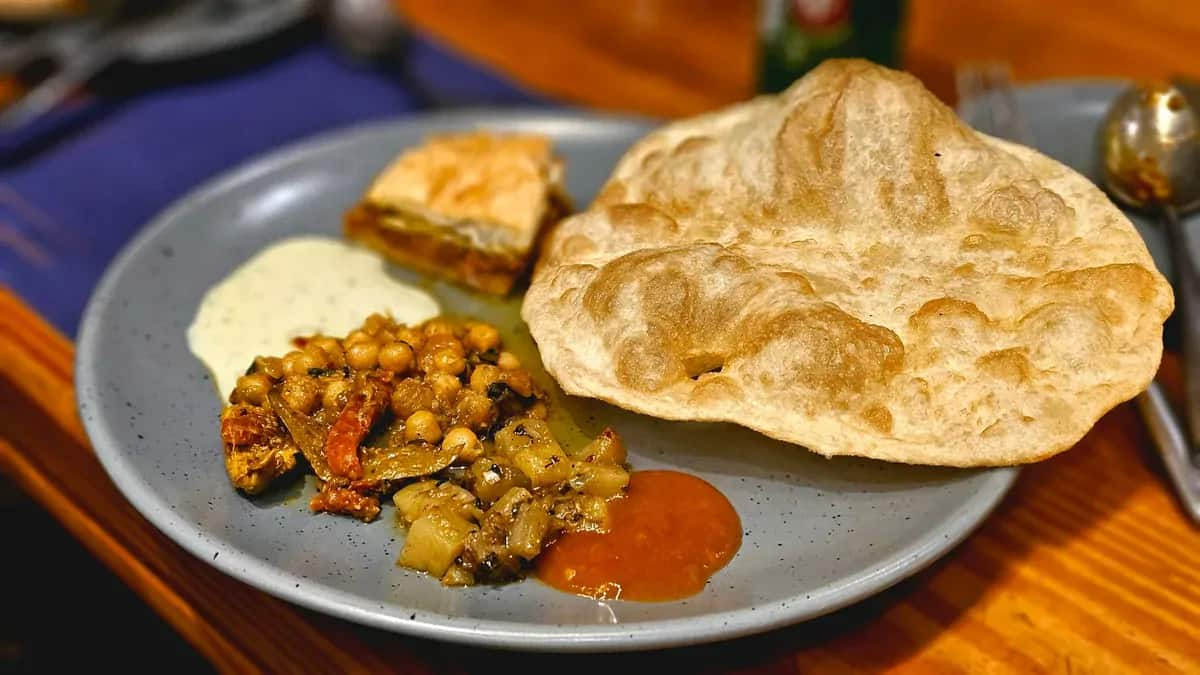
The first hiss is always the same—hot oil meeting dough—followed by that split-second hush when everyone listens for the puff. In diaspora kitchens, Sunday has its own choreography: late breakfast drifting into lunch, someone uncapping achar, windows cracked open so the frying smell doesn’t follow you into Monday.
When people search “Delhi style chole bhature,” they’re rarely asking for one sanctioned recipe. They’re asking for recognisable cues—dark, tang-forward, masala-clinging chole; bhature with fermented lift and blisters; onion-achar-chutney contrast—and, quietly, whether it still feels like home in Dubai.
This is the promise: (1) authenticity cues you can judge by sight, aroma, and texture, (2) a Delhi→Dubai case study of what mutates and what stays, and (3) an at-home checklist (not a recipe) with fast troubleshooting.
Sunday, ‘Delhi Style,’ And The Diaspora Promise
Sunday wins abroad because it’s the only meal slot that can absorb the whole production—soaking, simmering, proofing, frying—and still leave room to eat slowly. It’s also social engineering in edible form: an excuse to gather friends, call home, feed kids something that tastes like a story.
So what does “Delhi style” commonly mean here—without pretending Delhi has one true plate?
- Flavour: tang tends to lead (often amchur/anardana, sometimes lemon), heat follows; spice reads roasted and dark-leaning (cumin, coriander, black cardamom, clove, bay).
- Look: chole often lands deep brown (from spice, reduction, sometimes tea/tannins), not pale and brothy. Bhature show blisters/freckles, not a smooth, bun-like skin.
- Bite: chole should coat, not pool; bhature should puff, then relax—chew with crisp edges rather than cakey density.
- Accompaniments: onion + achar + green chutney aren’t afterthoughts; they build contrast—crunch, acid, herb bite—into every mouthful.
The Cues That Signal ‘Street-To-Home’ Authenticity
Delhi’s chole bhature lives on a street-to-home continuum: spices toasted until they smell nutty rather than raw, gravy reduced until it grips, sides served without ceremony because everyone already knows what to do with them.
Chole cues (dark, tangy, thick—and why)
Sight & texture: Delhi-leaning chole is thick and masala-forward, not soup. A few chickpeas often break—long cooking or a quick mash—so the gravy moves from liquid to sauce.
Aroma: toasted cumin/coriander should be clear, with the smoky-resin note of black cardamom if used. Some deepen colour with tea or tannin-rich whole spices; either way, it shouldn’t smell like boiled legumes waiting for help.
Taste balance: the edge is sour meeting heat, with salt that feels placed. Often the tang reads “dry” (amchur/anardana) more than glossy sweet-sour.
Example snapshot (ideal chole texture): the gravy leaves a rust-brown stain on the plate and drags when you swipe it with bread; each chickpea is creamy inside, wearing masala like a thin jacket rather than bobbing in water.
One stove-side fact that saves batches: acid can slow chickpeas softening. If they stay stubborn, it’s often the souring landing too early.
Bhature cues (fermentation lift, blistered fry, clean oil)
Fermentation lift: bhature should feel lighter than its size suggests. Fermentation isn’t there to make it sour; it seeds gas pockets so the bread balloons, then collapses softly instead of frying up dense.
Blistering & puff: blisters are evidence: dough structure + oil heat aligned. You want a bhatura that inflates, then settles into a tender chew with browned freckles.
Oil management: the finish should taste of wheat and fermentation—not tired oil. Oiliness usually means cool oil, overcrowding, or over-handling.
Example snapshot (ideal bhature texture): tear it and you get a gentle crack at the edge, then a stretchy rip; inside, steam-softened pockets show up like thin caves, not a tight, cake-like crumb.
The supporting cast (how the Delhi bite is built, not just served)
- Onion: plain or lightly salted—sharp crunch that resets the palate.
- Achar: a teaspoon of acid + oil-spice punch that lifts heavy bites.
- Green chutney: herb heat that adds freshness and can cover small restaurant sins.
- Raita/chaach: not universal, but shows up often enough—useful as a cooling counter.
What it’s not (without shaming other styles): If the chole is watery and pale with chickpeas tasting mostly boiled, it’s not Delhi-coded. If the bhature is smooth, dense, bun-like, that’s a different bread tradition—valid, just not what most people mean by “Delhi style.”
Want the origin context behind your favourite plates? Explore place-based food stories on Food Trails.
Delhi To Dubai Case Study
Dubai chole bhature sits at an intersection Delhi doesn’t have to negotiate the same way: global grocery aisles, apartment kitchens, and a weekend culture where “brunch” can be fast fuel or a reserved-table event. The plate adapts—sometimes invisibly, sometimes with a menu makeover.
Ingredient availability swaps (and how to adjust, not guess)
In Dubai, the label may match Delhi, but outcomes drift: spice blends vary in salt and clove/black-cardamom intensity, chickpeas vary in age (older = tougher), and souring depends on what’s easiest to buy week to week.
Concrete swap examples (Dubai reality, one line each):
- Amchur/anardana missing? Use lemon at the end; use tamarind sparingly if you want tang without tipping sweet-sour.
- No tea / you dislike tea in chole? Deepen colour by blooming dark whole spices longer + reducing, or steep a tea bag briefly and discard.
- Chickpeas stay firm? Some supermarket lots are older—soak longer and lean on pressure cooking; judge doneness by texture, not minutes.
Calibration tip that travels: taste your chole masala dry on your fingertip. If it’s already salty or clove-heavy, adjust with roasted coriander/cumin rather than piling on more blend.
Time-saving methods abroad (shortcuts that respect texture)
- Pressure cooker / Instant Pot logic: cook chickpeas to real creaminess first; then simmer with masala uncovered so the gravy thickens and clings.
- Overnight strategy: many make chole Saturday night (it improves with rest), then fry bhature Sunday morning.
- Controlled proofing: AC swings can scramble fermentation; people proof in a turned-off oven or near a warm stovetop.
Mini reality check (Dubai-specific): deep-frying in apartments means lingering smell, smoke alarms, and oil disposal. For many, the restaurant becomes part of the ritual because it absorbs the mess.
Restaurant evolution: from street breakfast to Dubai brunch
In Dubai, chole bhature often arrives as brunch positioning: share plates, smaller portions, “North Indian breakfast” menus tuned for weekend crowds.
Common evolutions:
- Portion + plating shifts: two smaller bhature instead of one large; tighter chole for cleaner plating.
- Premium add-ons: stuffed or cheese bhature, extra toppings, a butter finish.
- Sides in ramekins: achar and chutney arrive measured instead of jar-direct; the core flavour can still be right, but the hit is gentler.
Soul vs surface: what can change—and what shouldn’t
If you want the Delhi vibe, separate format from flavour memory.
Surface elements that can change: brunch plating, shareable portions, milder heat for mixed groups, lemon instead of amchur, extra sides like raita/chaach.
Soul elements that should stay:
- Tangy, thick, masala-coated chole (cling matters more than the exact souring agent)
- Fermented lift + blistered fry in the bread component
- Onion + achar contrast (fresh crunch + sharp pickle)
How To Recreate ‘Delhi Style’ Magic At Home
This is a playbook, not a recipe: checkpoints that get you closer than hunting one “secret” ingredient.
Chole checklist (layering, tang timing, thickness)
- Layer whole spices first: bloom cumin, bay leaf, black cardamom, clove in fat until they smell toasty.
- Cook ground spices, don’t just add them: coriander/cumin powders and chole masala need heat + time. If the masala smells dusty, it needs longer cooking (use a splash of water to prevent scorching).
- Souring strategy (timing matters): keep major acid additions toward the end so chickpeas soften properly. Aim for two-step tang: a little during simmer, then a final correction before serving.
- Thickening strategy: reduce uncovered until it coats, or mash a ladle of chickpeas back in. Optional: a pinch of roasted gram flour—too much turns pasty.
- Salt timing: salt early enough to season the chickpeas; adjust after reduction.
- Resting time: rest 30–60 minutes (or overnight). The sharp edges settle; the aroma gets deeper.
Bhature checklist (dough feel, proof cues, fry cues)
- Hydration feel: dough should be soft and slightly tacky, not stiff.
- Fermentation/proofing cues: look for visible puffing; press a fingertip—indentation should spring back slowly.
- Rolling thickness: even matters more than thin. Too thin won’t puff; too thick turns bready.
- Oil temperature without a thermometer: drop a tiny dough scrap—if it sinks then rises quickly with lively bubbles, you’re ready. Slow bubbles = too cool; browns in seconds = too hot.
- Drain/hold: let excess oil drip back into the kadhai, then rest briefly on a rack or paper. Don’t stack immediately.
If you’re aiming for “without maida” or “without deep-frying,” expect a trade-off: whole-wheat or baked/air-fried versions can still be good, but they won’t mimic the classic blistered puff and fermented chew. If the goal is the Delhi vibe, consider smaller bhature rather than a different method.
Troubleshooting quick fixes (save the batch)
- Chole tastes flat: correct in order—salt, then acid (lemon/amchur), then a quick roasted spice finish (dry-roast a pinch of cumin/coriander powder; stir in at the end).
- Chole is thin: simmer uncovered longer, then mash some chickpeas into the gravy.
- Bhature turns dense: usually under-proofed, over-rolled, or oil too cool. Proof longer, roll slightly thicker, raise oil heat until the test scrap rises quickly.
- Bhature feels oily: oil was too cool or overcrowded. Fry fewer at a time; let oil recover; avoid over-handling.
Minimal shopping list (hard-to-substitute)
- A chole masala you genuinely like (brands vary—taste and adjust)
- Whole spices: cumin, bay leaf, black cardamom, cloves
- Achar (mango/mixed)
- Fresh ginger + green chilli
Ready to compare approaches without turning this into a full recipe page? Browse techniques and variations on Recipes.
The Ritual’s Next Chapter
What changes well—especially in Dubai, where brunch menus and modern schedules quietly edit tradition—is portioning and framing. Do half portions with a salad, serve chaach on the side, dial spice for second-gen palates, or plate it as a shareable spread.
Baked or air-fried experiments also have a place—as long as you name the goal. If you want comfort with less oil, go for it. If you want Delhi-style bhature texture, accept that frying does specific physics: rapid steam expansion and blistering at high heat.
The non-negotiables for the real vibe:
- Tangy-thick chole that clings
- Fermented lift in the bread component (even if smaller)
- Onion-achar-chutney contrast
- Resting/melding time so flavours stop shouting and start speaking
Your turn: where are you eating Sunday chole bhature—Dubai, Sharjah, Abu Dhabi, somewhere else—and what’s the one adaptation you swear by (lemon instead of amchur, a spice brand, a proofing hack, a side you insist on)? Share it on Community.
Use Nutrimeter if you’re experimenting with portion sizes or lighter sides and want a quick macro/calorie reality check.
Conclusion
Sunday chole bhature isn’t about replicating a Delhi lane tile for tile. It’s about recognition: tang at the back of your tongue, cumin-dark air rising from the pot, bhatura steam fogging your glasses, and someone reaching for onions without asking. Keep the clingy tang in the chole, the fermented lift in the bread, and the onion-achar-chutney hit on the side—then let the rest flex with your city, pantry, and Sunday.
Some parts of this article were created with AI assistance.