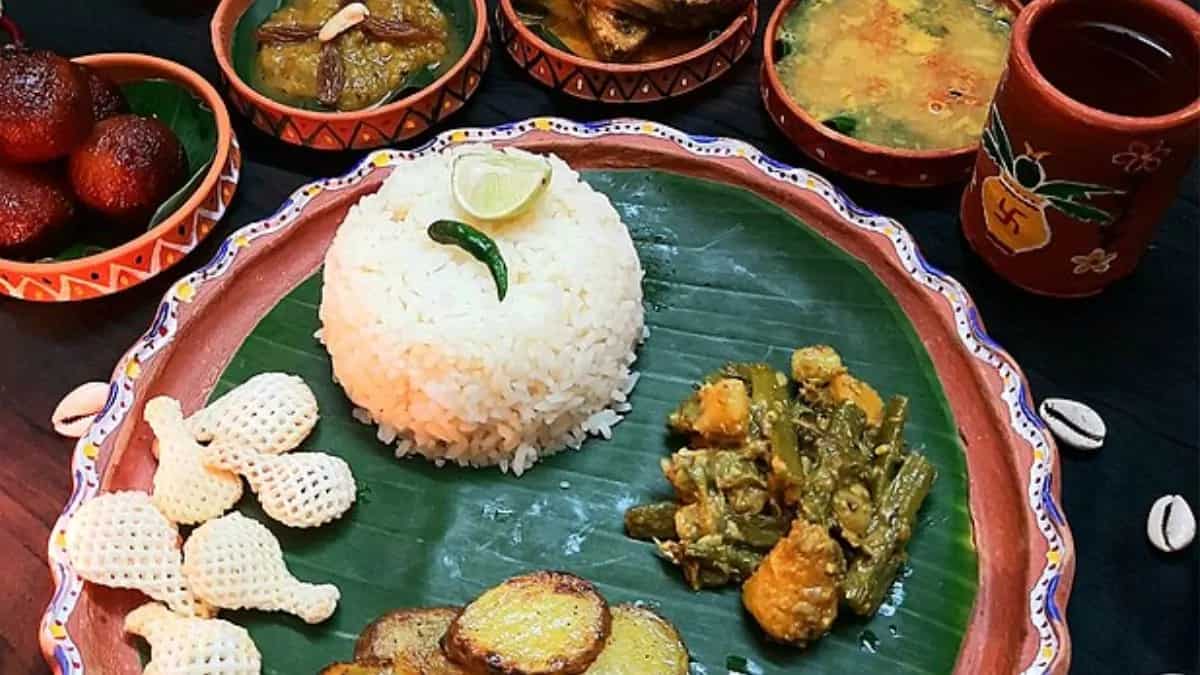
You will undoubtedly concur that a Bengali wedding is a visual feast of joy and divinity if you have had the good fortune to watch it from beginning to end. Bengali Hindu marriages combine traditional customs and rituals with a touch of modernity, just like any other Indian wedding. Bengali weddings, known as ‘Biye,’ are visually stunning. The rich, significant customs that form the culture are found in the spirit of extravagant colours and thoughtfully curated decorations. In traditional Bengali culture, food is an essential part of festivities like weddings. An essential component of the Bengali wedding ritual is the wedding feast, or ‘biye barir khabar.’ For the participating families, it represents love, happiness, and unity. Beyond simply providing delectable food, Bengali cuisine has a significant role in wedding catering. It displays the community's rich cultural legacy and represents their social standing, customs, and traditions.
Image Credit: Wikimedia Commons
The recipes are an essential component of their identity because they have been handed down through the centuries. Incorporating these traditional delicacies into weddings allows couples to honour their ethnic history while simultaneously celebrating their union. The diversity of Bengali food is another important feature that sets it apart. There is something to suit every palate, from non-vegetarian specialities like kosha mangsho to vegetarian dishes like shukto. Caterers may design a well-rounded buffet that accommodates all dietary needs thanks to this wide variety of flavours.
Utilising the freshest local ingredients, which help to give each dish a distinct flavour, for example, a paste produced from freshly shredded coconut provides fish curries a unique flavour, and roasted mustard seeds offer vegetable dishes a rich, acidic taste. The wedding feast gains authenticity from the focus on local and fresh ingredients. The conventional Bengali menu has undoubtedly been slightly altered in favour of contemporary cuisine prepared with a twist since the emergence of glamourised wedding culture. However, genuine dishes that make you want to say ‘khoob bhalo hoyeche khabar’ are the only way to truly capture the essence of a Bengali wedding. Here are some of the dishes without which a Bengali wedding is incomplete:
Luchi - Cholar Dal
Spiced Bengal gram lentils are eaten with deep-fried puffed breads called luchi. It is rich and flavourful because the lentils are cooked with aromatic spices and tempered with ghee. Made with refined flour, the luchi is the ideal side dish for dal since it has a crispy exterior and a soft interior. This dish is a favourite in Bengali homes and is frequently consumed during festival occasions. Hing (asafoetida) supplies the necessary sharpness that one would generally get from the use of onions. The best part about this warm, mellow, delicious coconut-and-raisin strewn cholar dal is that it can be served for breakfast, lunch or dinner, with rice, pulao, luchi, kochuri or porota.
Image Credit: Wikimedia Commons
Maacher Matha Diye Dal
Split green gram lentils and fish head are used to make macher matha diye moong dal, a lentil soup prepared in the Bengali way. Bengali households frequently prepare this tasty and healthful dish. The fish head gives the dal a distinct flavour and scent. For a full meal, serve this tasty and cosy dish with steaming rice. This dish delivers exceptional nutritional advantages in addition to capturing the spirit of Bengali home-cooked meals. Bengalis love this dish for its rich taste and health advantages, although other people might find it strange to use a fish head. It is an illustration of how classic recipes transform basic ingredients into something remarkable.
Image Credit: Wikimedia Commons
Shukto
The beloved shukto has to be the embodiment of Bengali weddings' abundance of vegetarian options. You must have never tried anything like this, somewhat bitter, slightly sweet gravy meal. Shukto, which is made with a lot of veggies, including the notorious karela, will make you want to lick your plate, if that's possible. Raw bananas, sweet potatoes, papaya, and brinjal are examples of vegetables that provide the meal bulk and smoothness. Ground spices are added to the vegetables. Grated coconut, ghee, and milk-based flour are added for a rich, creamy texture. Typically, shukto is consumed with steaming hot rice before digging into the main course.
Image Credit: Wikimedia Commons
Jhuri Aloo Bhaja
A dish of fried potatoes with peanuts and spices from Bengal. One famous traditional Bengali dish is jhuri aloo bhaja. Because of its distinct texture and crunch, this crispy grated potato fry is a very well-liked side dish in Bengali cuisine. Without this recipe for jhuri aloo bhaja, the menu at any real Bengali restaurant would be lacking. It is mostly accompanied by rice and any dal recipe, especially mushur dal sheddo or moong dal. Turmeric, red chilli powder, and cumin are among the spices used to season the potatoes, giving them a delightfully aromatic and spicy flavour.
Image Credit: Wikimedia Commons
Fish Fry
For both fish lovers and non-lovers, Kolkata fish fry serves as a unifying dish. The texture is well-balanced between being crunchy and soft. It is frequently advised that visitors to this city have this snack at a few heritage eateries. However, Kolkata fish fry's amazing origin story is what makes it even more well-known. Often served with julienned onions, cucumbers and carrots and the quintessential Kasundi, or Bengali version of mustard sauce, fish fry holds the essence of this city. When a Bengali wedding is near, the first thought that comes to one’s mind is whether there will be fish fry on the menu. If not, it’s a no to the invitation altogether. The highlight is the use of sweetwater fish, such as barramundi or bhetki. The meatiness and lack of bones of this specific fish species are well-known. It tastes very different. Fish is therefore a good choice for the inner, delicate fillet. The outside layer is crispy because of the crumb coating.
Image Credit: Wikimedia Commons
Basanti Pulao - Kosha Mangsho
For Bengalis, Kosha Mangsho and the fragrant and sweet Basanti Polao are the ultimate delicacies that can make people give up their love of fish. As the name implies, Basanti Polao is probably related to the basanti colour, which is a yellow hue. Similar to its beauty, its origins are mysterious. Because saffron was expensive, the commoner's version of Basanti pulao used turmeric instead. The justification for the sugar component is explained in Salma Hussain's book ‘Nushka-e-Shahjahani: Pulaos from the Royal Kitchen of Shah Jahan.’ It is reported that sugar was used extensively in Shah Jahan's royal cuisine. A staggering 750 grams of sugar were needed for 1000 grams, or one kilogram, of pulao. The Bengali epicureans' acceptance of Shahjahani Zard Pulao as Basanti Pulao was simply fitting. The next time you eat Bengali mishti pulao, keep in mind that its taste has a long history!
Image Credit: Wikimedia Commons
Paturi
Fish or vegetables wrapped in leaves, marinated in a hot sauce, and then steamed or grilled is a traditional Bengali dish called paturi. Its texture is soft and moist, and the leaves give it a subtle scent. The various kinds of leaves utilised give the dish a subtle aroma and a hint of earthiness. Its texture is moist and velvety, nearly melting on your tongue, and its flavour profile is rich with a well-balanced combination of smoky, sour, and spicy overtones. Paturi's cooking technique leaves the components covered in layers of flavour and moisture, resulting in a dish that is adored for its delectable flavour and texture. There are different types of paturis that you can try–bhetki paturi, illish paturi, chingri paturi, and there are also 5 types of leaves you can cook it in–elephant ear leaves, lau or lauki leaves, kumro or pumpkin leaves, banana leaves and alpina leaves. Having a paturi dish during a Bengali wedding is a must!
Image Credit: Wikimedia Commons
Desserts: Mishti Doi, Sandesh, Roshogolla
With iconic desserts like roshogolla, sandesh, patishapta, and more, a Bengali wedding also ends on a sweet note, which reflects the art and tradition of Bengali sweets. Bengali sweets, or mishti, are more than just desserts; they are an art form that has been refined over many generations and an essential component of the Bengali identity. From mishti doi to sandesh to malao chop and malpua, during the wedding season, which is usually celebrated between November to February, the Bengali community also uses nolen gur for the sweets they offer in addition to existing nolen gur sweets, which are already on the menu.
Image Credit: Wikimedia Commons
If you ever have the chance to experience a Bengali wedding, stay for all the 2-4 days of celebration and feast on a spread that’s the epitome of what you call a ‘Big Fat Indian Wedding.’