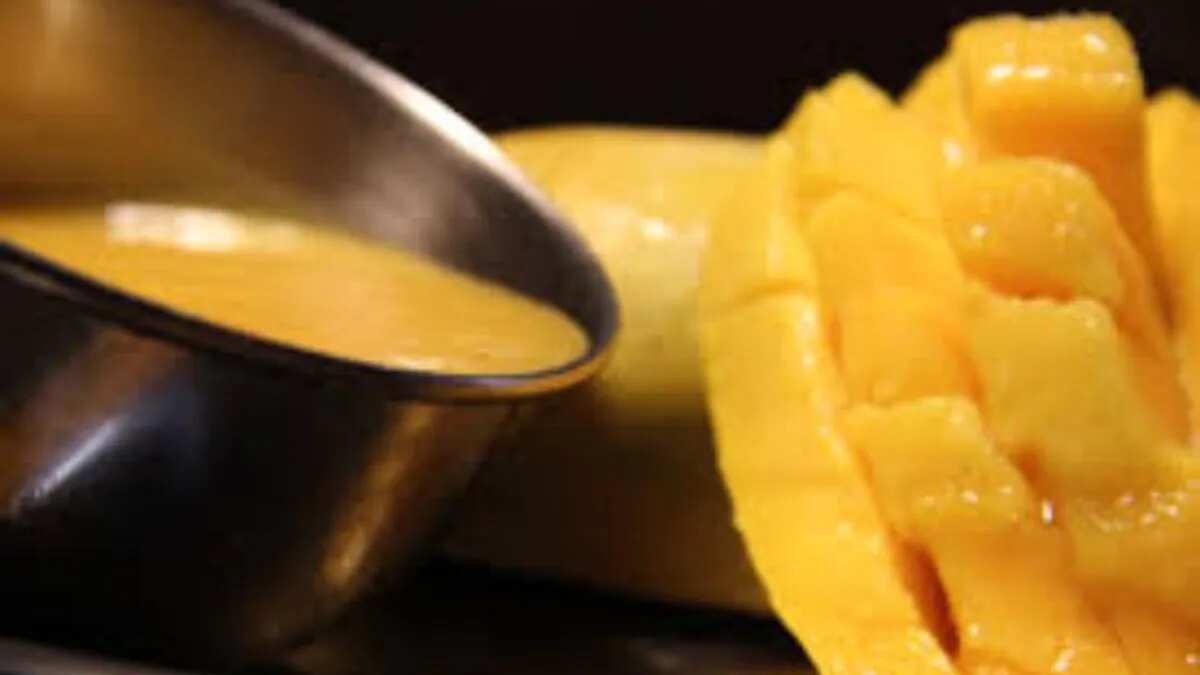
Summer has arrived, as has the season for mangos, the king of fruits. You're undoubtedly yearning for those juicy, pulpy, sweet, and completely tempting nibbles. But have you ever considered that the mango you're eating might not be fully authentic? Whether you believe it or not, it is feasible. There has recently been an increase in worry over food adulteration, and this is not restricted to mangoes. Everyday items like milk, ghee, and even dosa batter are tampered with in some cases, raising serious questions about what you’re actually consuming. Case in point;to meet the enormous demand for mangoes, some market players resorted to tainted and counterfeit products in Pune. A department of the Food and Drug Administration (FDA) seized and destroyed 3,800 kg of counterfeit mango pulp in the city, and here's what you should know.
Image Credit: Unsplash
FDA In Pune Seizes 3,800kg Fake Mango Pulp
After conducting raids in the area, a food safety team from the FDA in Pune destroyed almost 3,800 kg of fake mango pulp. The unit was discovered in Urse Village, Maval, where officials noticed that the pulp was prepared with colours and compounds that are not permitted under food safety regulations. The unit was flagged for major infractions. Samples of the pulp, raw mangoes, and additional ingredients were sent for testing. According to various reports, the pulp contained sugar, bovine milk, and a saffron-coloured liquid solution.
In another investigation, FDA officers in Pune searched a unit in Khed and confiscated 558 kg of mango pulp worth ₹61,380. Combined with the preceding raid, the total seizure climbed to roughly 3,800 kg of mango pulp worth ₹2.23 lakh. Senior FDA officials, including Assistant Commissioner N. R. Sarkate and Commissioner Shridhar Dube Patil, led the raids, which were accompanied by a team of food safety officers. D. V. Bhogawade, Joint Commissioner (Food), Pune Division, stated that strict action against violators would continue. This is quite troubling, and it also emphasises the importance of being extra vigilant about what you consume and buy, particularly during peak mango season. With situations like this coming to light, it's critical to be conscious of what's in our food and where it comes from. If you’re in the market, purchasing mangoes, here are a few ways on how you can spot fake mango pulp mangoes being sold:
Do A Colour Check
Mangoes can range in colour from pale to dark, depending on the season and type. However, colour alone isn't a guarantee of ripeness. Ripe mangoes come in a variety of colours, from a vibrant yellow to green, pink, or even crimson. Make use of additional senses, including smell, shape, and texture, in addition to colour, to assess ripeness. To make better decisions, learn about the many mango kinds and how they usually mature. Is it too perfect? Bright yellow on the outside, green near the stem, or shiny like plastic? That's probably carbide. Naturally ripened mangoes have a spotty yellow-green peel that is not uniformly yellow.
Touch & Feel The Mangoes You Choose
It is important to evaluate the texture of the mango before choosing one that is ripe. When they are fully ripe, mangoes should have a texture that is somewhat softer than that of peaches or avocados. However, they should not be too soft or mushy because this might be an indication that they are overripe. Choosing a somewhat firmer mango and allowing it to mature more at home is the best option if you intend to consume the mango within the next several days.
A Visual Check Is Important
Finding out when a mango is ripe is as easy as looking at it. Full, plump, and spherical, particularly around the stem, is the form of a ripe mango. Spots or brownish colouring on ripe mangoes are quite natural and have no bearing on the fruit's flavour or quality. Stay away from mangoes that are too ripe, which have wrinkled or shrivelled skin, and mangoes that are too thin or flat are likely to be tasteless.
Smell The Mangoes
Before purchasing a mango, sniff near its stem. This is a simple technique to determine whether it is good or not. If there is no smell at all, or if you detect a weird, chemical-like odour, the mango may have been ripened using chemicals. Such mangoes may not taste as delicious and may not be suitable for daily consumption. On the other hand, if the mango smells sweet, natural, and fruity, that's a good indicator. This usually indicates that the fruit has matured organically and will taste better. When choosing mangoes, always believe your nose.
Image Credit: Unsplash
Learn The Varieties
If you want to improve your ability to choose mangoes, you should familiarise yourself with the many varieties of mangoes. Mangoes come in a wide range of colours, flavours, and textures, and these characteristics vary based on factors such as the area and the time of year. Spend some time learning about the features of popular mango types so that you may get the most out of your mango shopping experience and discover new flavour profiles.
Cut The Mango Open
If a mango feels soft on the exterior but seems pale, rubbery, or tastes boring on the interior, it is an obvious red sign. It could have been ripened artificially and not developed correctly. Naturally ripened mangoes require time to mature, allowing them to develop rich taste, sweetness, and thick pulp from the inside out. They often have a uniform colour and a delicious texture. Another simple indicator is the water test, where natural mangoes tend to sink in water, but artificially ripened mangoes may float. Paying attention to these small details can help you pick better, tastier mangoes. If you're still unsure, soak your mangoes in water for a few hours to remove residue, or buy raw mangoes and ripen them at home, as our grandmothers did.