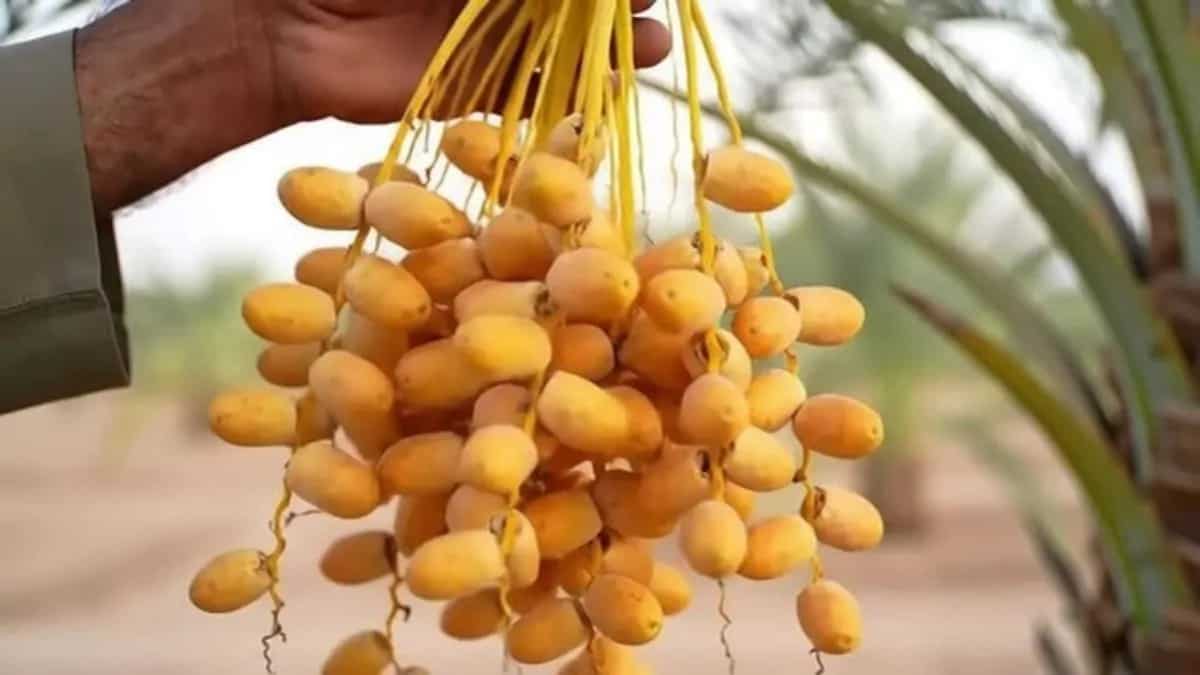
The arid, sun-bleached expanse of the Kutch region in Gujarat is globally famous for its mesmerising white salt deserts, vibrant mirror-work embroidery, and resilient communities. Yet, over the last few centuries, this harsh landscape has quietly nurtured an agricultural marvel that stands entirely apart from the global norm of date cultivation. Kutchi kharek, the native date variety grown in this coastal desert belt, has officially earned its rightful place on the agricultural map after receiving a prestigious Geographical Indication or GI tag. Unlike the soft, dark brown, wrinkly imported dates that dominate Indian households during winter festivals, these indigenous fresh dates offer a radically different sensory experience. They are celebrated not for a sticky, jam-like texture, but for their incredible crispness, vibrant colours, and refreshing bite.
What Exactly Is Kutchi Kharek?
Kutchi kharek refers to the fresh dates cultivated across the unique terrain of the Kutch district in Gujarat. This single region is the absolute powerhouse of Indian date production, accounting for more than eighty-five per cent of the total date palm cultivation across the country. The history of these palms in the coastal zone spans over four hundred to five hundred years. Local historical accounts suggest that the initial date palm groves sprouted from seeds discarded by trade settlers and pilgrims returning from Middle Eastern countries after completing the Haj pilgrimage. Furthermore, Arab gardeners working in the magnificent palaces of the former rulers of Kutch, known as the Maharaos, brought premium seeds and offshoots to cultivate in royal orchards. Over generations, these trees adapted beautifully to the high soil salinity, extreme summer heat, and erratic rainfall patterns of the region, evolving into a distinct indigenous ecosystem.
Image credit: Adobe Stock
The True Significance of the GI Tag
The awarding of the Geographical Indication tag to Kutchi kharek represents a monumental milestone for Indian agriculture. This certification is far more than a mere bureaucratic stamp; it serves as a powerful intellectual property shield that protects the identity, heritage, and reputation of a traditional product tied to its specific geographic locality. For the thousands of hardworking farmers across Bhuj, Mundra, Anjar, and Mandvi, the GI tag provides vital legal protection against counterfeiting. It ensures that ordinary or low-quality imported dates cannot be deceptively sold under the prized Kutchi name. This recognition gives the local farming communities immense leverage in both domestic and international markets, allowing them to establish a premium brand identity. It elevates the status of Kutch to a globally acknowledged hub of premium date cultivation, ensuring that farmers receive fair financial returns for preserving a five-hundred-year-old legacy.
Image credit: Pexels
What Makes Kutchi Kharek Completely Unique?
The absolute distinction of Kutchi kharek lies in its highly specific harvesting window, known globally as the khalal stage. In most major date-producing nations across the Middle East and North Africa, dates are left on the palm trees to ripen completely until they pass through various moisture phases, eventually turning soft, dark, and sticky. However, the geographical and climatic realities of Kutch necessitate an entirely different approach. The Kutch region faces the arrival of the southwest monsoon in late July. High humidity and rainwater can completely destroy fully ripened, soft dates on the tree, causing them to rot or ferment. To outsmart the weather, local farmers harvest the fruits at the peak of their maturity in June and July, precisely when they enter the khalal stage. At this exact point, the dates have accumulated high levels of natural sucrose, yet they remain firm, dense, and exceptionally crunchy.
Image credit: Pexels
The fruits appear in two striking, brilliant hues: a gorgeous golden-yellow and a deep, rich red. When you bite into a fresh Kutchi kharek, it behaves more like a crisp apple or a fresh berry than a traditional dry date. Kutch remains the only place across the entire globe where fresh dates are economically cultivated, successfully marketed, and widely consumed at this specific crunchy stage, making it a truly unparalleled seasonal delicacy.
Image credit: Pexels
Deep Nutritional Profile And Health Benefits
Beyond its delightful crunch and natural sweetness, Kutchi kharek is a nutritional powerhouse perfectly suited for modern health-conscious lifestyles. Because these dates are consumed fresh rather than dried and processed, they retain an exceptionally high concentration of moisture, water-soluble vitamins, and active enzymes.
Sustained Energy and Digestive Wellness
Unlike refined sugar sweets that cause rapid, unhealthy spikes in blood glucose levels, fresh Kutchi dates provide a steady, sustained release of clean energy. They are predominantly composed of simple natural sugars like fructose and glucose, which are easily metabolised by the body. Furthermore, they are an exceptional source of dietary fibre. This rich fibre content actively aids digestion, promotes smooth bowel movements, prevents acidity, and supports a healthy gut microbiome by acting as a natural prebiotic.
Image credit: Adobe Stock
Heart Health and Muscle Function
For individuals looking to optimise their cardiovascular health, Kutchi kharek offers an abundance of potassium and magnesium. Potassium plays a vital role in regulating blood pressure, maintaining proper fluid balance, and mitigating the negative effects of high sodium intake. Magnesium works alongside potassium to support overall muscle relaxation, nerve transmission, and stable heart rhythms.
Bone Density and Anti-Ageing Protection
These indigenous dates are loaded with essential minerals including calcium, phosphorus, and iron. Regular consumption is highly beneficial for individuals looking to naturally combat iron-deficiency anaemia and strengthen bone mineral density.
Additionally, Kutchi kharek is packed with powerful antioxidants, including flavonoids, carotenoids, and phenolic compounds. These antioxidants actively neutralise harmful free radicals in the body, reduce chronic systemic inflammation, and protect cellular health, thereby boosting overall immunity and supporting glowing skin.
Diverse Culinary Applications
The unique firm texture and balanced sweetness of Kutchi kharek open up a fascinating world of culinary possibilities, bridging traditional Indian flavours with modern gourmet experiments. Because the fruit is dense and crisp, it can be easily sliced, diced, grated, or julienned without turning into a mushy paste. In everyday salads, thinly sliced yellow or red kharek provides a beautiful, refreshing contrast to bitter leafy greens, crunchy cucumbers, and tangy citrus dressings. Traditional Indian kitchens have embraced this fresh fruit to create unique seasonal sweet-and-sour pickles and chutneys. By simmering the diced dates with mustard seeds, cumin, fennel, and red chilli powder, home cooks create a delightful accompaniment that pairs beautifully with parathas and rice dishes.
Furthermore, Kutchi kharek serves as an excellent natural sweetener for classic Indian desserts. Grated kharek can be folded into slow-cooked milk to make a naturally sweet kheer or halwa, drastically reducing the need for refined white sugar. In modern western-style culinary arts, these crunchy dates are being used by bakers to add texture to tea cakes and tarts, paired elegantly with sharp gourmet cheeses on artisanal platters, or blended into morning smoothies and breakfast bowls for a nutrient-dense, energetic start to the day.