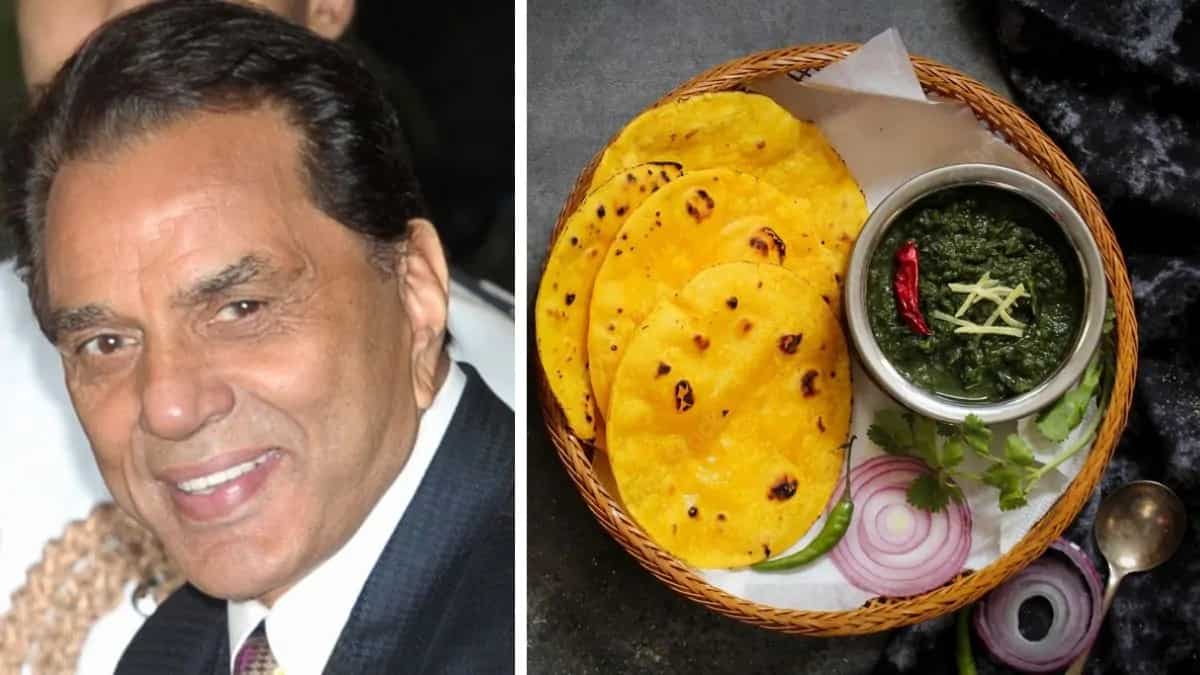
Dharmendra Kewal Krishan Deol, born on 8 December 1935 in Sahnewal in Ludhiana district, Punjab, has passed away at the age of 89. His acting legacy spans several decades, yet an equally consistent part of his public persona was his connection to his Punjabi background. He often referenced Sahnewal, his family’s farming environment, and the household cooking that shaped his early years. Meals in rural Punjab during his childhood were built from ingredients grown locally, mustard greens, wheat, maize, turnips, gourds, and dairy from the home or nearby farms. The food was practical, seasonal, and familiar, and these qualities had a lasting influence on his palate. Even after moving to Mumbai and becoming one of Hindi cinema’s most celebrated actors, he continued to prefer food that resembled what he ate in his youth. His farmhouse lifestyle in later years only reinforced this pattern, as it gave him access to produce grown traditionally and allowed meals to be prepared in ways that aligned with older Punjabi methods.
Saag And Makki Di Roti
One of the most iconic winter‐meals of Punjab, Sarson da Saag (mustard greens cooked richly) with Makki di Roti (maize flour flatbread) was known to be dear to Dharmendra. For instance, villagers from Dangon (Ludhiana) once recalled that he expressed his wish to have saag and makki di roti cooked on a traditional chullah for his birthday. This dish reflects his affinity for the seasonal rhythm of Punjab. The meal is simple but rich in flavour, mustard greens slow-cooked with spices and ghee, roti made fresh on a tawa. Dharmendra’s love for it hints at his desire for authenticity, for home‐style cooking rather than glossy restaurant fare.
Image credit: Adobe Stock
Shalgam Gosht
Among the more surprising favourites of Dharmendra was Shalgam Gosht, a dish combining mutton with turnips (shalgam) that is seldom seen in modern Punjabi restaurants. In an interview, he mentioned that he enjoyed this dish, noting that he had moved toward more vegetarian habits but still appreciated dishes like tinda or shalgam with subtle flavours. This choice is revealing: the turnip brings a soft sweetness and gentle earthiness, balancing the richness of mutton. It tells us that Dharmendra valued thoughtful, traditional dishes, not just the loud, heavily spiced marquee fare. Even when his diet matured and changed, his affection for this older style dish remained.
Meetha Karela
A particularly idiosyncratic favourite of his was Meetha Karela, sweetened bitter gourd cooked with jaggery, a dish that many might shy away from. According to reports, the veteran actor enjoyed this old‐time Punjabi combination, in which karela’s bitterness is tempered by jaggery’s sweetness. This reveals a willingness to go beyond common preferences, he wasn’t simply eating what everyone else ate. The dish also harkens back to older, offbeat family traditions: vegetables grown on the farm, prepared not purely for flavour but for also memory and care.
Image credit: Freepik
Gulab Jamun With Ice-Cream
Among desserts, Dharmendra consistently favoured a combination that has long been popular in North Indian households: warm gulab jamun served with vanilla ice-cream. This pairing grew more common in weddings and small restaurants over the past few decades, but he had been choosing it much earlier, according to accounts from people who worked with him. It’s a telling combination. On one hand the gulab jamun, classic Indian, familiar, nostalgic; on the other hand vanilla ice-cream, modern, global. Perhaps this mirrors Dharmendra’s own life arc: rooted in Punjab, yet global in appeal and experiences. It also shows he was open to innovation in the kitchen while never losing the base flavours of his homeland.
Image credit: Freepik
Parathas With Dahi And Butter
Another beloved staple of his was the humble stuffed Paratha, often enjoyed with curd (dahi) and a generous dollop of butter. Reports mention that in his advanced years he still enjoyed parathas, farmhouse-style breakfasts with a hefty dose of dairy rather than elaborate restaurant spreads. Parathas are deeply rooted in Punjabi food culture, wheat breads, stuffed or plain, served hot with butter melting on top, maybe some pickles and curd alongside. Dharmendra’s preference for this kind of food underscores how he never lost his taste for the simple joys: hot bread, cool curd, rich butter. It also reflected the type of culinary environment he grew up in, where wheat and dairy were abundant and treated as staples rather than occasional items.
Image credit: Freepik
Legacy And Food Philosophy
When one thinks of Dharmendra’s legacy, his screen presence, action hero roles, and rugged charm often come to mind. But equally telling is his food philosophy: grounded, local, unpretentious yet full of flavour. He maintained a large farmhouse where he personally grew fruits and vegetables. That speaks to a man who didn’t just consume food, he engaged with its origin. In choosing dishes like saag‐makki, shalgam gosht, meetha karela, parathas with butter, he celebrated his Punjabi roots. In enjoying gulab jamun with ice-cream, he embraced simple innovation. His food preferences remind us that celebrity or fame do not necessarily imply a drift away from the kitchen of one’s childhood. On the contrary, his true joy seems to have come from food that spoke of home, of land, of seasons, and of memory.