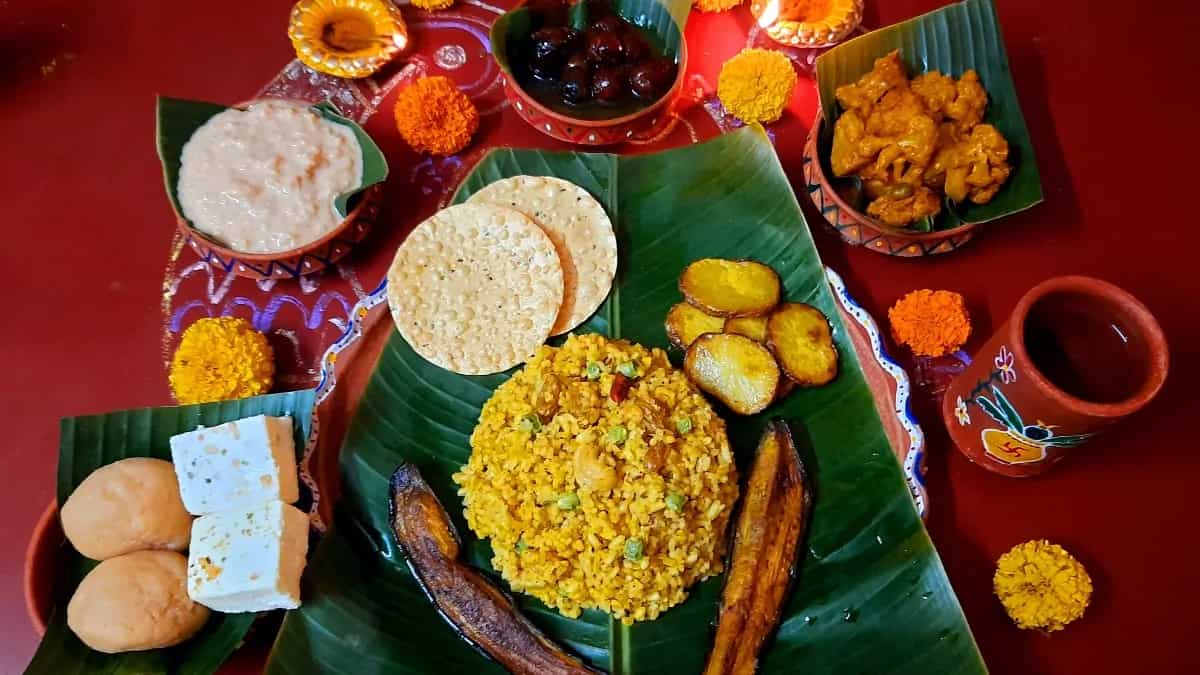
There is a strange, nostalgic ache that rises like a tidal wave of memories and emotions inside every Bengali when they hear the beats of dhaak in the distance, for it is a sign that Maa Durga is coming to take over all that might be currently plaguing you. Every Kolkata kid has their own precious childhood memories of new clothes, Ashtami anjali in traditional clothes, bhog served on sal leaves, and that first spoonful of khichuri eaten alongside neighbours who somehow become closer than family every October. Then there is the unmistakable para (neighbourhood) puja magic.
The pandal’s bamboo framework getting assembled, the club members arguing over the theme, the electrician arriving late, the treasurer worrying about the budget, and a group of volunteers insisting that everything is absolutely under control, while a rather loud fight between best friends is underway next to the pandal. Organising a neighbourhood Durga Puja is an exercise in affection, ambition and logistics. There is a creative pandal to be built, the idols of Maa Durga and her children to be brought home, permissions to secure, cultural programmes to organise, and crowds to manage. The puja committee must also ensure that Maa Durga's rituals proceed with due care and reverence, as mistakes are not acceptable.
And just when everyone thinks the biggest hurdles have been crossed, comes a task that can make even the most seasoned club secretary pause: feeding the para. Cooking bhog for hundreds, sometimes thousands, of people is nothing like preparing Sunday lunch for the family. The rice has to cook evenly in enormous vessels; the khichuri must not turn into a sticky or liquid-like mass; the labra needs to retain its character despite the quantity; and the payesh must be creamy without catching or burning at the bottom.
Add to the mix the pressure of cooking bhog precisely, ritual-wise (depending on the family or local customs) for the Goddess, serving on time, accommodating volunteers, and arranging mishti for distribution, your para’s puja kitchen can become a chaotic pandal of its own. The answer to the riddle is definitely not cooking everything at once or relying on any sole, heroic person to prepare the entire bhog for 500 people single-handedly. It is to smartly plan the para puja menu, calculate shopping and feeding quantities, divide responsibilities, and maintain food safety. So, here is a practical guide to getting your para's Durga Puja bhog right, even if this is your first year in charge.
Start By Finalising The Guest List
Before anyone orders Gobindobhog rice by the sack or starts bargaining for vegetables, stop and estimate the number of people that can be expected at each meal. You have to mindfully include priests, volunteers, kitchen staff, and committee members. After you are sure no one is left out, then you can add a sensible consideration and serving amount for visitors or devotees who ask for bhog prasad to take back home. Decide whether the menu will be the traditional khichuri-labra-chutney-payesh spread or whether festive dishes like dhokar dalna, chhanar kofta, luchi and alur dom can feature at separate meals or occasions.
And assign responsibilities early, not at the last moment. For example, just like at an administrative level, one person should manage procurement of ingredients, another handles the kitchen, a third oversees the serving, and someone else should take over the accounts. This kind of teamwork and equal division of labour ensures work occurs smoothly, as long as communication is maintained. Keep a written record of quantities, prices, and deliveries. It may seem excessively formal and official for a celebration built around devotion, but a missing sack of rice at dawn is considerably less romantic and quaint than it currently sounds.
Bhoger Khichuri 101
The quintessential Bengali Durga Puja bhog requires moong dal roasted until aromatic, alongside the steady accompaniment of Gobindobhog rice, ginger, whole spices, and ghee. For approximately 10 portions, you shall need 500g of rice and 300g of yellow moong dal. By volume, it is approximately 3 cups of rice to 1 ¾ to 2 cups of dal. Now you can easily calculate the proportion and shopping requirements for each ingredient, in case of emergency buying or budgeting issues.
Image credit: Wikimedia Commons
When cooking the khichuri, always keep stirring at the bottom to prevent sticking, and once it has been cooked, finish with ghee before serving. While it may appear an expensive trick, it is worth it once the khichuri is sampled. The trick to nailing large-batch khichuri bhog is to avoid using one enormous pot if the equipment cannot distribute heat evenly. Multiple manageable batches usually cook more consistently. Keep the consistency of the khichuri slightly looser than you want for the final serving, as the rice and dal continue absorbing liquid while resting.
Labra: A Delicious Chaos Of Vegetables
Labra brings a unique blend of savouriness, sweetness, colour, and a welcome change of texture to your plate of khichuri. For approximately ten portions, you shall require around 1kg pumpkin, 500g potatoes, 300g sweet potato, 300g aubergine, and 200g radish, alongside various flavourings and spices. This will help you get an idea of the proportion in which the vegetables should be picked and used to make a labra replete with ingredients that have attained flavour harmony.
Image credit: Wikimedia Commons
While cooking your labra, always pour in the firmer vegetables first to get extra cooking time, before following up with the softer veggies. It is very important that you resist the temptation to stir constantly, as labra should be soft and cohesive without becoming an undifferentiated mash.
Give Your Para Puja Menu A Second Act
Dhokar dalna is a great choice for committees wanting something more elaborate without adding meat or fish to their menu, or for an Ashtami dish. You can make the chana dal cakes ahead of time, cool and cut them, then fry them and add them to the ginger-spiced potato gravy shortly before service. Chhanar kofta is another festive and mouthwatering possibility, although the use of fresh chhana results in truly delicate koftas that require careful handling.
As for luchi and alur dom, they deserve their own service window. For around 8 to 10 people, you can make do with roughly 600g of maida for the luchi dough and 1.5kg of potatoes for the curry. This helps give you a healthy idea of how much to make for 100 guests without ending up with extra dough or running out of potatoes. The number of luchis per person matters, for if each guest is expected to eat five or six rather than two or three, you will have to increase the dough quantity accordingly. Also, always keep the curry-to-potato ratio consistent. Also, you can make your alur dom in advance, but fry your luchis close to serving time so that they reach every plate puffed rather than limp. However, keep in mind that trying to fry hundreds of luchis while supervising the main bhog service is an invitation to chaos.
Payesh, Chutney And The Mishti Negotiation
Payesh requires patience, not a hurried flame. To make 8 to 10 small portions, you shall require around 2 litres of full-fat milk with 100g Gobindobhog rice. A useful rule is to use 50 g of rice for every litre of milk. This is because that proportion is ideal, and payesh thickens as it cools, so reducing it too far while still on the heat can lead to unpleasant outcomes. If you are using jaggery, then you must let your payesh cool a little before adding it, as some varieties can split the hot milk. While there are endless varieties of Bengali chutneys, if you wish to make a classic date-tomato one, then believe in your ingredients after the panch phoron tempering and cook everything together until your chutney is beautifully glossy, sticky and viscous.
Image credit: Wikimedia Commons
Prepare it early enough to cool safely, but do not leave it sitting uncovered beside any open flames. Now mishti procurement is an entirely separate para-puja game. Ensure that you or the person in charge of it confirms the price per piece, size, quantity, delivery time, and packaging with the shop before the rush begins and an advance or full payment has been made. Keep the bhog sweets and distribution boxes counted separately, and nominate one person to be responsible for their distribution and delivery. This is because even a few missing sandesh can trigger a committee discussion longer than the cultural programme itself.
Para Durga Puja Dos And Don'ts
- Do use potable water and clean, sanitised vessels and serving utensils for all culinary endeavours.
- Do wash hands thoroughly and ensure that all the ingredients are covered.
- Do keep hot food at or above 65°C and cold food at or below 5°C, while keeping FSSAI’s guidelines in mind.
- Don't leave cooked rice, khichuri, or payesh sitting at room temperature for prolonged hours.
- Don't mix fresh food with leftovers or rely on smell alone to judge whether any dish is safe.
- Don't assign every job to the same volunteer, as large-scale cooking needs a team.