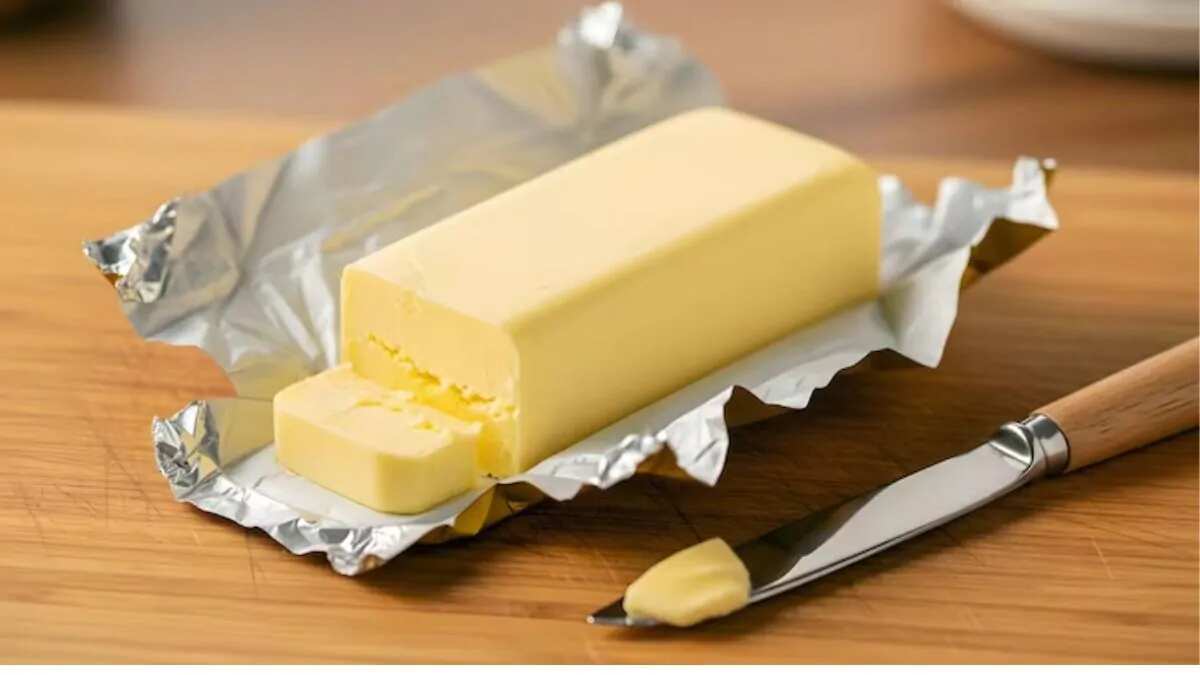
Walk into the dairy aisle of any supermarket, and without even a second thought, you go for picking the yellow block or tub labelled as 'butter'. The colour, creamy texture and familiar packaging can make many products look quite similar. But butter and a butter-like spread are not necessarily the same food. Under FSSAI norms, table butter is a milk-derived product and must have at least 80% milk fat. Fat spreads, on the other hand, can be made from milk fat, vegetable fats or even a mixture of the two, depending on the type.
That distinction is important because the product's appearance often reveals very little about what makes up its fat stage. A spread can be soft enough to scoop directly from the refrigerator, have a buttery colour and also work perfectly on toast, yet belong to a separate category. Even familiar or selected brands can sell different products under different names and formulations, so looking at the front of the pack is not always enough. The useful data is usually printed in the smaller print: the product name, ingredient list and nutrition panel, something that you should look at carefully. Here are 5 things to look for the next time you buy butter:
Start With The Exact Product Name
Before looking at the ingredient list, look at what the product actually calls itself. 'Butter' and “fat spread” are not synonymous terms. FSSAI's standards specify butter separately from the fat spreads, and the regulations mention that the word 'butter' should not be linked with a fat spread in its title.
This is the quickest first indication you can look at because packaging can use the same colours, shapes, and even the serving suggestions that make a spread look identical to butter. If the declared product name says fat spread, mixed fat spread or another spread type, treat it as a separate product rather than thinking it is simply a softer type of butter.
(Image credit: Freepik)
Look At Where The Fat Comes From
The ingredient list reveals more about the nature of the product. Butter is made from milk or milk products, whereas FSSAI categorises fat spreads according to whether their fat comes solely from milk fat, from a mixture of milk fat and vegetable fats, or just from vegetable fats.
Look for ingredients like milk fat, butter oil, cream or vegetable oils. In a mixed-fat product, both dairy and vegetable fat may occur. This does not tell you whether a product will taste good or bad, but it just tells you what kind of fat-based product you are purchasing.
Check The Milk Fat Or Total Fat Figure
The percentage printed on the pack can be useful to look for, but it has to be read in context. FSSAI's recent butter standard establishes a minimum of 80% milk fat for table butter, whereas cooking or white butter has a minimum of 76% milk fat. Fat spreads have a distinct composition range, and their fat content must be declared.
So, if a tub emphasises a large fat percentage, do not just read that as 'butter'. First, look if the number refers to the milk fat or total fat and also what product category is mentioned on the pack.
Read The Ingredient List Before The Front Claims
Words like creamy, rich, spreadable or buttery explain how a product is planned to be experienced; they do not by themselves prove that it is butter. The ingredient list gives you the exact composition.
For cooking, this difference is important because different fat systems behave in a different manner when heated, melted or spread. A product developed as a spread may have a softer texture than chilled butter, as its fat and water phases have been developed for spreadability. That is a product feature, not proof that it is specifically butter.
(Image credit: Freepik)
Check The Nutrition Panel And Serving Information
The nutrition panel is helpful as a second check rather than a replacement for the product name. Look at total fat and, where declared, saturated fat and trans fat, but do not use one number to determine what the product is. The regulatory classification and ingredient list tell you if you are looking at butter, milk-fat spread, mixed-fat spread or vegetable-fat spread. FSSAI needs fat content to be displayed for fat spreads, with milk-fat content also displayed for mixed-fat spreads.
The simplest habit is hence to read the pack in this order: product name, followed by the ingredient list, followed by fat declaration, followed by nutrition panel. That takes less time than attempting to judge a spread by its colour, consistency or how much it resembles the butter sitting beside it.