


 Share
Share

Buttermilk has always been a beloved summertime beverage which gives an instant refreshing relief from soaring heat. This fermented milk drink is beneficial for the body in many ways and is helpful in treating digestive ailments, improving gut health and giving the body an antioxidant boost, thus detoxifying the body. Not only does it give a satisfying relief from cravings, but it also relieves fatigue and has a relaxing effect on the body. Apart from drinking plain buttermilk, you can try numerous other regional recipes from around India to elevate your buttermilk drink to a whole new level. Here are 8 regional buttermilk recipes you should try:

Image Credit: Wikimedia Commons
Neer Mor, Tamil Nadu
Originating in the state of Tamil Nadu, neer mor is a traditional drink made of the thinner version of yoghurt-based buttermilk. In Tamil, ‘neer ’ means water and ‘mor’ means buttermilk, so the neer mor drink is basically a watery buttermilk which is tempered with sattvik spices. The beverage is especially prepared during the festival of Ram Navami and offered to Lord Ram as naivedyam or prasad. It is only after Lord Ram has had a bhog of this drink that it is offered to family and friends. What’s more, the tempering used in neer mor also improves its electrolyte and calcium content, making it a truly cooling, refreshing and detoxifying drink.
Mattha, Bihar
The name ‘mattha’ is another term used for buttermilk, and some might confuse mattha with chaas, but the very interesting difference you might always forget is that mattha is spicy while chaas is mainly just sweet. Mattha is religiously served as a welcome drink at every Indian household because of the strong flavours and spices that always leave one wanting more. The beauty of this drink and the incredible charm to lure someone lies in a mix of both sweet and spice. Not only this, mattha can act as your partner when you are feeling low or have an upset stomach, helping you in curing digestive problems. What’s even better is that you can drink it any time of the day, after lunch or before breakfast and even with dinner.
Mohi, Sikkim
Mohi is a traditional Nepali buttermilk drink that evokes warmth and trust in the community because of their inherent connection to family and cultural identity. It contains natural probiotics that enhance gut health, ease digestion, and can even help with constipation. The flavour is spicy and tangy on the taste buds, with ample ways to customise it the way you like. Many regions around Sikkim, North Bengal and Nepal make it accordingly using a wooden churer called madan. The community drink it as an alternative to sugary beverages. Farmers drink it to relieve thirst and exhaustion while working under the sun. Some flavours for mohi include roasted jeera, fresh mint, black salt, ginger and green chilli and sometimes a smoky base similar to mattha. Sometimes, mohi is made with Sichuan peppers or timur to give it that extra spicy kick. Mohi is described as ‘laghu’ in Ayurveda since it is a light and readily digestible appetiser that cleanses the body's channels and alleviates imbalances.
Thambuli, Karnataka
When summer arrives, thambuli is a yoghurt or buttermilk broth that is prepared in almost every household from locally sourced or home-grown produce and ingredients like water spinach, mango ginger, ginger, brahmi leaves, and more. This light and runny broth is paired with rice during meals or simply served as a drink as a coolant, especially during the hot and humid summers. Thambuli gets its name from blending two Kannada words; ‘, meaning ’ cool and ‘huli’, meaning sour broth. The cool and sour broth or curry made from thimmare or brahmi leaves is popular for all seasons. It is believed to have medicinal properties and is best consumed during the summer and sometimes between the changing seasons, when illnesses are in the air. Right from ajwain and jeera to banana stem, ash gourd, moringa, spinach and sandal leaves, thambuli can be prepared in one way or another to beat the summer heat, include varieties of local produce in your meals and consume a balanced diet.
Vaghareli Chaas, Gujarat
The vaghareli chaas or tempered buttermilk gets a mention in many articles on Gujarati cuisine, and that makes one wonder if it is a drink or an addition to a meal. In Gujarat, this as a beverage, and it is an important part of the summer meals in many homes when they seek a drink that can chill their body. The masala added is roughly pounded roasted jeera for its cooling properties and salt. The vaghareli chaas comes in two variations, with the first involving pouring oil tempered with jeera, curry patta, and chopped green chillies over buttermilk and serving it as a beverage, while the latter involves pouring buttermilk over chilli-garlic tempered hot oil. In all versions, the buttermilk is not cooked. While the former is served as a beverage in urban homes and upscale restaurants serving Gujarati thali meals, the latter has been a Kathiyawari staple. It is served as part of the dinner with rotla, bhakhri, or khichri.
Ghol, West Bengal
Ghol, West Bengal's signature buttermilk, is a staple of the summertime drink and has been around for decades. Gondhoraj ghol, a lime-based variant, stands out from the crowd due to the usage of gondoraj lebu, which is a distinguishing feature. This Bengali-exclusive lemon tastes and feels far more like kaffir lime than your typical nimbu. For preparing this light concoction for summers, all you need is some yoghurt, black salt, lime juice, lime zest and sugar. Bengali people also like to add spices like coriander seeds, cumin seeds, and fenugreek seeds to ghol.
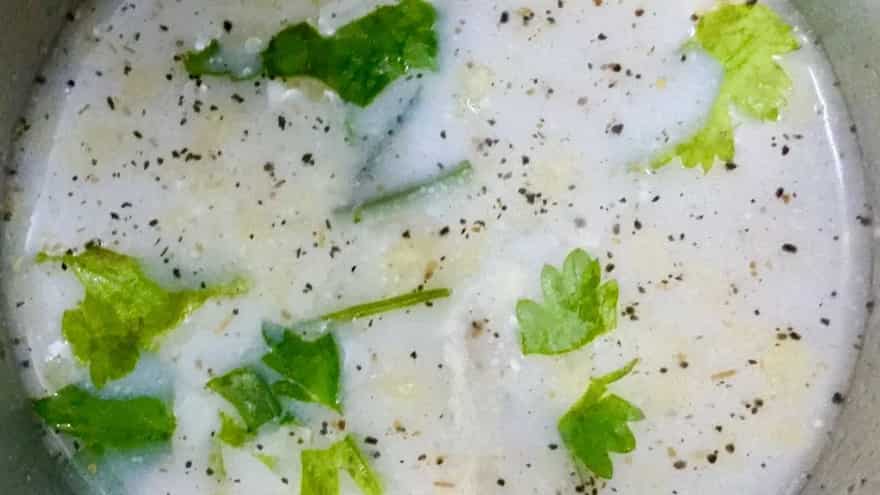
Image Credit: Wikimedia Commons
Gurus, Kashmir
In Kashmir, buttermilk comes to life in the form of gurus by a delicate blend of technique and intention, with butter-making at its core. Fermented milk is put into a tchod and worked with the wooden de'on, which is pulled rhythmically by the lam e raz rope. This motion is more than just mechanical; it requires care and control to allow butter to gradually separate and rise in rich, golden layers. The gurus-gour naturally recognised the moment, knowing when the butter was ready to be lifted. What remained was gurus, a light, acidic, and pleasant buttermilk. In the Kashmiri summer, it served as a natural coolant, cutting through the heat, facilitating digestion, and replenishing energy after long hours of work, providing both sustenance and relief. Today, the ancient practice of churning gurus is diminishing, with fewer homes maintaining the labour-intensive procedure. As modern ways and lives take control, this once-everyday ritual is only remembered in bits, rather than consistently practised.
Sambaram, Kerala
Kerala has given the country so many gems when it comes to food and beverages, and amongst so many gems, there is sambaram or morum vellam, which could be labelled as Kerala’s version of buttermilk. This Kerala-styled spicy buttermilk has green chillies, curry leaves, ginger, and other spices and is refrigerated for a few hours before serving. This is done to make sure that all the ingredients seep inside the buttermilk. Keralites can survive on this drink, and now you know why! Besides, it is a go-to drink for daily wage labourers who toil in the scorching sun all day. Apart from being a refreshing and hydrating drink, it gets ready in less than 5 minutes.




