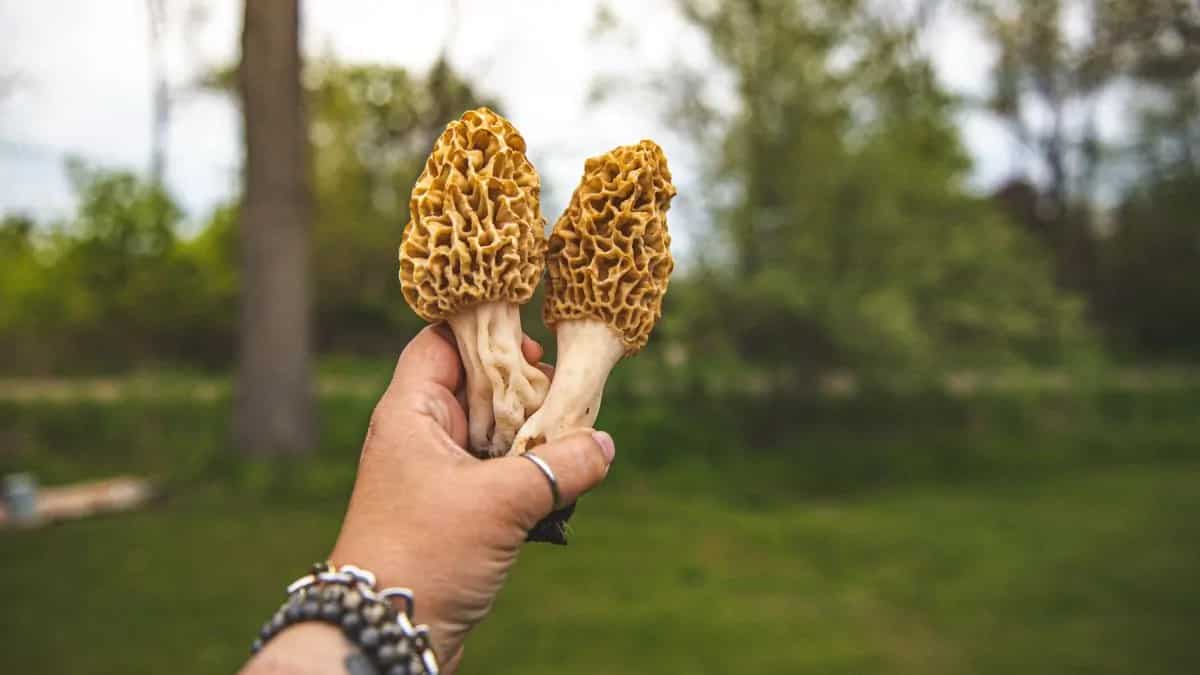
Gucchi morels have recently found themselves in the limelight after the rare Himalayan mushroom appeared on the menu at the BRICS gala dinner, which was hosted in New Delhi on September 12, 2026. Known as Gucchi Marmik, the dish was among the regional Indian preparations served to BRICS delegates and other leaders.
The attention it is grabbing is quite reasonable. Gucchi is not the kind of mushroom that grows neatly in trays or can be found at a supermarket. It is a wild morel, gathered for a short period in the Himalayan region, and its supply relies heavily on weather, terrain and also the season.
But the price tag is only one part of the story. Gucchi has a long place in Himalayan food culture, especially Kashmiri cooking, where a small quantity can change a pulao, gravy or festive dish with its deep, earthy fragrance.
What Is Gucchi Morel?
Gucchi, also known as guchhi or guchi, is the Indian name that is used for wild morels. The mushroom is easy to identify once you know what to look for: its cap has a unique honeycomb pattern of ridges and pits, while the inside is hollow.
In India, wild gucchi is linked with parts of Jammu and Kashmir, Himachal Pradesh and Uttarakhand. It appears in spring, especially as snow melts and appropriate conditions set in the mountain forests. The exact locations and timing can be inconsistent, which makes finding it far more complicated than simply gathering it as a cultivated mushroom.
(Credits: Unsplash)
Why Is Gucchi So Rare?
The biggest difference between gucchi and regular mushrooms is that you cannot scale up their production in the way you can with button or oyster mushrooms.
Morels have complex growing needs that involve soil, moisture, temperature changes, vegetation and other environmental requirements. Commercial cultivation has stayed unreliable, so Himalayan gucchi is still mostly wild-foraged. Its fruiting season is also short, leaving foragers only a limited time-frame to discover it.
Then comes the terrain. Foragers have to explore mountainous forest areas on foot, often with no confirmation of what they will find. One day may deliver a useful harvest; another may produce very little. This combination of a small natural supply, uncertain results, and labour-intensive collection is what increases the price.
What Does Gucchi Taste Like?
Gucchi has a taste that is more prominent than that of mild, familiar mushrooms that are commonly used in everyday cooking. Its appeal lies in its earthy, savoury and deeply fragrant character, with a slightly meaty texture that becomes particularly noticeable after cooking.
Dried morels become tight and a bit chewy after rehydration, whereas their honeycomb-like structure holds onto the sauces and the gravies. That is one reason a fairly small quantity can make its presence felt in a dish.
How Is Gucchi Used In Cooking?
Gucchi is generally sold dried, making sense given its short wild season. Before cooking, the dried mushrooms are first rehydrated in water and then cleaned carefully because the folds and cavities of the cap can carry dirt or grit. The soaking liquid can also be strained and then used in cooking, as it carries some of the mushroom's concentrated taste.
In Kashmiri cooking, gucchi is especially associated with gucchi pulao, where the mushroom becomes one of the main ingredients rather than just being an addition. It can also be used in rich gravies and festive dishes, letting its aroma work along with the spices without overpowering them.
Outside traditional Indian cooking, morels are also prized in European and modern restaurant kitchens as well, where they are sautéed, cooked into sauces or paired with butter, cream, grains, asparagus, peas, leeks, potatoes and fresh herbs like thyme and parsley. They also work well when added to risotto, pasta, eggs and chicken, where their earthy taste can stand out without needing heavy seasoning.
One important point to note is that morels should be cooked rather than eaten raw. Proper cooking is part of their normal culinary preparation.
(Credits: Unsplash)
Why Does Gucchi Cost So Much?
There is no single 'gucchi price'. Grade, size, quality, season and market availability all make a difference. Recent reports have mentioned premium dried gucchi at roughly Rs 25,000–Rs 40,000 per kg, while other reported market prices have varied beyond that range.
And because drying removes much of the mushroom's moisture, a kilogram of dried morels represents considerably more fresh mushroom material.
That makes gucchi less of an everyday ingredient and more of a seasonal delicacy. Its value comes not simply from being a mushroom that costs more, but from the fact that every batch has the luck of a wild harvest. The BRICS dinner may have presented it to a wider audience, but in Himalayan kitchens, gucchi has been prized long before it became a headline.