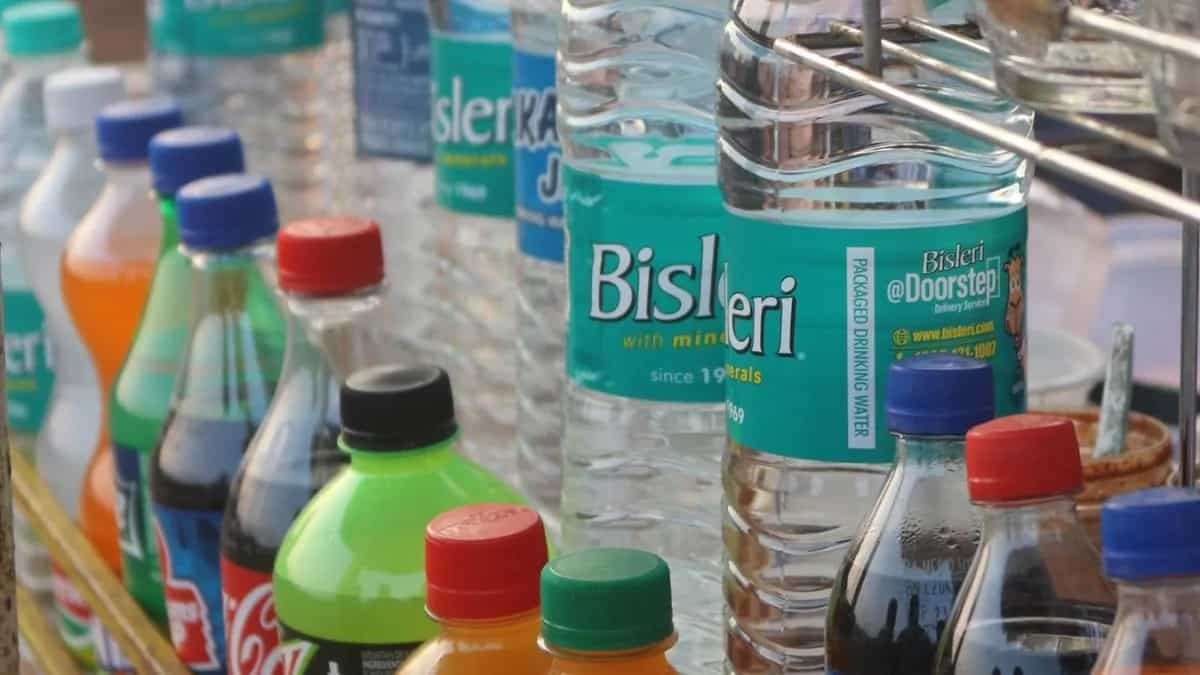
Few brands in India get to become a noun. Nobody on a railway platform asks for packaged drinking water. They ask for a Bisleri, and the vendor hands over whatever is coldest. That is quite an achievement for an Italian label that arrived in Mumbai in 1965 and was bought by the Parle Group in 1969. So when the Food Safety and Standards Authority of India said over the weekend that it had sanctioned prosecution against Bisleri International after a sample of its packaged drinking water was declared unsafe in laboratory tests, the news hit with the particular thud we save for things we never think to question. The brand that taught a nation to pay for water is now being asked to account for what was in it.  
What FSSAI Found In The Bisleri Water Sample
The story begins in Goa, more than a year ago. On 30 September 2025, FSSAI collected six samples from Bisleri's Goa facility, all from a batch produced that month. Five met the standards. The sixth showed bromate at 12 micrograms per litre, against a limit of 10. Bisleri appealed, and the sample went to a referral laboratory on 22 November 2025. That lab found bromate within the limit but flagged the presence of polynuclear aromatic hydrocarbons, better known as PAHs. FSSAI's view, set out on social media, is that the findings establish violations relating to unsafe food under the Act, and that sanction has been granted to prosecute Bisleri International.
How Bisleri Has Responded To The FSSAI Action
Bisleri's reply, issued on Monday, is firm and a little bewildered. The company says the issue concerned one batch from its Goa plant, which is one of 143 plants in its network. It had the same sample tested at another FSSAI-approved laboratory, which also found bromate within the limit, and it sent those results to FSSAI's Western Regional Office in a letter dated 2 February 2026. After that, it heard nothing from the regulator and understood the matter to be closed. It says it never received the reported notice by email or in hard copy, and could not find it on FSSAI's website. The company also points to more than 90 quality tests across its 10-step manufacturing process. What the statement doesn't address is the PAH finding, which is the very result FSSAI cited after the appeal. Until a court weighs in, the two accounts sit uneasily side by side.
Bromate And PAHs Explained: Should You Be Worried?
Bromate is the unwanted by-product of a good intention. It forms when bromide that occurs naturally in source water reacts with ozone, which is used to disinfect drinking water. How much forms depends on bromide levels, pH, the amount of ozone and the reaction time. In laboratory animals, long-term high exposure caused kidney damage and cancer, though the risk to humans remains uncertain. PAHs are a different family altogether. They are organic compounds formed when fossil fuels burn, and they usually signal pollution. Studies have linked several of them to cancers of the skin, lungs, bladder, liver and stomach. Still, context matters. A reading of 12 against a limit of 10, in one sample from 2025, is no reason to panic about the bottle in your bag today. It is, however, a fair reason to ask harder questions of an industry most of us take on faith.
A Bigger Problem With India's Packaged Drinking Water
Bisleri is the biggest name to land in the dock, but hardly the only one with explaining to do. In 2023 to 2024, 333 of 1,300 packaged drinking water samples failed to meet standards, down from 650 of 1,776 the year before. That is still roughly one bottle in four. Oversight has shifted too: mandatory BIS certification for packaged drinking water and mineral water was dropped in October 2024, and FSSAI brought in a testing scheme from 1 January 2026. And with Bisleri holding roughly 33 per cent of India's packaged drinking water market, one batch from Goa has become a national conversation.
Image credit: Pexels
The Case For Bilseri, Bislari And Friends
Which brings us, inevitably, to the cousins. Every Indian traveller has met them at a highway dhaba or a crowded bus stand. In 2019, Bisleri itself posted a picture of its fakes, among them Belsri, Bilseri and Brislei, with the reminder that not every bottle of water is a Bisleri. Internet users have since spotted Bistar, Bestlere and even Bill Gates on shop shelves. Bisleri has fought back for years. It once made camels its brand ambassadors, on the logic that if camels can tell the difference, humans surely can. And as recently as August, the Bombay High Court temporarily stopped a Karnataka bottler from using the name Bislie, finding it prima facie deceptively similar to Bisleri. 
Now look at the cousins' record. None of them has been named by FSSAI this week. None has had a bromate reading published, a referral laboratory called in or a prosecution sanctioned. Bilseri has never once had to issue a defensive press statement. On paper, the knock-offs have never looked cleaner.
The trouble is that a clean record and a clean bottle are not the same thing. The cousins mostly escape headlines because nobody can find them long enough to test them. When officials in Baghpat did track some down, they found shops and warehouses stocked with bottles called Bislari and Bilseri, filled in unhygienic conditions and passed off as the trusted brand. No ozone, no ten-step process and certainly no 90 tests, just a cap, a label and a great deal of optimism. Bilseri isn't innocent. It simply has a better alibi.
What Bisleri Drinkers Should Do Now
For now, the sensible response lies somewhere between alarm and indifference. Check the spelling before you pay, because on most highways the bigger risk is still the bottle that only looks like Bisleri. Look for the FSSAI licence number on the label, keep bottles out of direct sunlight and follow the case as it moves through the courts. The PAH question deserves a full public answer. Bisleri built its fortune on the promise that you could trust what's inside the bottle without a second thought. This week, the regulator asked for that second thought. The rest of us could probably stand to give it one too.