


 Share
Share

A spoonful of hot, fiery red chutney can make momos, samosas, pakodas and many other street-food favourites instantly more alluring. But a recent food-safety seizure in Gujarat has put in the limelight what may be hiding behind that bright red colour. The Gujarat Food and Drugs Control Administration (FDCA) seized around 700 kg of red chutney from a provision store in Palanpur in Banaskantha district during an inspection drive. The stock was reserved in 140 unlabelled jars that weighed around 5 kg each, with a reported value of around INR 20,940.
The seizure does not signify that every red chutney that is being sold on the food stall is adulterated. However, it is a useful reminder to pay close attention to the source, packaging, appearance and storage of the chutney. Some signs can raise doubt, but adulteration alone cannot be verified simply by looking at or tasting the product. However, from the recent seizure, as a customer, you can look for the following signs when enjoying street food, so that in case of any mistrust, you can keep yourself and your family safe from consuming it:
Watch Out For An Unnaturally Bright Red Colour
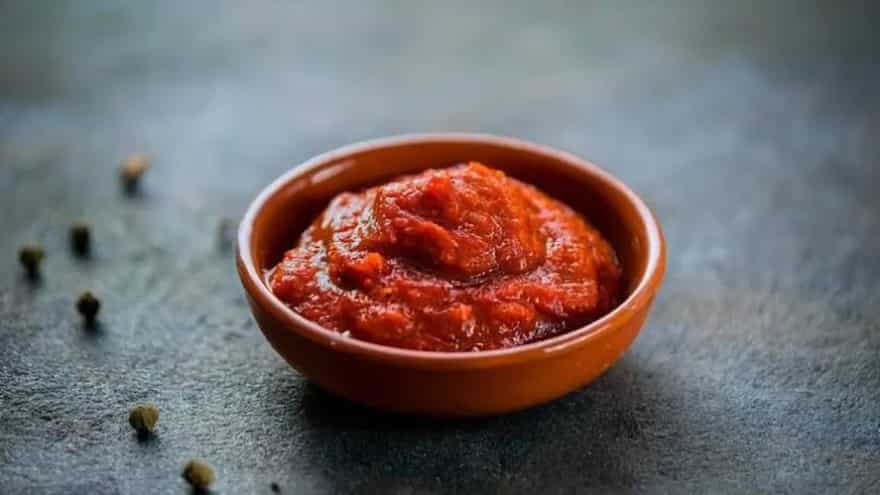
Red chilli chutney naturally differs in colour relying on the chillies and other ingredients that are used. A colour that looks unusually deep, almost fluorescent or thoroughly even, can thus be a reason to pause and rethink. Artificial colours and non-food-grade colouring agents are possible adulterants that are often used to make chutneys look more tempting or lower the cost of production, but you cannot recognise them simply by looking at the chutney.
The useful takeaway is to compare the colour with the ingredient list and the product you have got before. If the colour appears to be strikingly different and other things seem unusual, selecting another product is the safer option.

(Image credit: Freepik)
A Chemical-Like Smell Is A Red Flag
Your nose can tell you when something feels off, particularly when a chutney smells significantly different from the ingredients it is supposed to have. If you get a chemical-like, solvent-like or otherwise uncommon odour, reconsider eating it.
An unusual smell does not reveal exactly what is wrong, but it can suggest that the product may have been stored poorly, has been spoiled or contains an ingredient you were not anticipating. If the aroma is undoubtedly off compared to the fresh batch of the same chutney, it is better to leave it.
Check The Texture Before Taking A Bite
Texture can also be a useful hint when something seems off. Gritty texture, extreme oil separation or an odd, lumpy consistency are signs that may be worth paying attention to. A chutney that appears abruptly sandy, has unfamiliar particles or feels very different from the type you usually eat deserves a closer glance.
Some separation is totally normal in chutneys, as the ingredients like oil, water, spices and vegetables do not always remain completely blended. The important point is whether the texture looks quite different from the usual consistency. If you notice an unfamiliar texture along with a weird smell or appearance, believe it instead of considering it as another new recipe.
An Unusual Bitter Or Metallic Taste
A chutney that unexpectedly tastes strongly bitter, metallic or chemical-like should be treated with caution, particularly if the flavour is far different from what the ingredients indicate. This does not automatically mean the chutney can be adulterated, as sometimes chillies, spices, preservatives and other ingredients can also impact the taste.
A strange taste cannot tell you if a product has an adulterant. Ingredients, too much spice, preservatives or changes during storage can also impact flavour. But when the taste is undoubtedly abnormal, particularly alongside an unusual smell, it is sensible to discard instead of continuing to eat it.
(Image credit: Freepik)
Unlabelled Jars Make Chutney Harder To Trace
The recent seizure also underlines a simpler issue: knowing where the chutney you consume comes from. The seized red chutney was reportedly stored in unlabelled jars; that means it had no information for consumers to look for about its source or ingredients.
When buying packaged chutney, look at the label for the manufacturer details, list of ingredients, FSSAI licence or details of registration, batch number and date information. A sealed, labelled product is much easier to identify and trace in case of any issue. In case you are buying loose chutney, ask the seller about its origin and preparation if possible. A product with no identifiable basis gives you fewer tracks to verify its safety or report a problem later on.
What Should You Actually Do?
Think of these signs as a quick check, not a home adulteration test. One uncommon feature does not automatically mean that the chutney is unsafe to consume. A naturally dark red chilli, a bit of oil separation or a strong spice aroma can be perfectly okay.
The concern rises when many things do not add up, for instance, an intensely distinctive colour mixed with a chemical smell, weird texture or unexplained taste, especially when the product also has no clear source or labelling.
And if something looks, smells or tastes distinctly bad, you do not need to figure out why before choosing against it. When in doubt, pick a properly labelled product from a traceable source.




