Basant Panchami, also known as Vasanat Panchami or Saraswati Puja, welcomes the “basant ritu”, i.e. the spring season. Relieving everyone of the bitter cold, the festival also marks the birth of Goddess Saraswati, the deity of knowledge and wisdom. Symbolising renewal, Vasant Panchami, falling on the 23rd of January, also marks a hopeful phase in the agricultural cycle.
Dedicatedly celebrated by students, teachers, and artists to seek Goddess Saraswati’s blessings, the festival is a prominent event in educational centres. To know more about the shubh muhurat, why the festival is celebrated, and the traditional foods prepared for Saraswati Puja, scroll through this comprehensive guide.
When Is Basant Panchami 2026 To Be Celebrated?
As the name suggests, Basant Panchami is observed on the fifth day (panch) of the Megha month. As for 2026, the shubh muhurat starts at 2:28 AM on the 23rd of January and commences at 1:46 AM on the 24th of January. Since the Uday tithi falls on the 23rd of January, the rituals and Sarasswati Puja will be performed on the same day.
Why Is Basant Panchami Celebrated? Know The Significance
There are many underlying reasons for celebrating Basant Panchami. Depending on the different regions of India, here is the major significance of the festival.
The Onset Of Spring Season
Image Credit: Adobe Stock
In the Northern parts of India, Basant Panchami marks the time when the fog starts to clear, followed by the spring season. Filling the farms with a beautiful yellow colour, the sarson (mustard) plants are in full bloom. It is also the time when the harvest takes place, thus marking the new beginning of the fresh set of crops.
Saraswati Puja
As per the Hindu mythology, Vasant Panchami also marks the day when Goddess Saraswati was born. To celebrate the birth of the deity of wisdom, devotees worship Goddess Saraswati. Vidya Arambh, which translates to starting the education, the day is also considered to be the most auspicious day for students to seek the blessing of the Goddess.
Celebration Of The Yellow Colour
The yellow colour dominated the festival. Symbolising positivity and optimism, devotees wear yellow, fill their homes with yellow-coloured flowers, and prepare yellow dishes as bhog and prasad.
Traditional Dishes For Basant Panchami
The dishes prepared for Basant Panchami have a yellow hue. Here are some of the traditionally prepared foods you can whip up for the festival.
Meethe Chawal
Image Credit: Adobe Stock
Meethe chawal, or saffron rice, is particularly made in the Northern states of India, like Punjab and Haryana. Made with long-grained Basmati rice, meethe chawal is an easy-to-prepare, fragrant dish. The freshly prepared rice is infused with saffron (kesar) and a little haldi. Cooked with a generous amount of ghee, jaggery or shakkar, meethe chawal are then spiced with cardamoms and cloves.
Boondi Ke Ladoo
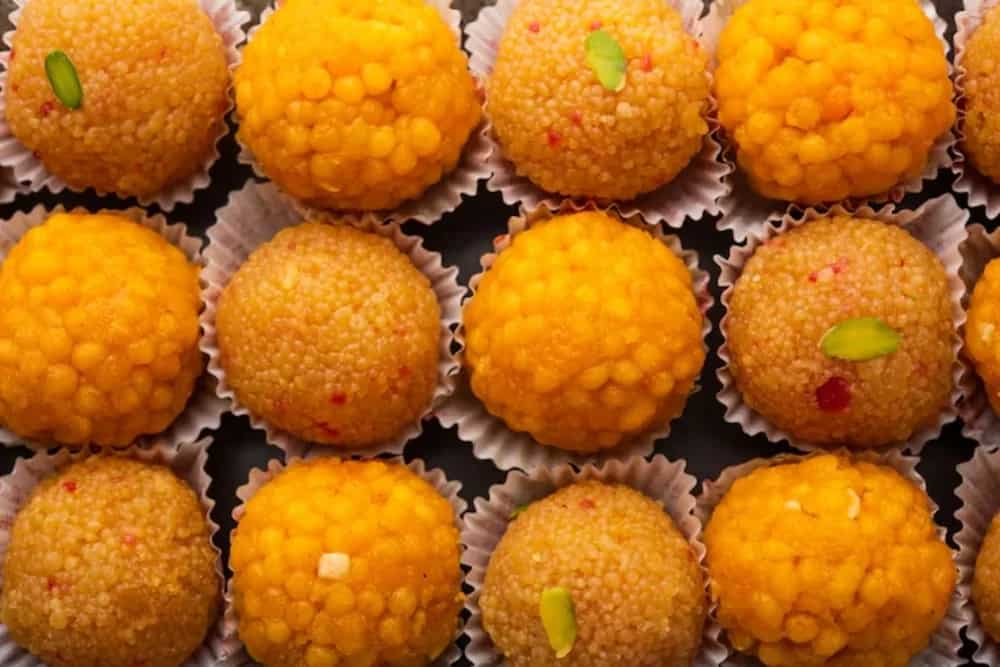
The yellow-coloured ladoos are also a traditional bhog offered to Goddess Saraswati for Basant Panchami. All you need to make boondi ke ladoo is a besan-based batter of the perfect consistency and a boondi jhara, also known as a perforated ladle, and you’ll be good to go. Mix the boondi with desi ghee, shape the ladoos, and garnish them with sliced pistachios.
Gurer Payesh
In West Bengal, gurer payesh is typically made for Saraswati Puja. Replacing the sugar used to make kheer, the Bengali dessert is made with nolen gur, aka date palm jaggery. With a smoky sweetness and a golden hue, the creamy dessert is first offered to the Goddess and then served as prasad.
Malpua
Malpua is another sweet that can be made for Vasant Panchami. It can be whipped up by deep-frying small portions of a batter made with flour, sugar, milk, and ghee. Malpua is also deemed to be one of the oldest Indian desserts, and it still carries the legacy of the past. Soaked in chashni, or sugar syrup, the dessert is a must-have for Saraswati Puja.
Haldi Doodh
Image Credit: Freepik
Haldi doodh, or kesar doodh, or golden milk, is popularly made to pair with all the savoury dishes made for Basant Panchami. All you need to do to make it at home is boil some milk and add some haldi, cinnamon and black pepper. Once the milk comes to a boil, stir in a spoonful of honey or sugar, taste and adjust the level of sweetness. Pour it into a glass, and your festive and soothing beverage will be ready to serve.