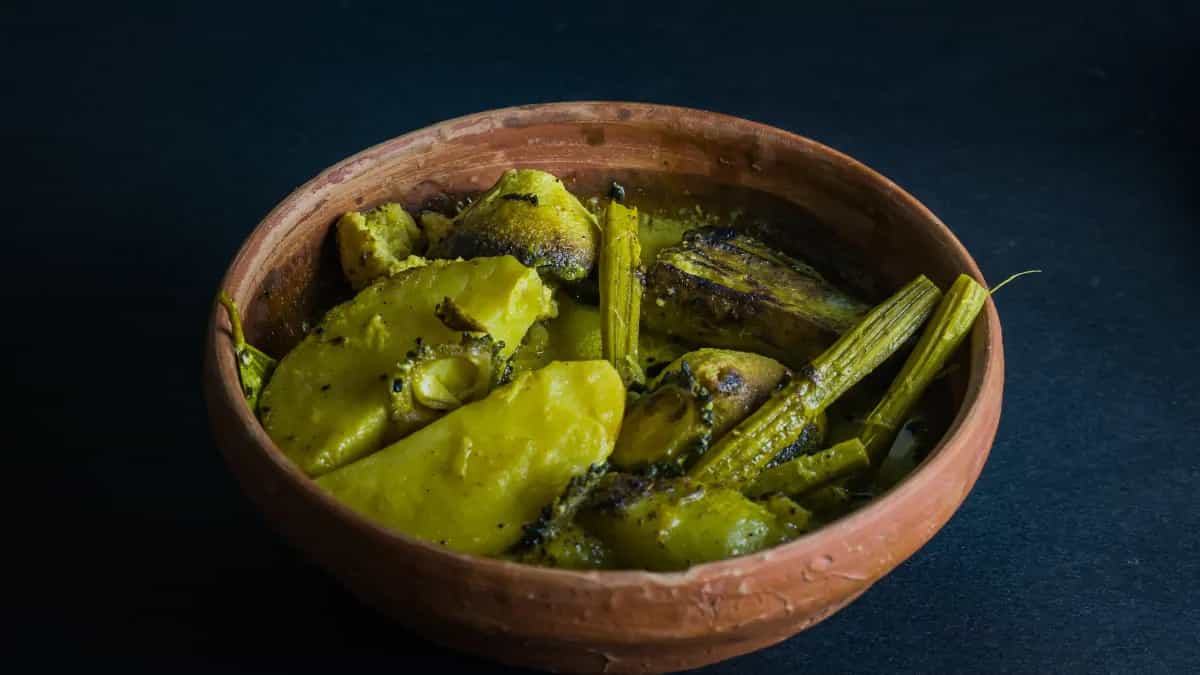
Basanta Panchami or Vasant Panchami, no matter how you pronounce it, for any Bengali, Sarswati Pujo is one of the most favourite festivals during Winter. Be it the day of wearing a dhoti and Punjabi for the first time or draping mum's saree, Saraswati puja is also famous for the tradition of Gota Seddho (whole boiled) and Sheetal Shasthi.
Slurrp reached out to Bengali home chefs and bloggers to gather their memories of Gota Seddho, its process and how beautifully family traditions are carried out through the generations.
What Is Gota Seddho And Shitol Shoshthi And How Is It Significant Among bengalis?
For the Ghoti people, gota sheddho is held the day after Saraswati pujo. A beloved winter dish is Gota Sheddho, a Bengali lentil soup cooked with whole vegetables. It is especially eaten on Shitol Shoshthi, which is made on Saraswati Puja night. With influences from Bengali food, this dish is served on Shitol Shoshthi. The word "Gota Sheddho" means "whole boiled."
In its original form, Gota Seddho is made with six kinds of vegetables: baby spinach, peas in their pods, baby eggplant, and potatoes. Along with green moong dal, six of each vegetable are used. While some people like black urad dal better, some families don't eat green moong dal, so they choose black urad dal instead.
On Shitol Shashthi, Bengali mothers pray to Goddess Shashthi to protect and bless their children. Since the word "Shitol" means cold, tradition dictates that no stove is lit and no fresh cooking happens on this day; instead, families eat delicious meals and treats prepared the day before during Saraswati Puja. A unique part of the celebration involves honouring the Shil Nora (stone grinder) by giving it a day of rest and even worshipping it.
The Gota Sheddho celebration brings together all the families. Right the day after Saraswati Puja, the meal is considered the true end goal of the puja, taking care of one another and fostering relationships.
Gota Sheddho is a profound symbol of humility and balance in Bengali culture. By using whole, unpeeled vegetables, it honors nature’s purity and bridges the gap between the divine and the everyday. This "unpretentious" dish serves as a spiritual reminder to live with moderation and sincerity, teaching families to find beauty and gratitude in life's simplest forms of nourishment.
Slurrp Reaches Out To Bengali Home Chefs and Food Enthusiasts For Their Memories Of Gota Seddho
Chef Samita Haldar, known as a popular Bengali home chef by passion and profession, shares her recipe along with the good old days' memories of Gota Seddho.
"In our family, Gota Seddho is traditionally cooked on the night of Saraswati Puja and eaten the following day with panta bhat and kuler tak by mothers. It is first offered to Ma Shosthi 🙏. According to belief, eight small brinjals are added for the well-being of one child.
The vegetables used include small brinjals, potatoes, whole green peas, rangalu (yam), spinach with roots (goda), and either whole green moong or whole golden moong. All the vegetables are washed thoroughly and carefully checked to ensure there are no cuts. They are then placed one after another in a large cauldron or hadi, water is added, followed by salt."
She further mentions, "The cauldron is placed on the fire, and the dish is never stirred while cooking. Once cooked, it is set aside.
The next day, a fresh paste of fennel (saunf) and ginger is prepared and mixed in, along with fresh mustard oil, just before serving."
There are certain variations as well in this traditional Bengali cold soup. All the vegetables are deep-fried in hot mustard oil first, then placed in a vessel and boiled. Roasted panch phoron and ginger paste are added.
"The taste I remember from my childhood was sharp, robust, and almost pickle-like. In some families, the variation comes with roasted paanch phoron powder. Peanuts and radish are added along with the leafy greens, and the dish is stirred while cooking, making it quite different in texture and flavour. All these vegetables are seasonal and together act as a natural immunity booster.
Though the technique and ingredients vary from family to family, the spirit of Gota Seddho remains rooted in tradition, care, and nourishment."
Samita remembers how in her ancestral home, Saraswati Puja lunch used to be a time-honoured tradition. Khichuri, slow-cooked with rice and lentils until soft and fragrant was paired with bandhakopi’r dalna or phulkopi’r rosha (cauliflower curry) along with chanar dalna (Cottage cheese curry) and a crispy papad. To round up the bhog, there always used to be a kul er tok, a tangy, mildly sweet chutney with jujube. There’s a belief among Bengalis that no one should eat kul or plum before Saraswati puja. And this Kul er tok certainly turns out to be a long-cherished one.
Bengali Home Chef Jayeeta Ghosh, Owner Of Haarir Khobor
Another Bengali Home Chef, Jayeeta Ghosh, owner of Haarir Khobor, draws inspiration from her Bengali roots, family traditions, and her travels. She shares her happy memories from childhood about Arandhan and Gota Seddho, ‘nature’s seasonal immunity platter’.
She mentioned, “My earliest memory of Arandhan is deeply tied to the calm before Saraswati Puja morning. The kitchen had no flames, no frying, just washing, soaking and boiling. I still remember waking up to the smell of raw mustard oil and winter vegetables soaked in nostalgia. That first bowl of cold Gota Seddho, traditionally served in enamel bowls, is simple and easy without heat. Sometimes we would keep the extra leftovers and would relish it with puffed rice in the dinner the following night.”
Jayeeta remembers how they never over-mashed the veggies and the freshly crushed mustard seeds, some ginger cubes and hand-pressed raw mustard oil used to bring the fragrance to the dish.
“That earthy yet refreshing and sharp, nose-tingling smell of raw mustard oil mixed with the bitterness of mustard seeds, neem leaves, sojne phool, make this cold soup rustic yet beautiful. In my kitchen I try to keep Sheetal Sasthi alive by respecting the ritual, not rushing it. I prepare Gota Seddho the traditional way only on request—slow boiling, minimal seasoning, zero shortcuts”, she added.
Luna Chatterjee, Bengali Food Blogger
Luna Chatterjee, the Curator of Bengal Chambers Foodpreneurs, Brand Strategist and a former teacher, shares her earliest memories of Gota Seddho with Slurrp.
“I was in my 20s when the first memory of Gota Seddho came to me. I am essentially from a ‘ Bangal Bari ’ and Gota Seddho is not part of our culinary ritual but I was lovingly fed Gota Seddho by someone whom I called Mamuni, she hailed from a North Kolkata bonedi bari and she made one of the best Gota Seddho which essentially had all the seasonal vegetables and was drizzled with fresh Mustard Oil (what we called cold pressed in those days came from the local mustard oil farm called Ghani) and trust me the oil opened your nostrils with the jhaaj, the pungent sense of smell, you can feel on your tongue and mouth.”
Every household has a 'rule of six' or a specific choice of lentil—be it Kalo Biulir Dal or Shobuj Moong. Luna shared that she tried making Gota Seddho tried replicating what Mamuni made but ‘that taste was heavenly and was not meant to be replicated’. “For me Gota Seddho must have the ‘ Sobuj Begun ’ & ‘ Sheem ’ and I prefer Sobuj Moong as my choice of lentil.”
“Gota Seddho doesn’t look appealing at all !! It lacks the colour of turmeric or the flavour of spices so prevalent in Bengali cuisine . At times I feel it is meant to be an acquired taste something that heals you internally. The smell of mustard oil that awakens your sense of smell , is supposed to open your clogged nostrils and the veggies are supposed to cool your stomach.”, she added.
Luna, is someone who loves to explore the history behind food and someone who loves to recreate old recipes. “I absolutely love cooking without spices, I use fresh ingredients instead of powders it is fresh ingredients. I am aware of what I eat and seasonal vegetables are something you must eat and appreciate. Winter is the time when we get a wide array of veggies, green and Gota Seddho is a tribute to that freshness and even before slow cooking was a thing out Didimas and Thakumas had mustard that art”, she concluded.
Sanhita Thakur, Home Chef And Co-Owner of Cloud Kitchen Goppoburir Henshel
Sanhita Thakur, a passionate foodie, home chef and co owner of cloud kitchen Goppoburir Henshel. She is one pillar of the venture who does the entire backend research before putting the menu on table. She loves to talk about food & trace every story behind it.
She mentioned, "We also follow the rule of six: the vegetables include baby potatoes, pea pods, eggplant, flowering spinach (sish palang), hyacinth beans (sheem), and ranga alu or sweet potato. Along with these, sabuj moong dal is added, which gives the dish its perfect texture while keeping the nutritional balance wholesome and healthy. Simply boiled, with no spices other than a drizzle of mustard oil and a few green chilies, gota seddho is undeniably comforting and soulful."
Upon asking if younger generation of Bengalis still appreciates this 'slow-food' ritual, she mentioned,
"My cloud kitchen, Goppoburir Henshel, works with lost and forgotten recipes that have stood the test of time. Every dish we curate in our kitchen carries a story of its own. Gota seddho is one such dish that we prepare specially during Saraswati Puja, and over the past four years, we have sold out every time. While we often say that people don’t have time, the truth is quite the opposite—people crave the authentic taste of tradition. That is why they love this bowlful of slow-cooked winter comfort."
Just like every other Bengali tradition, Gota Seddho is a tradition from Epar Bangla that looks into the simplistic and relatable methods of Bengali cold soup. Wasting food is always a big no-no in Indian food culture, and eating leftover food on the day of Saraswati Puja also connects to the devotional aspect among Bengalis.