Choosing baby food is very different from buying everyday packaged food. A product may show added proteins, HMOs or vitamins on the front of the package, but it is also essential to know whether the ingredients are present in the needed amounts, whether the claims are allowed and whether the product satisfies the standards set for infant nutrition. A recent Food Safety and Standards Authority of India (FSSAI) action involving some Nestlé infant nutrition products has brought these questions back into the spotlight.
The authority initiated three adjudication cases concerning promotional claims linked to whey protein and human milk oligosaccharides (HMOs), and another regarding the biotin content found in a tested follow-up formula sample. Nestlé, in reply, has said its products comply with relevant regulations.
Although the case is specific to one company, it raises a broader question as a consumer: what should parents actually check for when determining whether an infant food is safe and appropriate to use?
What Did FSSAI Flag In The Recent Case?
The recent action covers two different issues: claims made to promote infant products and the nutritional composition of one tested sample.
For NAN Excella Pro Stage 1, FSSAI flagged claims concerning '5 HMOs' and whey protein. For Lactogen Pro 1, it asked about a claim describing whey protein as easy to digest. According to the authority, these promotional claims were not aligned with restrictions governing infant foods.
(Image credit: Freepik)
In another case, laboratory testing of a follow-up formula sample found that its biotin content did not fit the prescribed requirement. FSSAI said the sample was subsequently reanalysed by a referral laboratory, which also found it non-conforming.
This is important as a regulatory action is not the same as a blanket finding that every product from a company is not safe to consume.
What Should Parents Look For In A Safe Baby Food?
For infant food, safety begins with more than one ingredient or just a regular brand name from where you have been buying the products. You need to consider whether the product is intended for the right age and feeding stage, fulfils the relevant composition standards, has the required information and can be made and stored correctly.
Infant formula, follow-up formula and complementary foods are not synonymous categories. Each is created for a different stage and has its own regulatory needs. This makes the age and planned use printed on the package one of the foremost things to check.
A product that sounds nutritionally remarkable is not necessarily the right product for every baby. The important question is if it is suitable for the baby's stage and concedes with the standards that apply to that category.
Why Do Whey Protein And HMOs Appear On Baby Food Labels?
Whey protein is one of the proteins that is naturally present in milk. In infant formulas, the type and ratio of proteins are regulated, as infant nutrition products have distinctive compositional needs.
HMOs, or human milk oligosaccharides, are complex carbohydrates that are naturally found in human milk. Some infant formulas have specific HMOs as added ingredients, but the presence of an ingredient and the way it is presented in advertising are two different questions.
That distinction is important for parents. An impressive-sounding ingredient on the front of a pack does not by itself tell you whether a product is appropriate for your baby. The product's intended age group, composition, preparation instructions and regulatory compliance matter too.
Why Does Biotin Matter In Infant Food?
Biotin, also known as vitamin B7, is a nutrient needed by the body. Infant nutrition products are prepared with specified amounts of vitamins and minerals, as babies have different nutritional requirements compared to older children and adults.
FSSAI's regulations specify compositional requirements for foods for infant nutrition, including needs relating to nutrients and approved ingredients.
That is why a laboratory finding concerning a nutrient such as biotin is separate from a marketing dispute. One concerns what the product has; the other concerns how the product is shown to consumers.
For parents, the bigger point is that infant food is not evaluated simply on whether a product has a particular vitamin, mineral or protein. The amount, source, composition and regulatory conditions all matter.
Why Is Baby Food Labelling So Important?
The front of a baby-food packet is created to grab attention, but as a parent, it is also important to read the less recognised information.
Check the age group and intended use first. Then look at the ingredients, nutrition information, preparation instructions, storage directions and required warnings. These details tell you much more about the product than a single underlined ingredient or marketing phrase.
FSSAI's food safety framework includes detailed labelling requirements for infant milk replacements and infant foods, that includes information and warnings planned to help consumers use these products properly.
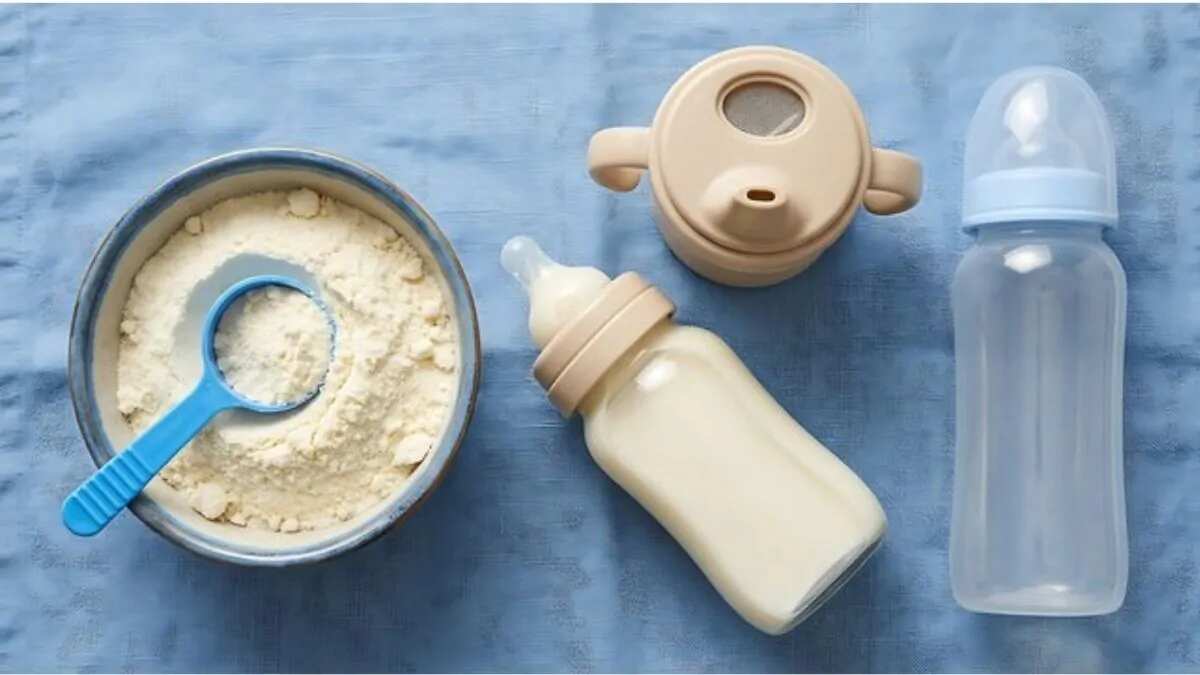
This is particularly essential with powdered products. They need to be made according to the directions of the manufacturer because changing the powder-to-water ratio can change the concentration of nutrients in the formulated feed.
(Image credit: Freepik)
Does Preparation Affect Baby Food Safety?
Yes. A product can meet its directed standards when manufactured, but handling at home is still important.
Parents should use the preparation method mentioned on the package, keep the feeding equipment clean and follow storage instructions after opening. Powdered infant formula also needs particular care as well.
Avoid using products that have even slightly damaged or compromised packaging. One more thing to keep in mind is that you should not rely on smell, appearance or taste alone to determine whether an infant product is safe. Always look at the other details like manufacturing details, expiry date, list of ingredients, etc.
Can Parents Judge Baby Food By Its Ingredients Alone?
No. In infant food, more ingredients do not automatically mean a better product.
A formula having whey protein, HMOs, vitamins or other specialised ingredients may sound good, but parents should first look at whether the product is appropriate for the baby's age and whether its formulation and claims adhere to applicable regulations.
The recent FSSAI action involving Nestlé is hence useful as a consumer reminder, rather than just a reason to focus on one company. For baby food, safe formulation, accurate nutrient levels, suitable claims, clear labelling and correct preparation all matter.