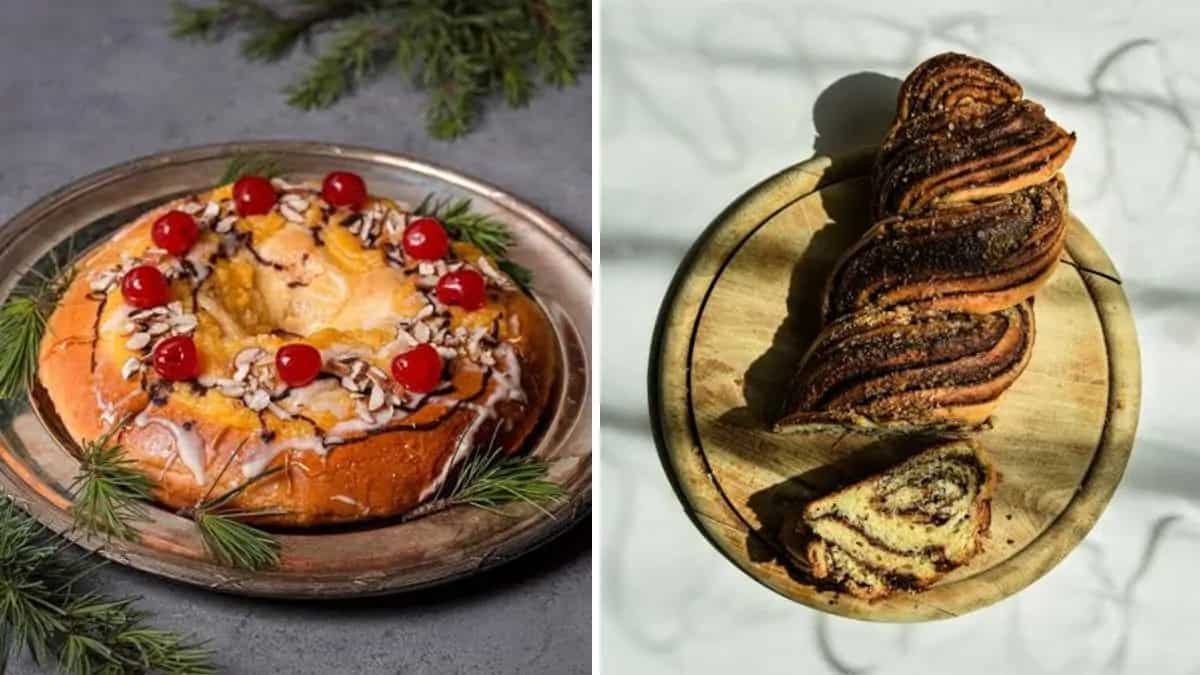
Babka carries a long history that begins in the communities of Eastern European Jews, where the dough would be enriched with eggs and shaped with twists that created distinct layers, and this form continued to evolve as families adapted the recipe according to available ingredients and personal rituals. The earliest versions were baked for Sabbath and celebrations, and the dough often shared similarities with challah due to the enriched style, although babka gradually developed a separate identity because the fillings relied on chocolate, cinnamon, nuts or fruit pastes. The loaf reached wider regions through migration, and bakers in new cities introduced techniques that helped the cake grow in popularity among home cooks who enjoyed recipes with texture and a generous character. The holiday season created an ideal moment for bakers to experiment with festive shapes, and the wreath form became a natural extension of the twisted loaf because it offered a circular structure that looked celebratory on a winter table. Babka continues to carry cultural memory and culinary curiosity, which makes it a rewarding bake for festive kitchens in India where families enjoy seasonal sweets that bring together tradition and creativity.
Image credit: Freepik
Origins In Eastern Europe
Babka developed in the Jewish communities of Poland, Ukraine and Belarus, where women prepared enriched doughs that could hold fillings without collapsing during baking, and this requirement encouraged a slow knead, a tolerant structure and a well-rested rise. The name is thought to have connected to the word for grandmother in several Slavic languages, which created an affectionate association between heritage and home baking. The dough was shaped in long forms and the twisting technique began as a practical way to distribute the filling across the length of the loaf, which created layered patterns once sliced. Chocolate was introduced much later when it became more accessible, and earlier versions favoured cinnamon, honeyed nuts or poppy seed pastes. Many families carried handwritten notes describing their own variations, and these notes changed as ingredients travelled across borders through migration.
Image credit: Pexels
Migration And Technical Adaptation
As Jewish communities moved across Central, Western and later North America, the cake travelled with them. Commercial bakeries encountered a product that required precise handling and extended preparation times, prompting the development of techniques that supported efficiency without compromising structure. Ovens with controlled heat, refined flours and mechanical mixers enabled bakeries to create consistent results and produce loaves at a scale suited to urban demand. By the mid-twentieth century, food publications began documenting the cake’s method, which further broadened its influence. This documentation introduced babka to audiences who had no cultural connection to its origin but appreciated the craft involved in its construction. From there, the cake entered artisanal baking circles, café menus and patisserie collections, influencing its continued evolution.
Image credit: Freepik
Introduction Of The Wreath Form
As loaf-style babka spread and evolved, bakers began experimenting with alternate shapes to bring novelty and table-presence to the bake. One such adaptation was forming the twisted dough into a circular ring or wreath. The method retained the fundamental shaping technique: rolling, filling, twisting, while altering the final structure to a ring that could serve as a festive centrepiece. The wreath form offers practical advantages: heat circulates evenly around the ring during baking, reducing dense centres and ensuring a consistent bake. The twist-based pattern becomes visible on the outer edge and top surface, creating a decorative effect with minimal ornamentation. The wreath shape also simplifies slicing and presentation, each wedge exhibits visible layers, highlighting the craft of its construction. For Hanukkah and Christmas celebrations, the wreath version delivers a festive presence without complicated decoration. Its adaptability makes it ideal for home kitchens and bakeries alike, offering a bridge between traditional baking methods and celebratory presentation.
Image credit: Adobe Stock
Preparing The Dough For A Babka Wreath
A wreath begins with enriched dough that develops strength through a combination of kneading and resting. Warm liquid, yeast and sugar are brought together until the mixture becomes active with surface bubbles. The dry ingredients are then incorporated gradually to create a cohesive dough with enough moisture to stretch without resistance. Eggs contribute richness and structure, while softened butter is added in small portions so that each addition blends fully without separating from the dough. The kneading stage is crucial because it determines how well the dough will withstand the later twisting. The dough is worked until it becomes smooth and resilient, then placed in a covered bowl for a slow rise. The rise allows the gluten structure to relax and mature, creating a texture that rolls evenly. Once doubled in size, the dough is pressed gently to release excess air and left to rest briefly, which makes it easier to handle during shaping.
Assembling And Forming The Wreath
The rested dough is rolled into a long rectangle with even thickness across the entire sheet. A filling of choice is spread across the surface in a consistent layer, ensuring that the flavour remains balanced along the final structure. Once the filling is applied, the dough is rolled tightly from one long edge to form a cylindrical log. A sharp knife is used to slice the log lengthwise, exposing the interior layers that define the finished cake. The two strands are placed with their cut sides facing upward. They are crossed over each other in a controlled motion that creates a twisted pattern without compressing the dough. The twist continues along the entire length until the strands form an elongated rope. The ends are brought together to form a seamless circle, and the joint is carefully sealed. The wreath is then placed on a tray for its final rise, which allows the dough to regain lightness before entering the oven.
Image credit: Freepik
Baking And Finishing The Wreath
The risen wreath is transferred to a preheated oven, where the enriched dough bakes into a structure that holds its defined grain while developing colour across the outer surface. The exposed layers become more pronounced as the filling settles into thin lines between the spirals. After baking, a warm syrup is brushed over the surface to create a gentle sheen that enhances the visibility of the layers without overwhelming the texture. The cake is then cooled on a rack to preserve its structure. Cooling allows the internal lines to set firmly, ensuring that each slice reveals the full pattern created during twisting. The wreath can be presented whole or sliced into segments, and its structure maintains clarity in both formats.
Image credit: Freepik