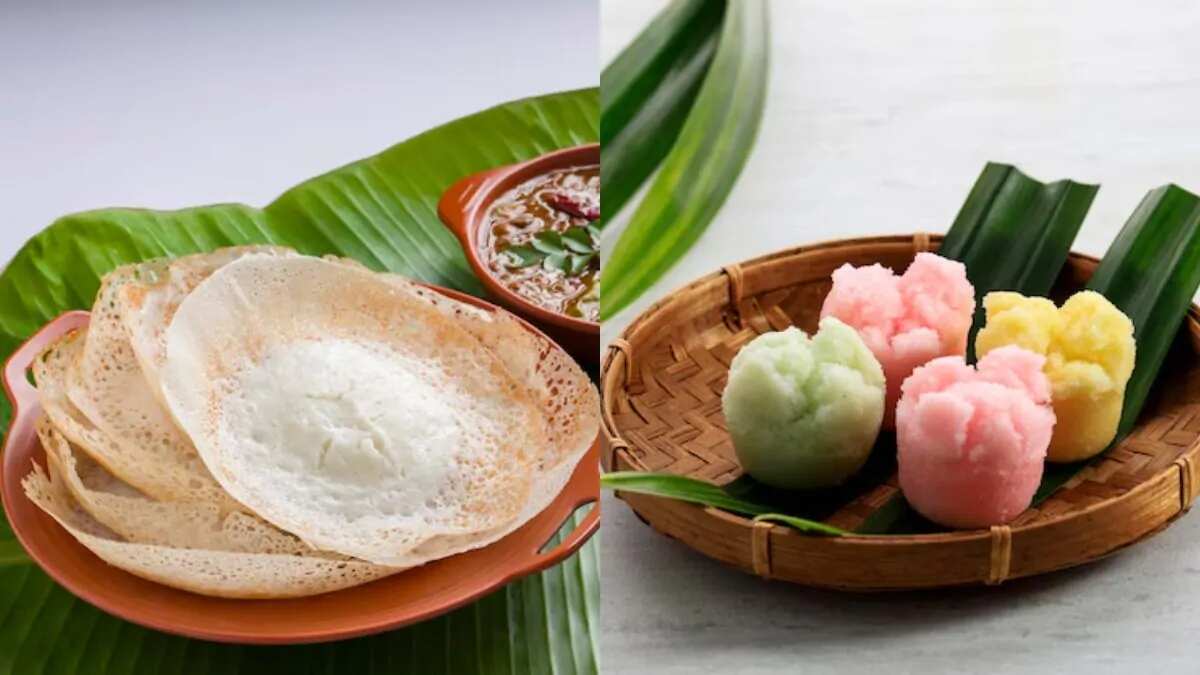
If you’ve eaten appam with stew for breakfast or had it during a family meal, you know how light and tasty it feels. Now, imagine something close to it; but from another country. That’s apem. This soft, sweet cake is made in Indonesia, and just like appam, it is steamed. Both dishes are made using rice flour, but the flavours, colours, and uses are quite different. These two rice cakes might look similar to some, but their stories and ingredients are not the same. People in both places have been making them for years, often during special occasions or as simple comfort food.
Video Credits: Rajshri Food/ YouTube
Apem
Apem, also known as Kue Apem, is a soft, fluffy cake that is popular in many parts of Indonesia. It is usually made with rice flour, coconut milk, palm sugar, and sometimes a fermented item like cassava or yeast to make it rise. The batter is poured into small moulds and then steamed. When cooked, apem turns out round, lightly sweet, and soft. It is eaten as a snack or shared during religious days. What stands out is the colour, which is not always white. You’ll often see pink, green, or yellow versions of apem at gatherings. These colours are added using natural flavourings or herbs.
Image Credits: Freepik
Appam
Appam is well-loved in South Indian states like Kerala and Tamil Nadu. It is a thin, lacy pancake made with a mix of rice and fermented batter. Most people enjoy it with vegetable stew, coconut-based curries, or even with jaggery and coconut for a sweeter version. There are also steamed versions like vattayappam, which are soft and thicker. The batter is made by soaking rice and grinding it, sometimes with coconut. It is left to rise before cooking. Appam is usually white and has a slight tangy taste due to the fermentation. It is light but filling, and often eaten in the morning.
Ingredients
Apem and appam share a few ingredients, but they are not the same. For apem, the common items are rice flour, palm sugar, coconut milk or water, and a rising agent like yeast or fermented cassava. Natural colourings like pandan juice or rose syrup are also added. On the other side, appam uses raw rice, cooked rice, grated coconut, water, and a pinch of sugar and salt. For vattayappam, which is a steamed version, the ingredients are almost the same. The biggest difference is in the sweeteners and colours, apem is usually sweeter and more colourful, while appam stays mild and white.
Preparation
To make apem, the ingredients are mixed and left to ferment. The batter is poured into small cups or trays and steamed. The rise depends on the time left for fermentation and the type of leavening used. Once steamed, the cakes are allowed to cool and then served. Appam, on the other hand, is made by grinding soaked rice and letting it ferment overnight. For the lacy version, the batter is poured into a curved pan to get a thin centre and crispy edges. Vattayappam is simply steamed in a flat tray or bowl. Both methods are simple and use steaming, not frying.
Image Credits: Freepik
Cultural Significance
In Indonesia, apem is made during prayers, temple offerings, and family events. It is not just a food item; it is often shared with neighbours or used in rituals. It is commonly seen during Ramadan and Javanese ceremonies. In South India, appam is traditionally linked to Christian and Hindu households. It is a regular item during Christmas, Easter, and Onam. It also has a place in daily meals. These dishes show how food connects with culture. While they look alike, apem and appam are served for different reasons and at different moments. Yet both bring people together over warm, soft bites.