Anant Chaturdashi will be observed on Friday, September 25, 2026. It is an important day in the Hindu calendar, especially for devotees who observe a fast and worship Lord Vishnu in his Ananta avatar. The day is widely acknowledged as the last day of the 10-day Ganeshotsav and is linked with Ganesh Visarjan as well.
What makes the festival particularly distinctive is the repeated appearance of the number 14, i.e., from the day on which the puja is conducted to the elements used during the ritual. Food also has a distinct place in the observance. For the bhog, the offerings are mainly prepared from wheat flour, ghee, and sugar, with no sour or spicy items on the list. On this day, the devotees seek stability, protection and the fulfilment of their wishes through devotion and worshipping Lord Vishnu.
Why Does The Ananta Thread Have 14 Knots?
The Ananta sutra is usually a cotton or silk thread that is prepared with fourteen knots. The number is not random: it combines the physical thread with the idea of the fourteen lokas, or worlds, in Hindu mythology. The thread is considered a symbolic representation of Ananta rather than just a protective thread.
During the puja, the thread is placed before the deity and then worshipped along with the other offerings or naivedya made for the puja that mainly includes malpua, kheer, meethi puri, seasonal fruits, etc. The bhog is first presented as an offering to the deity and is later distributed as prasad.
In common practice, men wear the Ananta thread on the right arm and women on the left. The material, colour and other rituals can vary, but the fourteen-knot structure remains the defining feature.
(Credit: Freepik)
Why Do Sweet Preparations Take Centre Stage?
Sweet preparations have a prominent place in the bhog preparation for Ananta Chaturdashi. Sweet preparations have long inhabited an important place in Hindu ritual food because they are linked with auspicious offerings and are suitable for distributing as prasad.
Sweets can be understood as a way of expressing gratitude and devotion. Traditional sattvic food practices also favour simple ingredients such as milk, ghee, wheat, jaggery and sugar, which are used in many bhog preparations and are traditionally associated with purity.
This idea of keeping the offering purified also extends to tulsi leaves, which hold a special place in Vishnu puja and also in other Hindu worship rituals. A tulsi leaf is placed with the naivedya as part of the offering, making the food spiritually suitable for the deity before it is distributed as prasad.
What Sweet Foods Are Offered On Anant Chaturdashi?
Here are a few common traditional preparations that are generally made on the day of Anant Chaturdashi and offered as bhog:
Sweet Puri
Sweet puri is a deep-fried wheat-flour preparation in which jaggery is mixed into the dough along with ghee while kneading. The dough is kept a bit firm so that puris hold their shape in hot oil and get a light puff while frying. Unlike savoury puri, there is no need for a spicy accompaniment to pair with them. The result is lightly sweet, rich and a bit crisp on the outside, having a soft centre within. In some regional practices, grated pumpkin is added to the dough, which adds moisture and a light natural sweetness to the puris.
Atiras
Atiras is a traditional sweet made from wheat flour, combined with sugar syrup or gur to form a firm dough. It is then shaped and deep-fried until golden and perfectly cooked. Ghee is also used to enhance the taste, and it is added to the dough itself. Once fried, the outside turns a bit crisp while the inside remains thick and pleasantly chewy. The flavour is simple, having the earthy taste of wheat with the light sweetness of jaggery or ghee.
Kheer
Kheer is a festive favourite without which no celebration can be done. Rice is slowly cooked in milk with sugar until the grains turn soft and the milk gets a thick and creamy texture. Cardamom is commonly added for the aroma, with a garnish of almonds, cashews or raisins. The slow cooking gives the kheer a rich dairy taste, with soft rice grains adding a little texture in every bite.
Malpua
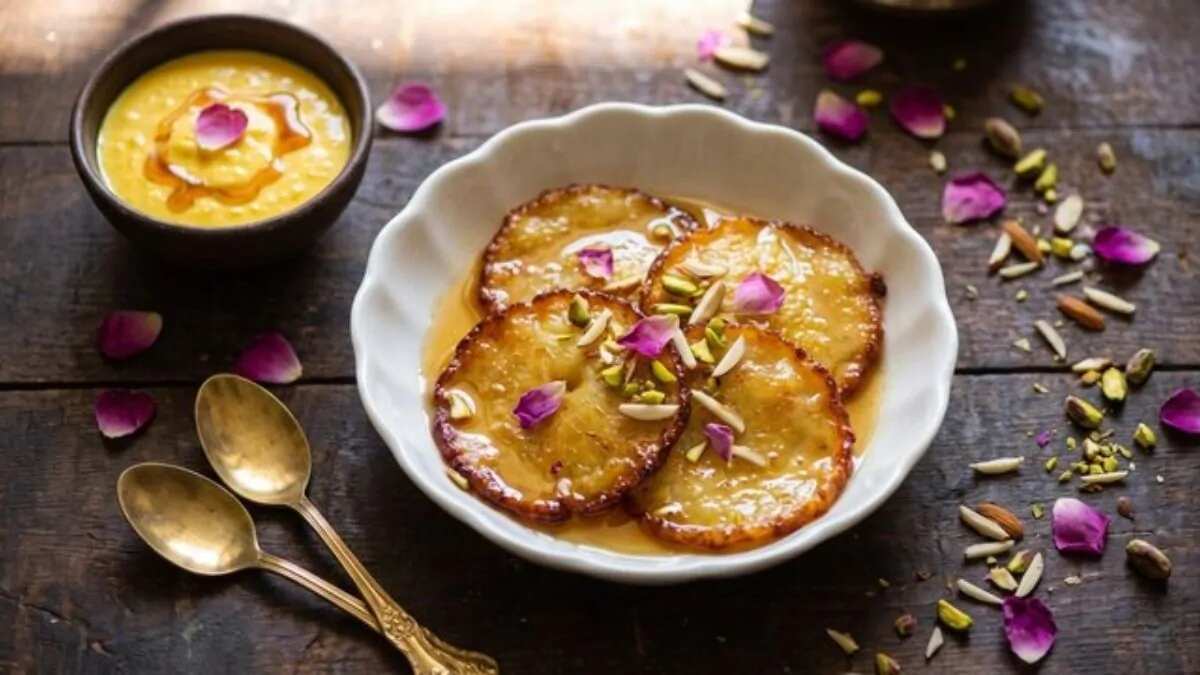
Malpua is a soft, fried sweet with crisp, browned edges and a soft centre. A simple batter is prepared using all-purpose flour and milk, and is enhanced with fennel or cardamom. Small portions of the batter are poured into hot ghee or oil and fried until the edges turn golden. Depending on the preference, the malpua may be served as is or can be dipped for a short span in sugar syrup, which gives it a glossy finish and a deep, sweet taste.
(Image credit: Freepik)
Meethi Mathri
Meethi mathri is a crisp wheat-flour snack that is made by mixing wheat flour with ghee and sugar before shaping the dough into small round discs. The discs are pricked through with a fork and then shaped to help them cook evenly, then deep-fried over a moderate flame until firm and golden all over. Once fried, it turns crumbly and crunchy rather than being soft, with a mild sweetness and the rich taste of ghee. Unlike syrup-soaked sweets, meethi mathri is dry and easy to store for a much longer time.