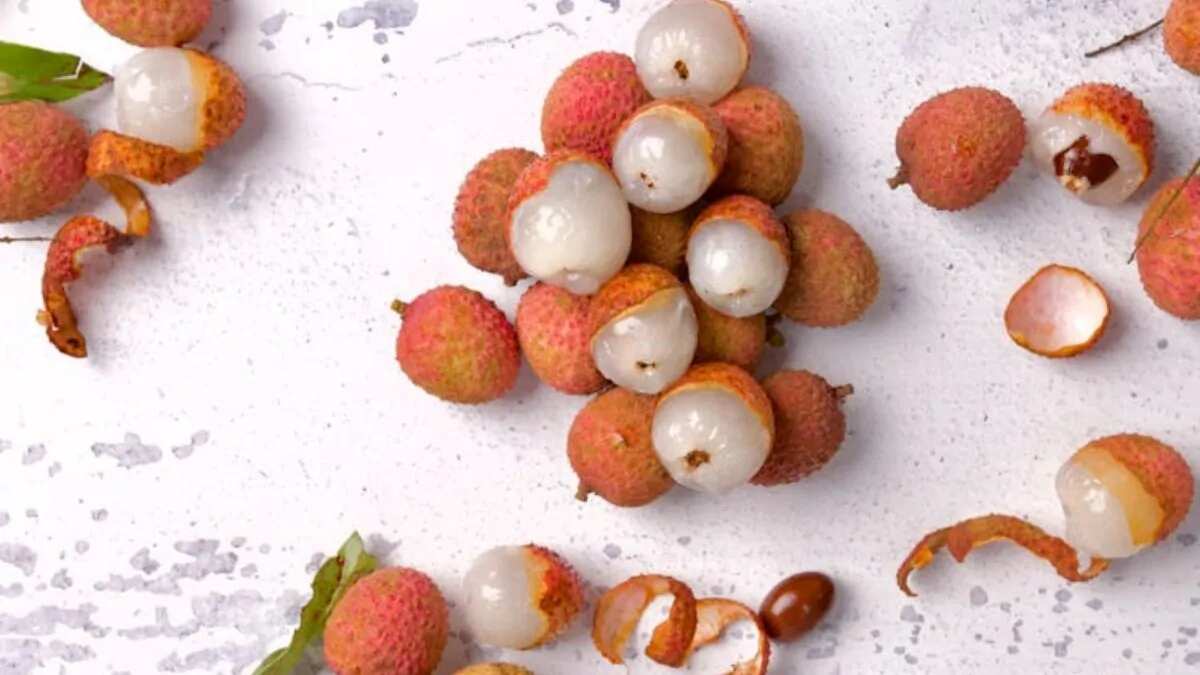
With summers in full swing, fruits like mangoes, melons and lychees are being used for every meal you have, from breakfast, snacks, lunch, to even dinner and desserts. The markets are now in full bloom with lychees as well, which are one of the most popular summer fruits other than mangoes. Recently, though, lychee has been in the limelight for reasons that jeopardised its cultivation in Bihar, the largest producer in India. As per reports, concerns raised by lychee farmers in Bihar about crop damage caused by the Lychee Stink Bug, Union Minister for Agriculture and Farmers' Welfare Shivraj Singh Chouhan directed the formation of a special expert task force that will visit the affected areas and submit a report with recommendations for remedial measures within a week.
Image Credit: Wikimedia Commons
Lychee is a tropical delight which is known for its juicy, sweet flesh and is mostly consumed in harsh summers and dry days when everyone seeks something cooling and refreshing. One interesting fact is that it is also known as the eyeball fruit because of its reddish-brown seed located in the centre of its white, juicy flesh, which has a sweet taste. Its versatility allows it to be incorporated to make sauces, jams, purees, and preserves, which have a delicate flavour with a subtle hint of floral notes. According to an order issued on May 7 by the National Research Centre on Litchi in Muzaffarpur, the task force will analyse the present state of the litchi stink bug. It will perform a rigorous analysis of agricultural losses, visit impacted areas, and recommend both urgent and long-term remedies to help farmers.
The insect (Tessaratomapapillosa) feeds on sap, causing fruit drop and damaged shoots. Scientists believe that the insect originally arrived in northeastern India, then migrated to Jharkhand, and has now been identified in huge numbers throughout Bihar since last year, affecting the cultivation of lychee in the state. And while India figures out a way to resolve this issue, you can learn that lychees come in different varieties, with varying tastes, sizes, and appearances. If you’re curious, here is a list of 6 types of Lychees found in India:
Image Credit: Wikimedia Commons
6 Types Of Lychee Found In India
Bengal Lychee
Bengal Lychee is a variety of lychee that is widely popular in India, and its succulent flesh and burst of sweetness make this variant popular and a must-have in summer. Moreover, the size of this lychee is quite big too and with its thin skin and a vibrant red colour, they are easily distinguished among other variants. The tropical and floral notes present in this lychee make it a very delicious and refreshing indulgence.
Shahi Lychee
Shahi lychee, which is mostly cultivated in Muzaffarpur, Bihar, as well as in parts of Jharkhand and Uttar Pradesh, is well-known for its sweet fragrance and distinct rose aroma. Harvested in May, this cultivar is in high demand in both domestic and foreign markets. Prices per kilogramme typically range between ₹85 and ₹145, depending on demand and quality.
Swarna Roopa Lychee
Swarna Roopa, developed by the Central Horticultural Experiment Station (CHES) in Ranchi, is well-known for its high total soluble solids (TSS) content and fracture resistance. This kind of lychee is cultivated in Jharkhand and its adjacent areas. For optimal growth, the crop requires regular soil moisture and proper root zone aeration. Micronutrients like zinc and boron enhance fruit quality and production while minimising erosion and improving establishment in hilly or uneven terrains. Lychee is planted along correctly planned terraces or contours at least one metre wide.
China Lychee
A popular table cultivar from Muzaffarpur, China lychee is semi-dwarf and ripens around the third week of May. The fruits are medium to large, globose, and have a red-orange tint. This lychee is one of the finest varieties growing in the Bengal region, and they have smaller leaves compared to other lychee plants. If properly tended, these trees can yield fruit on a regular basis, and if not, they may not produce fruit each year. This is because China-3 can thrive in numerous locations; however, it dislikes locations where the rainy season begins too early.
Jungle Lychee
Wild litchis, called locally as jungle lychee, thrive in the Keyi Panyor area of Potin, Arunachal Pradesh. Actually, these trees are called rambutans, and two sorts of rambutan morphotypes grow here—one is sweet with a dull red hue, smaller fruit and seed size, while the sour one is bright red and larger in size. Kerala also grows them; if you’re walking through the streets of central and northern Kerala, you’ll come across street-side vendors selling some bright red and yellow furry lychees. The berry has a solitary seed and is oval. The outer peel has soft, pliable spines and is crimson, occasionally orange, or yellow. The flesh inside has a grape-like flavour and ranges from white to pale pink.
Image Credit: Wikimedia Commons
Elaichi Lychee
Also known as Tezpur lychee, it is the pride of Assam, and was awarded the renowned Geographical Indication (GI) tag in 2015, recognising its distinct taste and flavour. This award verifies that these delightful fruits come only from the scenic region of Tezpur, safeguarding them against imitations made elsewhere. Elachi litchi is also cultivated in certain regions of West Bengal. The fruit has 60% juice, 8% rag, 19% seed, and 13% skin. Tezpur lychee is farmed organically, with no chemical fertilisers or pesticides and notably, it is famous for its special varieties, such as those grown around Paltan Pukhuri and the Paruwa Litchi Garden. Litchi cultivation is prevalent in many families in Assam and nearby areas. Bombaya, Bilayati, Desi, Elachi, and Piyaji are among the most popular Tezpur lychee kinds.