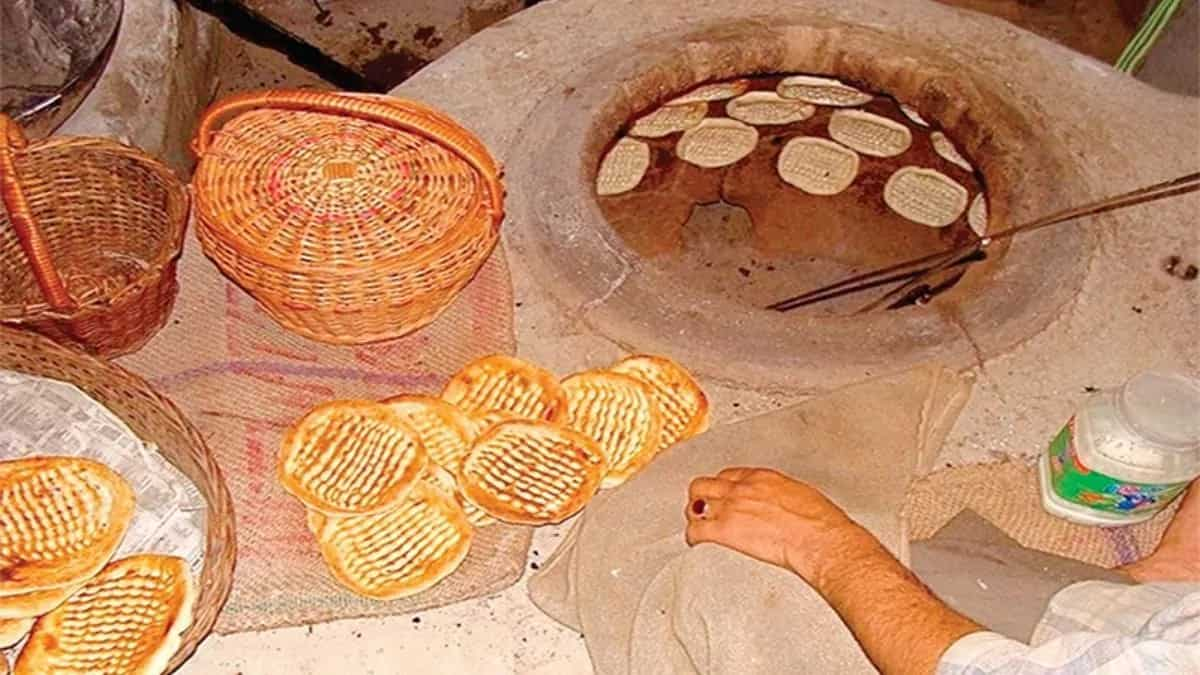
On the Dal Lake in Kashmir or in downtown Srinagar, bakeries are elaborately laid out, and bakers sell various kinds of breads, with golden brown crusts and intricate, complex textures. In a majority of Kashmiri Pandit and Muslim households, the main part of the meal includes rice for supper. Bread is not part of the meal; it is only eaten with tea in the morning or evening. But there’s no getting away from the fact that the aroma of freshly baked bread is very inviting. This smell of baked bread rising from the bakery, or “kandurwan” as it is known in Kashmir, is a tough temptation to resist. In Kashmir, these kandurs do more than just sell bread. They are a hub for community, where people congregate and share news and pleasantries, and they are an integral component of the social fabric of the place.
Image Credit: Wikimedia Commons
If you’re ever visiting and want to learn more about the bread and this vanishing tradition, it can be found at Sofi Bakery. It’s like entering a workstation that has been there for more than a century, taking you back to how it would be if you were in ancient Kashmir. The aroma of freshly baked bread permeates the air, and years of baking smoke have coloured the walls. You can sense time here, not in a nostalgic way, but as something more lived in. Although rice is still a mainstay, bread is an essential component of Kashmiri cuisine, and Kashmiris have a very special affinity with bread. So, what is the kandur culture and art of baking bread? How did it become so ingrained in the cuisine?
Origins Of Kandurs In Kashmir
Local bakers known as Kandurs use ancient clay tandoors to create common breads and snacks. Similar bakers can be found not only in Kashmir but also in Pakistan, Armenia, and even Azerbaijan. The former Silk Road, which linked Kashmir with Central Asia, Afghanistan, Punjab, and Iran, made the tandoor a significant component of Kashmiri cuisine. Kashmiri bakeries are frequently used as early-morning meeting places when neighbours go to share news and pick up fresh bread. The Sofi family is a powerful symbol of Kashmiri baking legacy since they are renowned for upholding traditional preparation techniques employing wood-fired ovens and tried-and-true recipes.
Image Credit: Wikimedia Commons
Actually, the Persian word tanur, which means oven, is where the word tandoor originates. This type of baking is quite traditional, and the method hasn't really evolved over time. Tandoori bread is essentially a must for Kashmiris. The kandur travels with the Kashmiri populations wherever they move, whether to Ladakh or Delhi. Leh even has an entire lane dedicated to these bakers, and old Delhi has long had kandurs in neighbourhoods with a strong Kashmiri presence. The bakery begins operations long before daybreak, while downtown is still asleep. Bakeries align their operations with the namaz-e-fajr, which is often said between sunrise and daybreak.
Image Credit: Wikimedia Commons
Girdas and lavasas are the first foods to be burned on the tandoor and enjoyed with a cool cup of noon chai or kehwa. Elders pick up freshly made girdas and lavasas for the whole family on their way back from the local mosque after completing fajr. In this sense, the bakery (kandurwan) serves as a gathering place for the community, where people converse about both important and unimportant topics and catch up on local rumours.
Similar to how the Ahanger caste is recognised for blacksmithing, the Zargar caste for goldsmithing, and the Wani caste for business, the Sofi caste is traditionally known for baking in Kashmir. Hilal Ahmad Sofi, a fourth-generation Sofi family member, is currently in charge of Sofi Bakery. He moves with a serene assurance that comes from practising something for so long that it becomes second nature. Outside, a queue is formed as people wait with cloth bags, metal baskets, and long conversations. It’s not just about buying bread from Sofi Bakery, it's about starting the day with something familiar, something warm.
How Sofi Bakery Has Kept The Kashmiri Kandur Ritual Alive
You will instantly be struck by how different the breads are, even though they all begin with the same basic ingredients such as wheat, water, salt, and possibly a small amount of oil or yeast. Depending on how it is prepared, who eats it with, and when, each one has a unique narrative to tell. Every community has a kandurwan, often more than one. Every family member contributes distinctly. Children deliver the loaves, frequently on their way to school, while mothers prepare the dough and men labour on the tandoors. Getting invited to watch the daily activity in a kandurwan is as good as getting invited to their house. It is a busy space, with long hours of hard work. Early morning and late afternoon are the busiest. This is the identity they go by. Hilal of Sofi Bakery learnt by observing his father and grandfather as a child.
Image Credit: Wikimedia Commons
Many believe that traditional baking, like Kashmiri kandurwan and kandur have a bleak future. But a growing number of people are returning to it, particularly younger people. The tandoors at Sofi Bakery are more than just ovens. They are about clinging to something genuine in an unstoppable environment. And truly, life without a bit of bread sounds quite flavourless, right? So, as more and more people turn to bring back a few traditional ways of a regional cuisine and staple, Kashmir’s kandur culture might shine in a new light. If you’re ever visiting Kashmir and reach Sofi Bakery, don’t forget to try a few famous baked breads, hot and steamy from the kandurs!
What Does Sofi Bakery Bake In Its Kandur?
Sofi Bakery starts with the girda. Spherical, thick, and slapped onto the tandoor's walls until it blisters and turns brown. The interior is still pillowy and fluffy, but the exterior forms a sharp shell. Eaten with butter, jam, or curry, it is the bread that people are raised on. This bakery’s girda completes every meal, even though it doesn't ask for much. It needs to be baked fast and has a limited shelf life. The team behind it uses their fingertips to press the pattern into the front of the bread.
Then, they move on to the lavassa. This bread is thinner and softer because it is baked on the tandoor floor instead of the sides, which keeps it soft all the way through. It folds with ease. It is frequently consumed with tea in the morning and occasionally with barbecued meat. It is light but filling, and something that slips easily into a morning routine.
Then comes the bakherkhani. You can see how it is being made at Sofi Bakery. This bread is unmatched. It is more pastry than bread, rich, flaky, and buttery. You take your time eating baqerkhani made by Sofi. It requests that you take a seat, pour yourself a cup of noon chai, and engage in a lengthy discussion. It's bread for leisurely times. Marriages in the area are incomplete without Sofi Bakery bakherkhani.
The tandoor must be prepared differently for each type of bread. Every variety of bread has a different temperature. Though there are variants in other parts of Kashmir, Srinagar is known for about a dozen various sorts of bread baked in the kandurs. Life in Kashmir has not been easy, and the kandur has felt the effects. Even though everyday operations were altered by years of curfews and uncertainty, the tandoor never truly halted. The kandur ensures that bread is available because it is a daily essential. Through it all, they've clung to their art, convinced that as long as the Valley exists, so will its bread and the kandur that fuels it.