


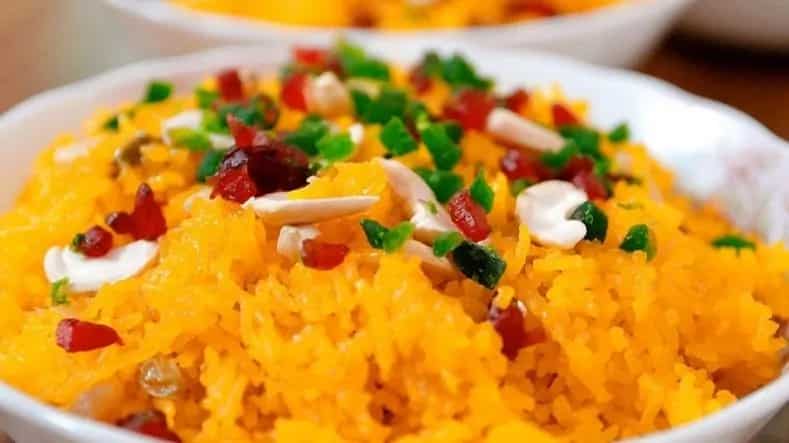
Zarda
Nutritional Value
5206
Calories
per serving
- Fat56 g
- Protein101 g
- Carbs1057 g
- Fiber50 g
- Sodium0 g
- Others0 g
- Place of OriginNORTH,INDIA
- CuisineAsian,Indian
- Common Ingredients
- CourseDessert
It is understandable why, in India, rice is used in every form across all courses, from appetisers, main courses, and desserts to even beverages. After all, rice is the staple grain in the subcontinent. From Payasam to Poha Kheer, rice is the uncontested choice to make indulgently sweet desserts. And this rice was transformed into its golden, mildly fragranced form—Zarda—in the Mughal Bawarchi Khana.
Deriving its name from Zard, the Urdu word for yellow, Zarda is a heady concoction of saffron-stained rice grains with sugar, cardamom, cloves, slivers of almond, pistachios, murabba (candied fruits) and fragranced desi ghee. Auspicious occasions like weddings and Eid in India, Pakistan and Bangladesh are still incomplete without the final serving of Meetha Chawal (sweet rice) bringing a hearty meal to a close.
Food historian Lizzie Collingham notes similarities between the Mughal rice dish Zard Biryani and Zarda in her seminal book Curry: A Tale of Cooks and Conquerors. With newer trade routes constructed through the northern belt of India to Persia, dry fruits and nuts like figs, dates and apricots started being imported by the country in bulk. A favourite with the emperors, Zarda was the finest amalgamation of a wide variety of imports and locally available ingredients.
Ain-I-Akbari, the 16th-century chronicle of the life and times of Emperor Akbar, lends a peek into the royal food hierarchy, of which meatless dishes occupied the highest rung and were bracketed under the Sufiyana menu. Along with Halwas and Sherbets, Zarda was a common occurrence during religious fasts.
The dish is made with Basmati rice, a special long-grained and aromatic rice that helps in retaining texture in the dish even after the rice has been boiled. It is boiled in water stained with yellow food colouring, cloves and star anise, after which it is sauteed in ghee with cardamom pods and saffron. The sugar is added in stages, carefully mixing it in till it dissolves into the rice. Rose or kewra water is added to enhance the floral notes of the dish.
Nutritional Value
5206
Calories
per serving
- Fat56 g
- Protein101 g
- Carbs1057 g
- Fiber50 g
- Sodium0 g
- Others0 g