


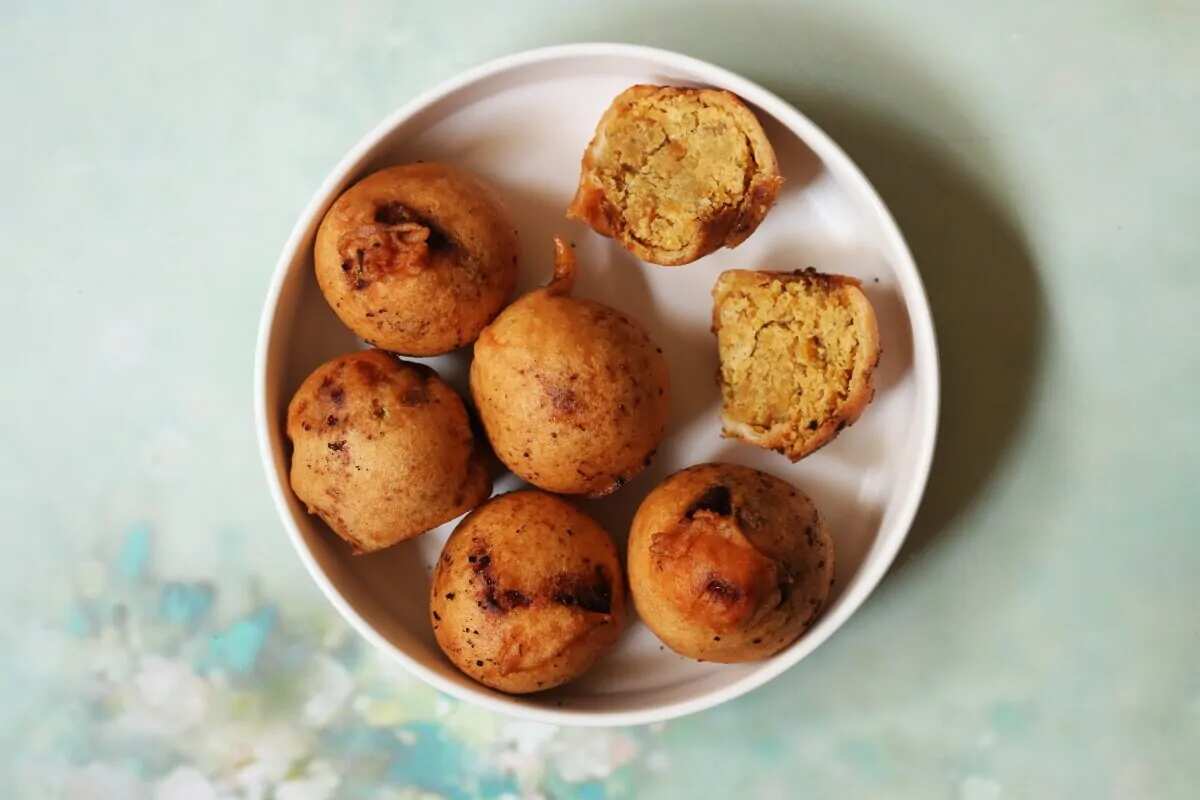
Poornalu
Nutritional Value
1266
Calories
per serving
- Fat4 g
- Protein18 g
- Carbs285 g
- Fiber6 g
- Sodium0 g
- Others0 g
- Place of OriginANDHRA,PRADESH
- CuisineAndhra
- Common Ingredients
- CourseDessert
A traditional Telugu dessert, the Poornalu, or Poornam Boorelu, is a fried ball made of rice flour. It has a rich mix of jaggery and dal paste, along with dry fruits for the crunch factor. These deep fried balls are often coupled with a generous dollop of ghee when served. The dal used in the sweet is urad. The batter is later mixed with almond shavings and chana dal paste as well, to lend a thicker body to the mix. This concoction is referred to as Aspoornam.
Typically made in Andhra households during the seasonal festival of Makar Sankranti in January, and even Varalakshmi Vratham in August, Poornalu is a celebratory dessert of sorts, to summon a period of fecund harvest. Poornalu-s are usually served hot, the outer crispy brown skin gently coating the inner gooey coconut-jaggery mix. Structurally akin to the Bengali Taal-er Bora (deep fried, sweet palm balls), the contents of the dish are similar to the Patishapta or Pithe (also a rice-flour roll stuffed with coconut, sugar, or jaggery).
This dish, many food historians claim, was a community culinary experience. It was traditionally served to friends and families during Telugu festivities, bringing families and loved ones closer.
Also known as the Sugunta, Sukiyan, Seeyam, Sugeelu or Suyyam, the Poornalu is prepared differently in different parts of South India. In Tamil Nadu for example, the dessert is made during Ganesh Chaturthi and Diwali. Karnataka, on the other hand, consumes this dish during Lakshmi Puja.
The health benefits of this dish are many. The rich folic acid, iron, calcium and magnesium content in urad dal help with maintaining bodily functions. Vitamin B and proteins also are a crucial part of the lentil. The jaggery used consists of minerals like potassium and insoluble fibres which aid in digestion.
Poornalu’s popularity has risen in the recent past, with orders pouring in for it to be made during weddings, birthdays or even grihapravesh ceremonies (a traditional housewarming gathering).
Nutritional Value
1266
Calories
per serving
- Fat4 g
- Protein18 g
- Carbs285 g
- Fiber6 g
- Sodium0 g
- Others0 g