


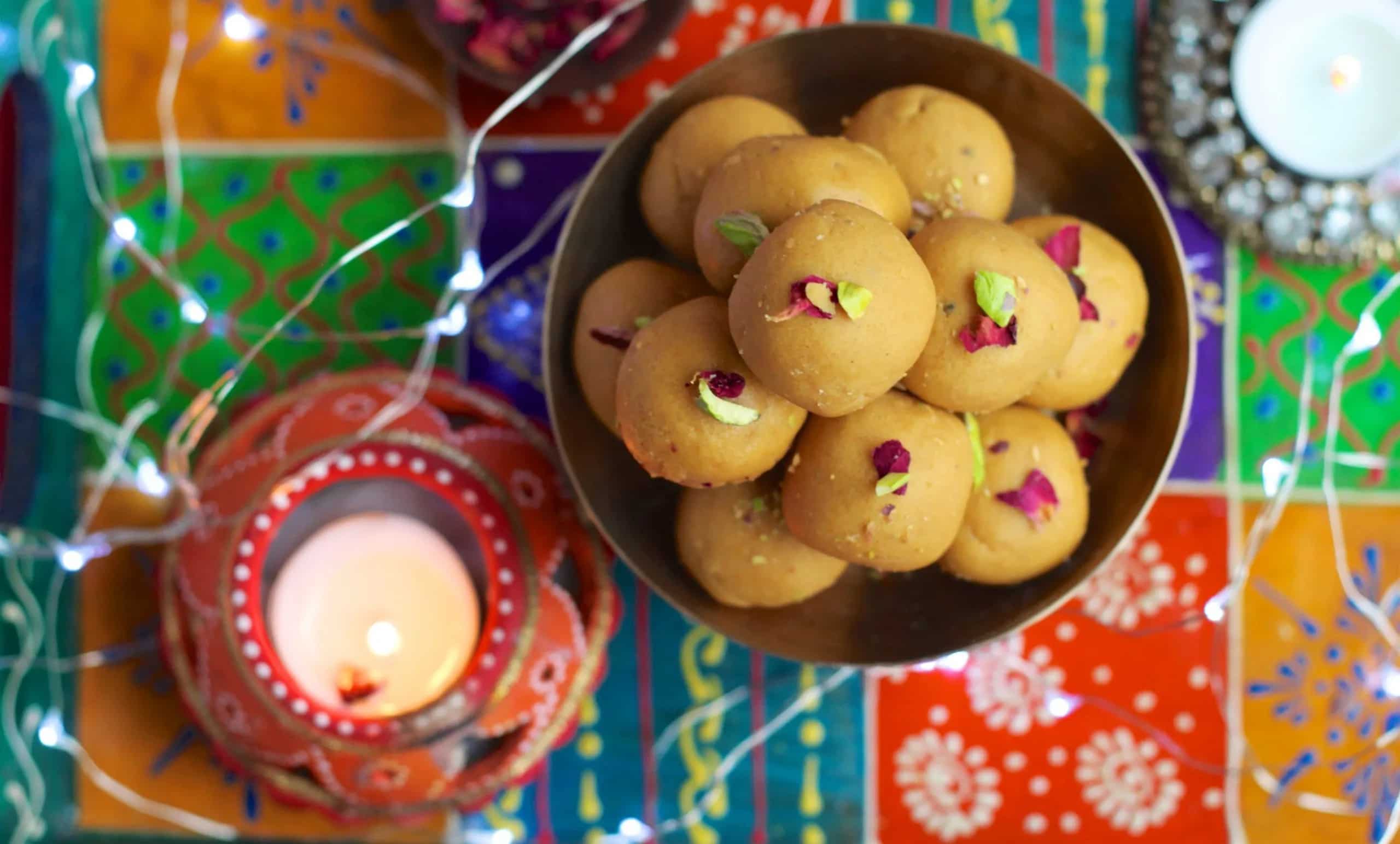
Pinni
Nutritional Value
2225
Calories
per serving
- Fat74 g
- Protein62 g
- Carbs319 g
- Fiber51 g
- Sodium0 g
- Others0 g
- Place of OriginNORTH,INDIA
- CuisineAsian
- Common Ingredients
- CourseDessert
Pinni is a Punjabi and North Indian treat cooked with desi ghee, wheat flour, jaggery, and almonds, sometimes with a sprinkle of raisins. Khoya, semolina or urad dal (lentil) is sometimes used as an alternative. The word Pinni is also a generic name for round-shaped treats or sweets, also referred to as Pindi in North India and the Punjab region, that are typically consumed in the winter. A unique factor of this sweetmeat is that it does not spoil for a long time and does not need to be cooled. Pinnis are topped with crushed cardamom and served hot with tea or warm milk.
Most Punjabi festivities are incomplete until pinni is offered, be it as prasad or simply as a dessert. Because they are homemade, there are variances in their recipes. Each household has a unique recipe that is passed down from generation to generation. Choose from atte ke pinni or pinni ke laddu, this delicacy is like comfort food, a reminiscence of home. With ghee and dry fruits mixed while preparing, this sweet bit is often considered to be a powerhouse of energy.
The humble Pinni, however, has quite an interesting story weaved into the history of the First World War. It was during this time, approximately a million and a half Indians served in the trenches of Europe. The Indian soldiers in France and Belgium yearned for Indian sweets. To boost their morale for being away from home, attempts were made in London by the committee looking after Indian soldiers to provide them with pleasantries such as music, oil, combs, Sikh religious objects, and the Punjabi sweet, Pinni.
The committee placed an order for two batches of Pinnis from India’s Messrs Veeraswamy & Company to the Marseilles base depot. Difficulty in delivering it was then proposed that an Indian chef be flown to France to prepare the dessert. The man might also request Indian components such as 'misri,' as a sugar substitute. Such an Indian supply network would eliminate the demand for sugar sweets from England. However, they were compelled to abandon this due to the exorbitant expenses of the ingredients. Furthermore, the committee sought to make kheer (made of milk and vermicelli) but was unable to meet this request too, due to expenses. Thus, the Indian soldiers had to compromise with the English sweets in a war they had nothing to do with. However, even after 73 years of independence from British Imperialism, Pinni remains a popular dish among many.
Nutritional Value
2225
Calories
per serving
- Fat74 g
- Protein62 g
- Carbs319 g
- Fiber51 g
- Sodium0 g
- Others0 g