


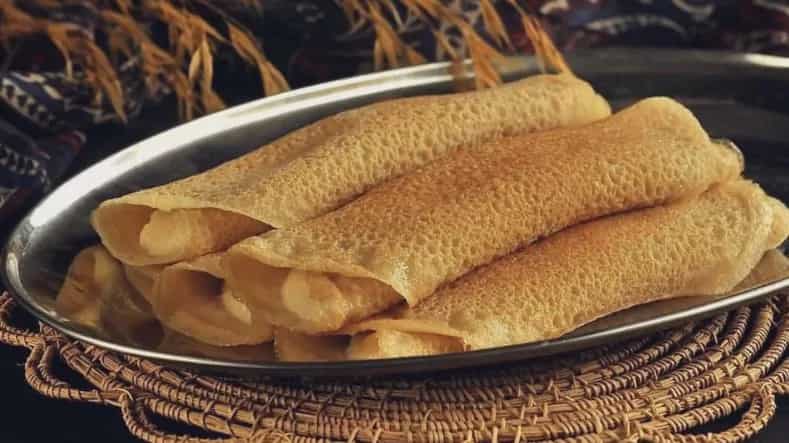
Patishapta
Nutritional Value
2809
Calories
per serving
- Fat140 g
- Protein82 g
- Carbs302 g
- Fiber7 g
- Sodium0 g
- Others0 g
- Place of OriginWEST,BENGAL
- CuisineAsian,Indian,Bengali
- Common Ingredients
- CourseDessert
Over the years, Patishapta has become the winter delicacy no one seems to get enough of. The thin, al dente crepes hug a rich, indulgent filling of jaggery, shredded coconut, milk, khoya and cardamoms. The coconuts are grated using a coconut grater, then dry roasted in a pan until they’re golden brown. The coconut is then added to jaggery, milk and khoya to make a grainy, sticky paste. The crepes, made of rice flour and sooji (semolina), are made in an oil-slicked pan. When you bite into a Patishapta, the jaggery oozes out of the crepe, coating your fingers and mouth in a decadent crimson.
The teeth-clatteringly sweet crepes, much like food traditions germinating out of Hinduism, can be traced to festival feasts and temple cuisines of the country. Like Thekuas, which were traditionally prepared only during the Chhat festival, Patishaptas are a staple presence in Bengali Poush Sankranti or the harvest festival held around the ides of January. The festival celebrates the harvest of paddy and Gur or date palm sugar, the two primary ingredients used in the preparation of Patishapta.
This special kind of jaggery, known as Nolen Gur or Patali Gur, has become synonymous with Joynagar, a town in Kolkata. But it’s a little-known fact that Nolen Gur is a healthier alternative to refined sugar. In winter, Bengali families end their meals with a bite of jaggery because it aids in digestion. Because of its high potassium, iron and magnesium content, Nolen Gur can also prevent diabetes and protect the nervous system. This ingredient is thus used to make several other Bengali sweetmeat dishes, apart from Patishapta. For instance, Joynagarer Moaa is puffed rice and jaggery balls garnished with a piece of unsalted kaju (cashew). Nolen Gurer Payesh, on the other hand, is flavoured with jaggery instead of sugar, lending it its characteristic saffron hue.
With its rising popularity, the dish has transcended Bengali household kitchens to now feature in elite restaurants. But modern versions of Patishapta may not always have jaggery in their filling because jaggery is difficult to preserve over longer periods of time. Contemporary chefs have had to switch up the traditional filling for rose-flavoured Sandesh mix or dried fruit and khoya. Sometimes, jaggery is used sparsely, to flavour the filling as opposed to being used as the primary sweetener.
Nutritional Value
2809
Calories
per serving
- Fat140 g
- Protein82 g
- Carbs302 g
- Fiber7 g
- Sodium0 g
- Others0 g