


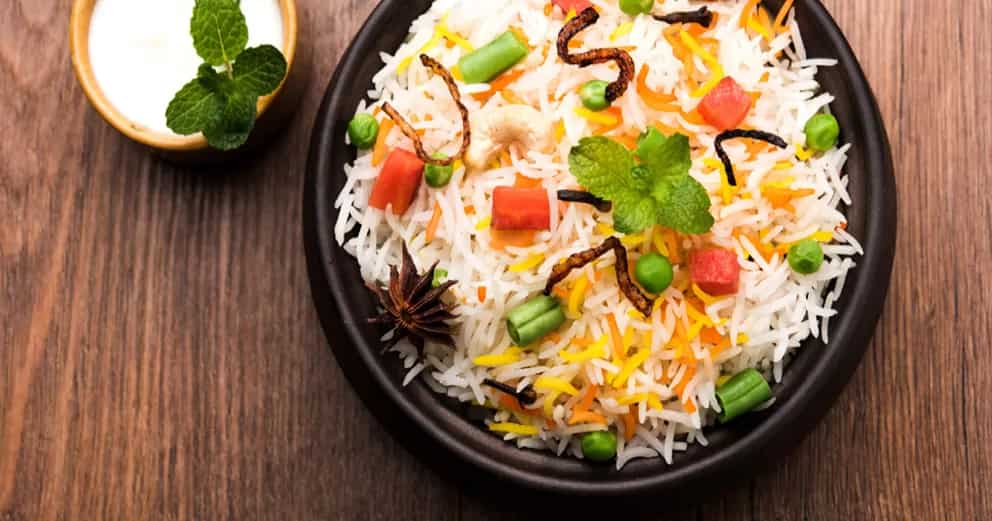
Modur Pulao
Nutritional Value
2612
Calories
per serving
- Fat73 g
- Protein53 g
- Carbs431 g
- Fiber12 g
- Sodium0 g
- Others0 g
- Place of OriginNORTH,INDIA
- CuisineAsian,Indian,North Indian,Kashmiri
- Common Ingredients
- CourseDessert
To anyone with a love for food and travelling, Kashmir is truly heaven on earth. The land’s theophanous wilderness and superlative culinary choices have forever enthralled locals and visitors alike. Though the celebrated platter of Kashmiri Wazwan is laden with irresistible meat delicacies, we often overlook a royal accompaniment that helps complement Wazwan’s unmissable burst of spices and the rich grease of its crimson-hued curries. This is the Modur Pulao, a Kashmiri sweet rice that appeals equally well to all our senses.
To begin with, long-strain Basmati rice is soaked in water and then three-quarter cooked, alongside soaking saffron strands in a bowl of lukewarm milk. A generous amount of ghee (clarified butter) is then heated in a pan, scattered with clove, bay leaves, cinnamon sticks, cardamom, and peppercorns, and once the spices clutter, given a sumptuous pouring of sugar to achieve a thick syrupy consistency. The rice is thrown into the hot mixture followed by the saffron milk that lends the dish its magnificent amber tinge. The Wazas (traditional chefs) of Kashmir conclude the preparation with a lavish topping of dry fruits and nuts, which include chopped dates, blanched almonds, chopped cashew, Sultana raisins, pistachios, and dry coconut slivers.
Though a signature Kashmiri dish, it is not uncommon to find sweet pulao recipes like Modur Pulao in the Indian platter. From Assam to Mangalore, sweet rice is often the choice of preparation in celebratory feasts and wedding buffets. Bengal’s Basanti Pulao and the Punjabi Gur Chawal are similar to Kashmir’s Modur Pulao yet different in certain flavour notches, but certainly hint at a common precursor.
The Modur Pulao is sometimes referred to as the Zarda, the name by which it is most famous in North India. The word Zarda comes from the Persian word for yellow, ‘Zard’, and is indicative of the dish’s captivating golden hue. The etymology of the name and the mention of an aromatic sweet rice preparation titled Zard Birinj in Ain-i-Akbari establishes a Persian origin of the Modur Pulao. Lizzie Collingham, in her book Curry: A Tale of Cooks and Conquerors, has identified the toppings of Zarda or Modur Pulao to be an authentic Persian practice. In fact, Kashmir’s historical connection with Persian trade and conquest ventures as also its unmatched reverence in the Mughal empire are reasons enough to believe that the dish originated in the ancient Persian cookhouses that have influenced a host of modern North Indian dishes and globalised the Asian spice palette.
Nutritional Value
2612
Calories
per serving
- Fat73 g
- Protein53 g
- Carbs431 g
- Fiber12 g
- Sodium0 g
- Others0 g