


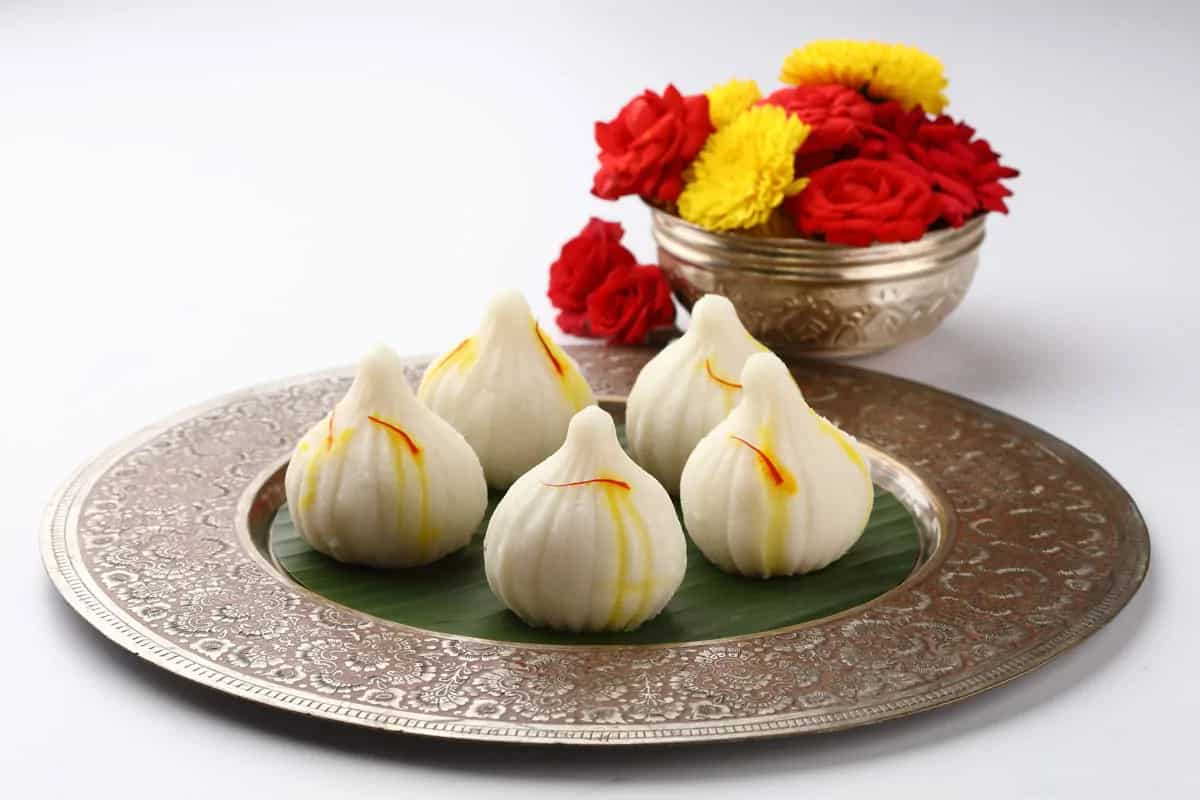
Modak
Nutritional Value
2600
Calories
per serving
- Fat69 g
- Protein39 g
- Carbs449 g
- Fiber26 g
- Sodium0 g
- Others0 g
- Place of OriginWEST,INDIA,,SOUTH,INDIA
- CuisineAsian,Indian,South Indian,Maharashtrian
- Common Ingredients
- CourseDessert
Since time immemorial, Ganesh Chaturthi has been associated with health and prosperity, unbridled jubilation, and mouth-watering Modaks. Every year, this Hindu festival is celebrated across various states in India—most prominently in Maharashtra, but also in Kerala, Goa and Tamil Nadu, to commemorate the birth of Lord Ganesha, the Hindu god of wisdom. They welcome the deity by installing a clay idol in their home and making Modaks in their kitchens.
Modaks have historically been considered to be the favourite food item of Lord Ganesha. Made primarily with a filling of jaggery and coconut, these sweetmeat treats resembling dumplings are prepared by rolling out a dough made of rice flour or maida, then separated into smaller dough balls, which are then flattened out using a rolling pin. A mix of jaggery and grated coconut is then used to fill these dough shells, sealed at the top, and steamed in a special container until the outer covering starts to become soft and chewy. It is then served straight out of the steamer with a generous drizzle of homemade ghee.
But considering Lord Ganesha is the god of intelligence and wellbeing, It is no surprise that Modaks are not just delicious, but also have many health benefits. Its long-standing legacy rests heavily on its superfood status—coconuts are easy to digest, boost metabolism and promote the production of good cholesterol. Furthermore, they also protect the body from disease-causing bacteria during monsoons, which is crucial since the festival takes place in the monsoon season. In contrast, jaggery activates the digestive enzymes in our bodies, promoting good gut health.
What’s even more interesting is the method employed to make these dumplings. Steaming retains almost all nutrients (like potassium, phosphorus and vitamins B and C, antioxidants) as well as the colour and texture of the dish. Thus, every bite of these heavenly dumplings is chock-full of wholesome goodness. Ancient Hindu texts like Samhitas and Vedas named Abhiayadi Modak and Shatavari Modak as food items used to treat symptoms of seasonal change and other health issues.
In India, this healthy sweet snack has flourished predominantly in coastal regions, where both palm jaggery and coconut are available in abundance. Each region has its own name for the iconic sweet bundle. It’s referred to as Modakam or Kumudu in Telugu, Kadubu in Kannada and Kozhakatta in Tamil and Malayalam. But the dish has also travelled to far-flung parts of the world like New Zealand, Canada and South Africa with the Hindu / Indian diaspora.
Not just in Hinduism, Modaks have also long been associated with Buddhism and have been served as offerings to Buddha.
Nutritional Value
2600
Calories
per serving
- Fat69 g
- Protein39 g
- Carbs449 g
- Fiber26 g
- Sodium0 g
- Others0 g