


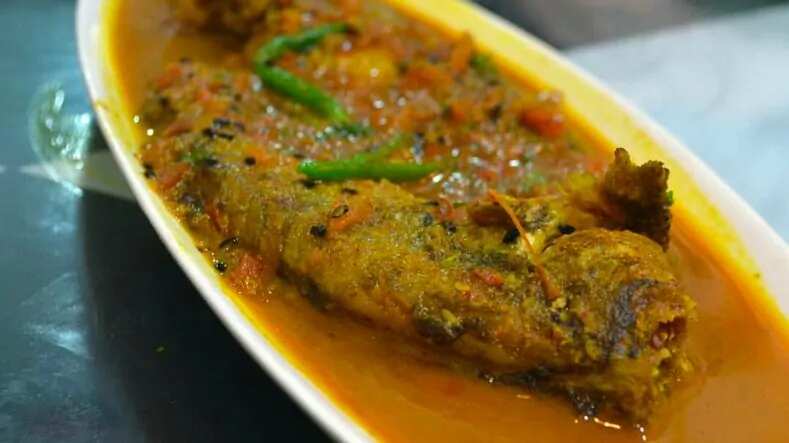
Machher Jhol
Nutritional Value
678
Calories
per serving
- Fat65 g
- Protein10 g
- Carbs13 g
- Fiber18 g
- Sodium0 g
- Others0 g
- Place of OriginWEST,BENGAL;,BANGLADESH
- CuisineBengali
- Common Ingredients
- CourseMain Course
An elixir for most Bengalis across the globe, the esteemed Machher Jhol (which literally translates to Fish Curry) is more an emotion than a dish. Originating as part of Bangladeshi cuisine, the dish found roots in India post the Partition. When West (present-day West Bengal and parts of Tripura) and East Bengal (present-day Bangladesh) separated, the two regions were already a culinary amalgamation of delectable wonders. Understandably then, the fish curry was shared between border states. Owing to the abundance of both freshwater fish and sea fish, the regions above the Bay of Bengal pride themselves for their sea-food rosters that have managed to woo the world for decades.
Machher Jhol is a prime dish that is served in most Bengali households on the daily. The preferred fish variant for the dish is either Rohu or Catla (a fattier version of Rohu), but smaller fish like Tilapiya or Bata may be used too. Recipes for the Jhol may vary from the more common tomato and nigella seed combination, to the richer mustard seed and poppy seed mix (Shorshe'r Jhol).
The interesting bit about Machher Jhol, largely prevalent in West Bengal, Odisha, and parts of Tripura, is the pre-frying of the fish before it marries with the spices. That Machher Jhol is a meticulously prepared dish is evidenced by each element being pre-cooked before mixing them. The spices that generally go into it include ginger paste, onion paste, cumin and coriander powder, garam masala and chilli powder. These are sautéed in a tawa (hot pan) with mustard oil for a good 15 minutes in order for the natural oils to release from the mash. This process of continuously stirring the mix into a rich, thick, well-cooked paste is known as ‘koshano’ in Bengali, also why dishes like Kosha Mangsho (a rich Mutton Curry) have a dense gravy, in which the mutton is cooked for hours.
Vegetables in the curry are also specific to the recipe. The basic watery Machher Jhol made simply with ginger paste, radhuni and nigella seeds, requires wedges of potato and ridge gourd as prime ingredients. The richer Kosha Machh variant can have only potatoes with finely chopped (and cooked) onion bits in it. Multiple fish curries across India (especially eastern India) pull in culinary inspiration from the Bengali Machher Jhol. In fact, within Bengali and Odiya cuisines themselves there are subdivisions of the fish curry with recipes like Doi Machh (fish prepared in yoghurt), Shorshe Machh (fish cooked in mustard paste), or even Machha Chhencheda (an Odiya speciality where the fish is mashed and cooked in a vegetable curry).
Nutritional Value
678
Calories
per serving
- Fat65 g
- Protein10 g
- Carbs13 g
- Fiber18 g
- Sodium0 g
- Others0 g