


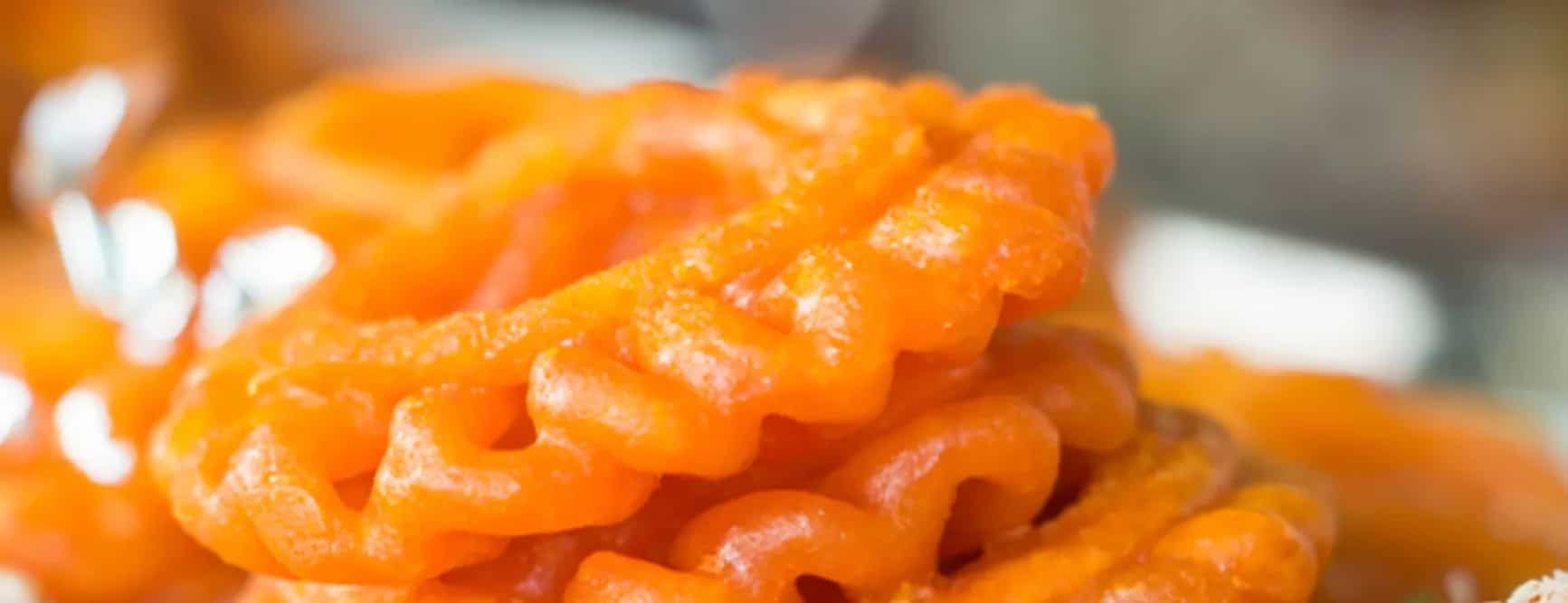
Imarti
Nutritional Value
1687
Calories
per serving
- Fat51 g
- Protein55 g
- Carbs245 g
- Fiber30 g
- Sodium0 g
- Others0 g
- Place of OriginNORTH,INDIA
- CuisineAsian,Indian,North Indian
- Common Ingredients
- CourseDessert
Bengal’s unabashed, almost reverential love for sweetmeat is hardly a secret for the grave. Arguably, some of the most iconic sweetmeat dishes, from Rosogolla, Ledikeni, and Chhanar Jilipi to Mihidana, Patishapta and Chomchom, have sprung out of east India.
Amriti or Imarti, is a sweetmeat dish that’s sold across West Bengal and Bangladesh both in prestige sweetmeat chains as well as by roadside vendors in makeshift sal leaf cups. This saffron-hued sweet dish resembles a hollow circular disc with decorative flower-petal accents around it. At first glance, it can easily be confused with Jalebi, which is also designed in concentric circles and is golden-yellow in colour.
But their culinary journeys have been markedly different.
To understand the differences between the two, it is imperative to trace the origins of both. In the case of Imarti, its other name Jahangir/Jhangiri is a direct reference to its era of origin. Historians suspect Imarti was conceived during Emperor Jahangir’s reign. The story goes that the emperor had a robust sweet tooth and often urged the royal cooks to create new varieties of desserts. After having exhausted all recipes, a cook then resorted to recreating a version of a Persian dessert named Zulbiya. But instead of using Maida (plain flour), the chef substituted it with the coarser, locally sourced black gram flour. Thus was born Imarti, the North Indian version of Zulbiya (or the modern-day Jalebi).
Even the textures of the dishes are different. Imarti was considered a key element in lavish Raj Bhog (royal feast) and was also offered as ritualistic gifts. Since such large batches of sweets needed to be stored before being distributed among guests, Imartis were made to be drier in consistency as opposed to the sticky, sugar-syrupy Jalebis.
Today, Imartis are a common sight at wedding ceremonies and religious festivals in eastern India, specifically in West Bengal, Jharkhand and Bihar, and parts of Rajasthan. In Uttar Pradesh, a Tawa-fresh Imarti is served with a dollop of heavy, sweetened cream for a sensory explosion. Imarti is also a staple at Bangladeshi weddings and festivals, and is the quintessential Iftar treat to polish off your Beef Tehari and Shami Kebab with.
Nutritional Value
1687
Calories
per serving
- Fat51 g
- Protein55 g
- Carbs245 g
- Fiber30 g
- Sodium0 g
- Others0 g