


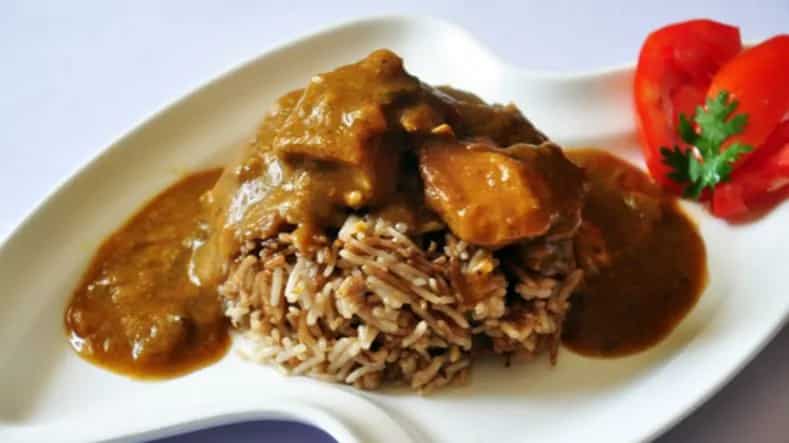
Dhansak
Nutritional Value
5573
Calories
per serving
- Fat42 g
- Protein133 g
- Carbs1390 g
- Fiber596 g
- Sodium0 g
- Others0 g
- Place of OriginWESTERN,INDIA
- CuisineAsian,Indian,Parsi,Maharashtrian,Gujarati
- Common Ingredients
- CourseMain Course
The gloriously eclectic Parsi cuisine is a fitting gastronomical account of a culture born out of the synergic integration of Persian (Iran), Marathi, Gujarati and British cuisines. It was during the Arab invasion of Iran in the 17th century that a small religio-ethnic group of Zoroastrians fled to the port city of Mumbai to avoid persecution. These Persians are the ancestors of the dwindling Parsi population in India, who migrated and settled down in the coastal belt of the subcontinent, primarily in Mumbai and Gujarat.
What makes Parsi cuisine unique is its ability to implement different styles of cooking and ingredients into a single dish. So there is generous use of dry fruits and meat in Parsi savoury dishes owing to their Iranian roots, but the community also incorporates lentils and rice into their dishes because of their ready availability in the subcontinent. Therefore, the Parsi cuisine boasts of many, many preparations that have a culturally rich past, be it the simple Akuri (scrambled egg) or the zesty, herby Patra ni Macchi (fish wrapped in banana leaf).
But the one preparation that is almost synonymous with this cuisine is Dhansak, a lentil stew made of goat, lamb or chicken, and served with a side of brown rice.
This dish emerges from the cross-pollination between Persian and Gujarati cultures—the original Persian dish named Khoresh was made with meat, vegetables and plums. But the use of spices was scant. By contrast, Dhansak, which derives its name from two Gujarati words ("saak" or green, leafy vegetables, "dhan" or rice), uses Indian spices like cinnamon, cloves, nutmeg, cumin seeds and asafoetida in its gravy, lending it a more pungent, savoury hit. Sometimes, even pumpkin and squash are added to tenderise the mutton pieces.
While Dhansak was traditionally only prepared in Parsi households, the latter part of the 19th century witnessed a sudden burgeoning of Iranian cafes in and across Mumbai. These pocket-friendly breakfast hubs, offering Bun-Maska and Mawa Cake with a cup of Iranian spiced tea became as popular as the Udupi restaurant chains and their platters of Masala Dosa and Idli Sambar. Britannia and Co, the iconic century-old Parsi cafe in Mumbai, still serves their lip-smacking Mutton Berry Pulao encrusted with sweet pomegranate seeds, unsalted cashew and caramelised strips of onion.
Nutritional Value
5573
Calories
per serving
- Fat42 g
- Protein133 g
- Carbs1390 g
- Fiber596 g
- Sodium0 g
- Others0 g