


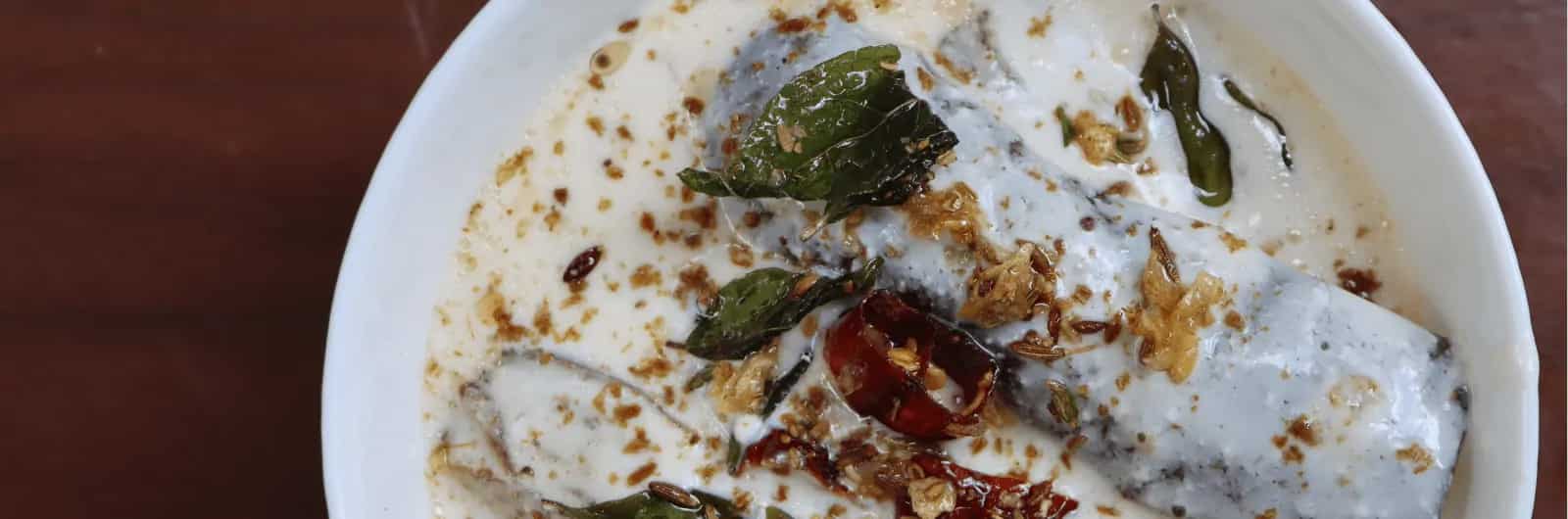
Dahi Baingan
Nutritional Value
441
Calories
per serving
- Fat22 g
- Protein12 g
- Carbs51 g
- Fiber6 g
- Sodium0 g
- Others0 g
- Place of OriginODISHA
- CuisineAsian,Indian,Odia
- Common Ingredients
- CourseStarter & Appetizer
Dahi Baingan or brinjal with curd is a side dish popular in Odisha, often referred to as khatta. Odisha’s rather unexplored cuisine is known for two things: mustard oil, and panch phoron or five spices, a combination of mustard, cumin, fenugreek, nigella seeds, and fennel seeds, both of which this dish uses. Besides these two ingredients, to make Dahi Baingan, one will also need eggplant, turmeric, cumin, coriander, red chilli, asafoetida, curry leaves, curd, ginger, salt, and sugar.
The brinjal or eggplant is indigenous to India and appears in several ancient texts. The Pakashastra, the first known Indian cookbook, mentions a baingan recipe. Since the text was passed down orally and is hard to date, its exact date is difficult to estimate, but many agree that it grew out of the same time period as the Mahabharata. A 2010 study found remnants of cooked brinjal in shards of pottery found in Farmana, Haryana, one of the largest Harappan sites related to the Indus Valley Civilisation.
Curd and brinjal are a powerhouse combination, both bringing with them phenomenal health benefits. Curd aids in digestion, improves immunity, contributes to stronger bones and teeth, and prevents the buildup of cortisol in the body, which causes hypertension. It also contributes to healthier skin, preventing wrinkles and dandruff, and removing dark spots. And baingan, besides being rich in fibre, vitamins, and minerals, is also packed with antioxidants that protect against cell damage. It also maintains one’s blood sugar level. Being low in calories, it may also promote weight loss, depending on the rest of the diet and lifestyle. Being a versatile and easily accessible ingredient, it’s also easy to add to one’s diet.
Nutritional Value
441
Calories
per serving
- Fat22 g
- Protein12 g
- Carbs51 g
- Fiber6 g
- Sodium0 g
- Others0 g