


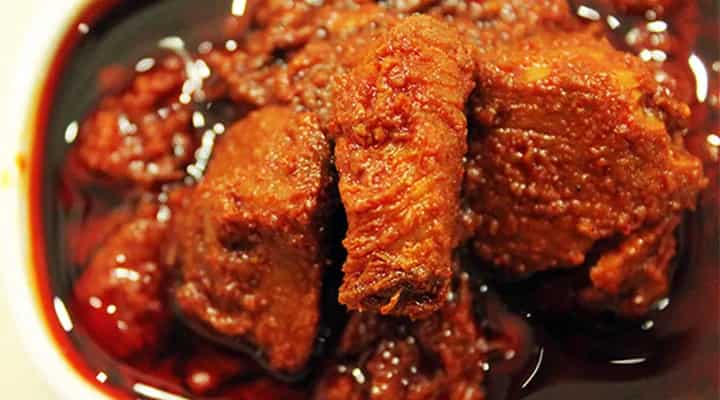
Chicken Pickle
Nutritional Value
3871
Calories
per serving
- Fat202 g
- Protein269 g
- Carbs256 g
- Fiber245 g
- Sodium0 g
- Others0 g
- Place of OriginSOUTH,INDIA
- CuisineAsian,Indian,South Indian
- Common Ingredients
- CourseCondiment
If there is one food item that is ubiquitous in its presence in the pantry of an Indian household, it is achaar (pickle). Made with almost any widely available produce, ranging from mango, jackfruit, tomato, and chilli to carrot, amla (Indian gooseberry), brinjal and lemon, this sweet, sour and spicy side is a non-negotiable part of any Indian meal.
In several parts of the country, not just fruits or vegetables, but different kinds of meat are also used to make pickles. For example, Nagaland’s pork pickle, made with the infamously hot Bhut Jolokia, is a spice lover's darling. Similarly, Andhra Pradesh and Telangana are especially known for their diverse meat pickles made with chicken or lamb.
Kodi Chutney or Pachadi is a specialty achaar made from chicken, with an impressive shelf life of six months without refrigeration. This achaar doesn’t use vinegar or chemical preservatives in its recipe. Instead, lemon juice and mustard oil are used as the primary pickling agents.
However, since most of these pickles were concocted by families and passed down generations, there is no standardised set of recipes to make achaar. The most prevalent method of making Chicken pickle at home entails dehydrating the meat with salt and turmeric. The reason behind extracting the moisture out of the chicken is to ensure the food remains fresh for months. This is also the reason why pickles are stored in airtight glass jars. For a more robust spice hit, the chicken can additionally also be marinated in garam masala (Indian five-spice mix), red chilli powder and fenugreek seed powder.
After letting the meat rest for a few hours in a spice bath, it is fried in a wok with ginger garlic paste and mustard oil. Once cooled, the fried chicken pieces are swathed generously in lemon juice and kept out in the sun so that any remaining moisture gets evaporated before it's ready to be eaten.
Food historian KT Acharya remarks that pickling is essentially a form of cooking without heat. Moreover, because of how fuss-free it is to store pickles, they would historically make for great food items to be taken for long and arduous voyages.
Nutritional Value
3871
Calories
per serving
- Fat202 g
- Protein269 g
- Carbs256 g
- Fiber245 g
- Sodium0 g
- Others0 g