


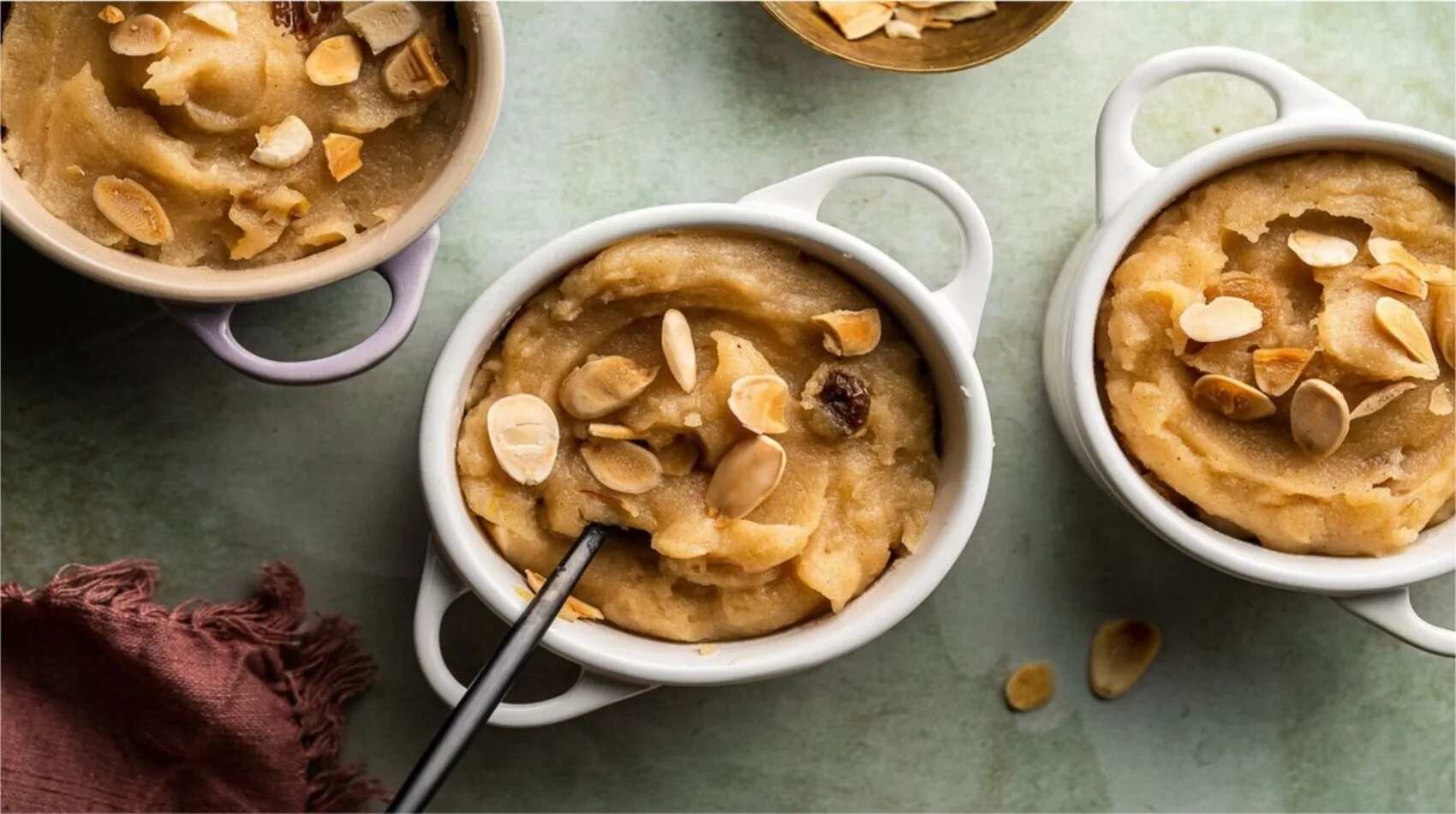
Badam Halwa
Nutritional Value
2266
Calories
per serving
- Fat200 g
- Protein66 g
- Carbs54 g
- Fiber40 g
- Sodium0 g
- Others0 g
- Place of OriginINDIA
- CuisineAsian,Indian
- Common Ingredients
- CourseDessert
Ghee, sugar, and almonds. Three ingredients and badam halwa, one of India’s favourite desserts, comes to life. Soak and blend almonds with water till the paste has a rava-like consistency. Start cooking it in a pan, adding sugar and then ghee in batches of one to two spoons, stirring constantly. With this seemingly simple recipe, the main thing to get right is the consistency. With a lot of handwork, the process of making badam halwa is a slow but rewarding one.
Almonds, the star of this dessert, are rich in protein, nutrients, and fibre. They’re rich in antioxidants, protecting one’s cells from oxidative damage, and thereby preventing ageing and disease. They can also help control type 2 diabetes and regulate blood pressure. They lower cholesterol levels, thus contributing to better heart health. They also make one feel fuller, thereby reducing overall calorie intake. While more research is needed, they may also promote weight loss.
Badam halwa is part of a long history, which starts with the first halwa recipe appearing in a 13th century Arabic text called Kitab al-Tabikh (The Book of Dishes) by Muhammad ibn al-Hasan Ibn al-Karim. It mentions a total of eight different types of halwa.
Today, different parts of India have adapted the dessert to their liking, making the dish distinctly and lovingly Indian. There’s Pune’s Hari Mirch Halwa (green chilli halwa), West Bengal’s Cholar Dal Halwa, UP and Bihar’s Anda Halwa, Karnataka’s Kashi Halwa, Kerala’s Karutha Haluwa, Moong Dal Halwa, and the famed Gajar Ka Halwa.
Nutritional Value
2266
Calories
per serving
- Fat200 g
- Protein66 g
- Carbs54 g
- Fiber40 g
- Sodium0 g
- Others0 g