


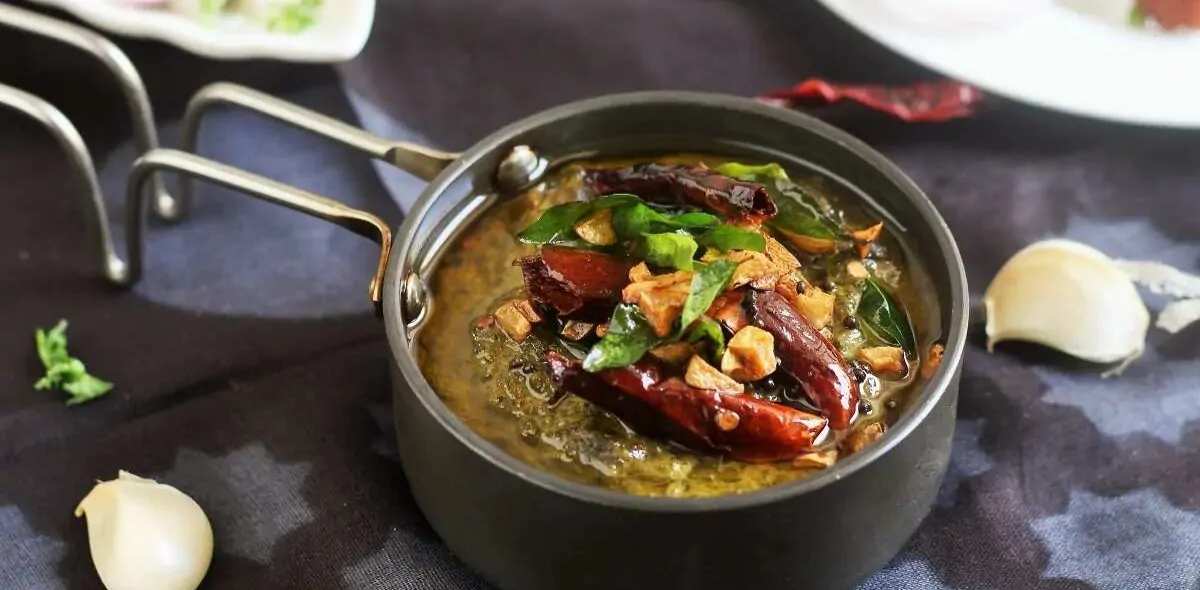
Andhra Gongura Pachadi
Nutritional Value
39
Calories
per serving
- Fat0 g
- Protein3 g
- Carbs5 g
- Fiber8 g
- Sodium0 g
- Others0 g
- Place of OriginANDHRA,PRADESH
- CuisineAsian,Indian,Andhra
- Common Ingredients
- CourseCondiment
Since the dawn of civilisation, pickling has been an integral part of Indian cuisine and a lasting tradition that is believed to be more than 4000 years old. The earliest archaeological evidence of the humble Indian pickle is from the Tigris valley and dates back to 2030 BC. In the Indian state of Andhra Pradesh, pickle is synonymous to Gongura (sorrel leaves), that are quintessential elements of innumerable Andhra recipes. In fact, it is locally hailed as the Gongura Matha (mother Gongura) owing to Andhra’s unquestionable dependence on the leaves for its daily diet. Though the Gongura is popular under different aliases all across the nation, be it the Marathi Ambaadi, the Bengali Mestapata, the Assamese Mwitha, or the Tamil Pulichakeerai, it is the Gongura Pachhadi or Gongura pickle of Andhra that enjoys the most celebrated position in the Deccan cuisine. To the people down south, a plate of piping hot rice, generous amounts of ghee (clarified butter) and some Gongura Pachadi is a marriage made in heaven.
This Andhra delicacy, mandatory in all family reunions, festivals, and celebrations, is a must on Dussehra, Sankranti, and most importantly, on Kartika Poornima, when every year, ladies traditionally assemble beneath a gooseberry tree, lay a mat under the full-moon sky, and consume the Gongura Pachhadi with rice and other delicacies. To prepare this iconic pickle, one needs to lightly saute sorrel leaves, fenugreek seeds, red chillies, and coriander seeds which are then blended to a thick paste. The paste is added to tempered urad and chana lentils and mustard seeds and cooked till the mustard pops, followed by a topping of curry leaves.
Most historians believe that the affordability of Gongura has been instrumental behind the pickle’s equal appeal to all classes. It is speculated that the control of market stocking by the upper classes had historically deprived the Andhra Adivasis (tribals) of nothing more than wild produced Gongura, making its pickle increasingly popular among the common masses. Historian Pushpesh Pant opines that it is pointless to try and date the origins of the Gongura or its Pachhadi because local traditions consider the perennial herb to be ‘as old as the hills’. The leaves have therefore been foraged and cooked for centuries, if not millennia, by the Andhra inhabitants. So, instead of trying to discern the creator of the Pachadi, it is better to enjoy the sourness and pungency Gongura adds to food and relish the uncountable health benefits the pickle has to offer.
Nutritional Value
39
Calories
per serving
- Fat0 g
- Protein3 g
- Carbs5 g
- Fiber8 g
- Sodium0 g
- Others0 g