


 Share
Share

Editor’s note: This feature is adapted from “The long fascinating history of food additives – and why we’re stuck with them” by Gunter Kuhnle, University of Reading, first published in The Conversation on 18 September 2026. It has been reworked for Slurrp readers with additional Indian context. Read the original here.
*
TURN OVER almost any packet in your kitchen, whether biscuits, bread or a bag of bhujia, and somewhere under the ingredients sits a little cluster of codes. INS 322. INS 471. INS 500(ii). Perhaps a coy “contains permitted Class II preservative”. Most of us skim past, vaguely sure that numbers in food can’t be good news.
The haldi in your masala dabba has one too. Curcumin, the pigment that turns dal yellow, is INS 100, top of the list. (INS is the International Numbering System that Indian labels follow. Europe puts an E in front of the same codes, hence “E-numbers”.) The silver varq on kaju katli is 174. The nimbu sat that sharpens chutneys and khaman batter is citric acid, 330. Khane ka soda is 500.
Additives, in other words, didn’t arrive with the factory. They’re among the oldest tricks in the kitchen, and their story takes in Roman wine, Victorian poisonings and a thorn hedge across India.
THE SILVER ON YOUR BARFI
That varq, as it happens, is regulated down to the gram. Under FSSAI rules notified in 2016, food-grade silver leaf must be at least 99.9 per cent pure and weigh no more than 2.8g per square metre, and no animal material may be used at any stage of making it. That last clause is there because varq was traditionally made by placing silver inside cow or buffalo intestines and hammering it thin over a granite stone. For generations, plenty of “vegetarian” mithai wasn’t quite. Far from being tossed carelessly into food, additives tend to be regulated with almost fussy precision.
WHAT THEY ARE ACTUALLY FOR
Mostly, it’s about control. No two batches of your mother’s laddoos come out identical, and nobody wants them to. A factory making lakhs of biscuits a day doesn’t have that luxury: the thousandth packet must taste like the first.
Nature makes that harder than it sounds. Wheat from a cool, wet year bakes differently from a hot, dry year’s crop, so bread makers use vitamin C and emulsifiers to even things out. Fruit grown in more sunshine has less natural pectin, so jam makers add some to make sure every jar sets. If you’ve ever set a mango pudding with China grass, you’ve used a gelling agent yourself: it’s agar, INS 406.
Above all, additives preserve. Calcium propionate (INS 282), listed on most Indian bread packets, holds off mould, and antioxidants stop oils going rancid. Longer shelf lives mean food travels further and costs less.
ASH, SALT & A HEDGE ACROSS INDIA
We were preserving food long before we were writing anything down. Finds from Qesem Cave in Israel suggest people used ash to preserve food as far back as 200,000 years ago.
Salt came next, and never left. When harvests were unreliable, which was most of history, salting and pickling were survival skills, and salt became valuable enough to build empires on. India knows this better than most. In the 19th century, the British taxed salt so heavily that they ran a customs line across the country to stop untaxed salt slipping through. Stretches of it were a living hedge of thorny bushes. In 1930, Gandhi walked to Dandi and scooped up a fistful of salt from the shore. Among other things, it was a protest over the price of a preservative.
Every barni of achaar sunning on a terrace belongs to that lineage: salt, oil and acid doing slowly what factories now do with numbers.

WHAT THE ROMANS PUT IN THEIR WINE
Roman kitchens had a surprisingly modern toolkit. Nitrates, found naturally in some rock salt, cured meat and kept it pink, the same job nitrite (250) and nitrate (251) still do in bacon and ham. Winemakers burned candles of mined sulphur to fill vessels with sulphur dioxide, which stopped wine and fruit from spoiling. Most wine still contains sulphites.
Flavour came from garum, a pungent sauce of fermented fish guts splashed over nearly everything for its salty, savoury depth. Nearly two millennia later, in 1908, the Japanese chemist Kikunae Ikeda traced that same savouriness in kombu broth to glutamate. He named the taste umami and developed a seasoning sold as Ajinomoto, which is why so many Indians still call MSG by a brand name.
Sweetness came from somewhere darker. Boiling grape juice in lead pots produced lead acetate, a calorie-free sweetener stirred into wine. It took centuries to establish that it was poisonous.
ENTER THE CHEMISTS
By the late 18th century, chemists could extract some of these compounds in a lab: lecithin from egg yolk (INS 322, now mostly from soy and sunflower), pectin from apples and agar from seaweed. Soon they were synthesising them, which was cheaper and more predictable. Baker’s ammonia, a raising agent once obtained from deer antlers (hence its old name, salt of hartshorn), could now be made from soot. Artificial pear and banana sweets, flavoured with amyl acetate from fermenting alcohol, debuted at London’s Great Exhibition in 1851, and coal tar soon supplied the first synthetic dyes.
Margarine arrived in the 1870s, made from beef fat and skimmed milk as a cheap butter substitute. By the turn of the century, chemists could turn liquid vegetable oil solid by forcing hydrogen through it at high temperature, and India ran with the idea. Vanaspati, or Dalda to generations of households, became the ghee substitute of the 20th-century kitchen and halwai shop. The same process created trans fats, which India now caps at 2 per cent in oils and fats.
A ROGUE'S GALLERY
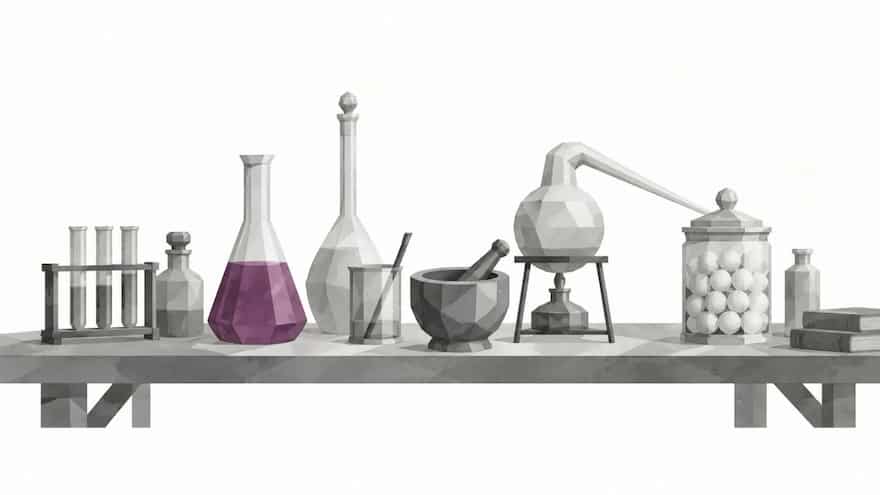
Not every chapter ends well, usually because of who was doing the adding. Bakers whitened bread with chalk while many of their customers were already malnourished. Wine was sweetened with lead salts long after they were known to be toxic, and in a few modern scandals with antifreeze. Borax disguised sour milk and butter. In Bradford, England, in 1858, sugar was so heavily taxed that confectioners routinely bulked it out with plaster of Paris. One apprentice mixed up the plaster with arsenic, and around 20 people died from the peppermint lozenges.
India has its own list. The Prevention of Food Adulteration Act of 1954 was written for a country where brick powder turned up in chilli, and metanil yellow, an industrial dye not permitted in food, brightened turmeric and dal. FSSAI still publishes a booklet of home tests for spotting adulterants. These were frauds, though, not approved additives. The two are easy to confuse, and often are.
FROM MODERN MIRACLE TO LABEL PANIC
The 20th century had far more mouths to feed and hundreds of new compounds to feed them with. Canned meat, cheese slices and crisps all leaned on additives. In 1961, Britain’s Chorleywood process (fat, vitamin C, extra yeast and high-speed mixing) did away with hours of proving and gave the world the soft, square sliced loaf. Instant soups, packet desserts and luminous sweets followed, and for a couple of decades it all looked like progress.
The backlash began in 1973, when the Californian allergist Benjamin Feingold blamed artificial colours and flavours for hyperactivity in children. His diet became a craze, though research never found much proof it worked. In 1984, Maurice Hanssen’s bestseller E for Additives turned E-numbers, designed as a badge of safety, into a warning sign. A 2007 UK study did link six artificial colours, including tartrazine and sunset yellow, to a small rise in hyperactivity, and Europe responded with warning labels rather than bans. India’s own bogeyman remains “Ajinomoto”. Its reputation traces to a 1968 letter in an American medical journal, though controlled studies have struggled to reproduce the symptoms that letter described.
THE CLEAN-LABEL SHUFFLE
Manufacturers answered with “free from” labels, often by swapping a numbered additive for a plant extract containing the same compound. Acerola cherry extract stands in for vitamin C (E300), and seaweed extract for carrageenan. Celery powder in cured meats supplies nitrite, which still keeps the meat pink and kills bacteria; the label just doesn’t say so. The catch is that a well-tested compound can end up being replaced by an extract that’s less understood, varies from batch to batch and may carry natural toxins of its own.
Your kitchen isn’t exempt either. The hing in your dabba is almost certainly compounded asafoetida: resin blended with flour and gum arabic (INS 414) to tame it and make it pourable.
HAZARD, RISK & YOUR ACHAAR
In 2023, the International Agency for Research on Cancer (IARC) classed aspartame as possibly carcinogenic. At the same time, the joint FAO/WHO expert committee that advises food regulators worldwide reaffirmed a safe daily intake of 40mg per kilo of body weight. Both can be right, because they ask different questions. IARC asks whether something could cause cancer at all; the committee asks whether it does at the amounts people actually eat. IARC lists the sun as a known carcinogen, and we still step out for vitamin D. We manage the dose. Aspartame, for the record, shares its category with aloe vera extract and traditional Asian pickled vegetables.
Emulsifiers are the current worry. Some studies suggest they alter gut bacteria and the gut lining, but nobody yet knows whether that’s harmful or lasting. Changing the microbiome isn’t bad in itself; it’s exactly what fermented foods like dahi are prized for. With ultra-processed food, the bigger problems tend to be too many calories and too little fibre rather than any single additive. When the evidence is clear, regulators do act: Red 2G, a sausage and burger colouring, was withdrawn across Europe in 2007 over cancer concerns.
WHAT'S BREWING
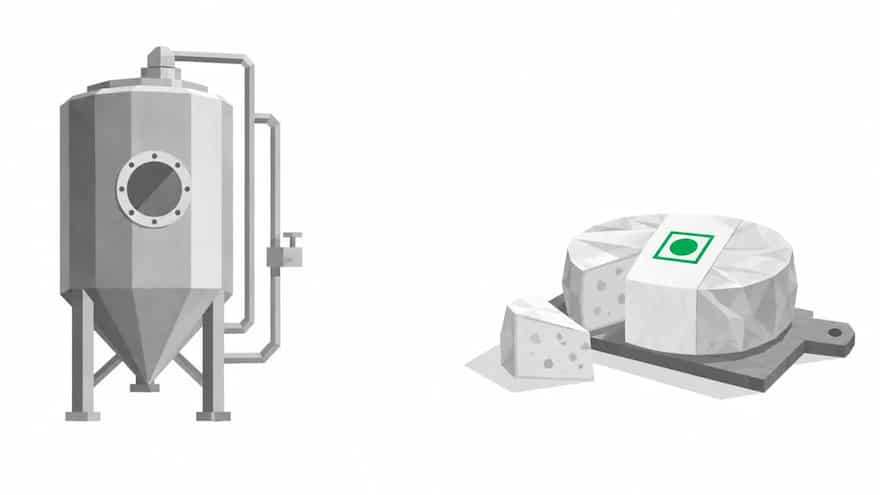
The future is partly brewing in tanks. Since the early 1990s, cheesemakers have used chymosin, the enzyme that splits milk into curds and whey, made by microbes rather than taken from calves’ stomachs. It’s one reason so much cheese sold in India can carry a green dot. In the US, you can already buy milk whose dairy proteins were brewed by microbes, not made by a cow. Researchers are using AI to find compounds that trick the tongue into tasting salt or sugar that isn’t there. Others are wrapping additives in microscopic fat bubbles so colours don’t fade on the shelf and vitamins survive the heat.
Back in the masala dabba, the oldest additive in the house carries on regardless. Long before anyone numbered it, haldi was colouring dal and khichdi and being rubbed into fish before it met the pan. INS 100 is simply what the paperwork calls it.




