


 Share
Share

Every year on October 16, World Food Day asks all nations of planet Earth to confront an uncomfortable but blatant truth: the fact that feeding humanity remains unfinished business. Established in 1979 by the Food and Agriculture Organisation (FAO), the annual observance highlights hunger, nutrition, as well as the need for food systems that work for everyone. This year’s theme: Innovate today. Nourish tomorrow, looks forward to a better food future, but innovation alone cannot solve a crisis that is rooted as much in inequality, privilege, and political choices as in agricultural production.
Food is as fundamental to human survival as shelter, clothing, and community. It has always been. You can debate ideology, argue about political reform, and even tolerate inequality, but the daily business of eating cannot be postponed indefinitely. When people can not afford bread, rice, or other daily staples, economic hardship becomes painfully tangible and really difficult to overcome. History repeatedly shows how that distress can transform private desperation into public rage and unity. The scale of today's problem makes these historical lessons even more relevant.
According to the FAO's 2026 global hunger estimates, approximately 645 million people experienced hunger in 2025, while 2.1 billion faced moderate to severe food insecurity. India has made substantial progress in reducing hunger, but malnutrition remains a serious concern. The country's National Family Health Survey-5, conducted in 2019 to 2021, found that 35.5% of children under the age of five were stunted and 19.3% had a wasted physique. These are measures of poor nutrition, not direct counts of people going hungry, but they do highlight the actual distance between production of food and the assurance that people shall receive their adequate nourishment.
Across centuries, hunger has become a formidable force to reckon with, especially when widespread. It has succeeded in toppling rulers, intensifying revolutions, exposing colonial failures, and forcing governments to reverse unpopular or poorly thought-out policies. Here are a few historical moments when food became so much more than sustenance.
1. The French Revolution, 1789: When Bread Became A Matter Of Power And Privilege
Few historical episodes capture the political potency of food as vividly and poetically as the French Revolution. By 1789, France was struggling with a financial crisis, deep social inequality, and potent resentment towards a feudal class and aristocracy whose privileges appeared increasingly indefensible and lavish. Poor harvests and rising bread prices made an already explosive situation even more immediate, especially since almost every ordinary family was struggling to afford even a single staple essential for daily survival. Now, bread was not an occasional indulgence or their morning breakfast.
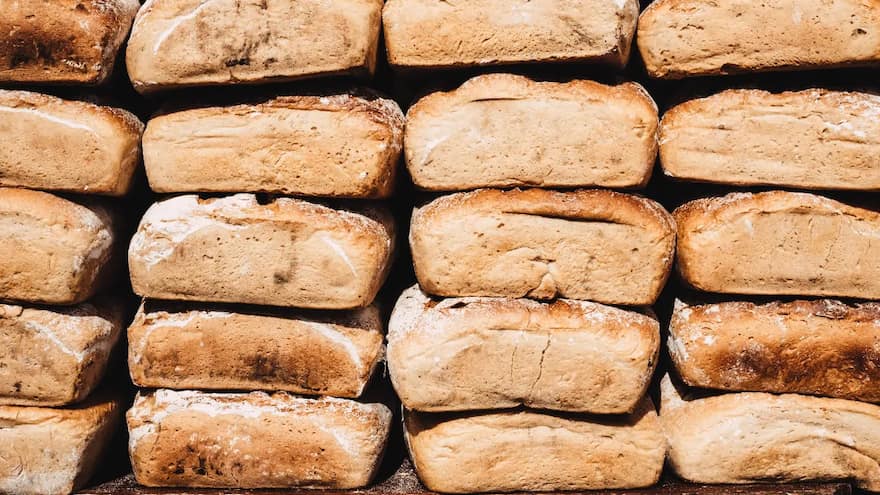
Image credit: Pexels
For the majority of working households, it was a dietary necessity, much like the desi roti, and a sudden increase in its price left little money for anything else. This crisis helped transform abstract grievances about taxation and inequality into a question of whether families could even sustain themselves or their children. And when scattered complaints unite into a giant, bellowing voice for basic rights, well, the ruling class better run for their lives. On October 5, 1789, thousands of women and other demonstrators marched from Paris to Versailles demanding relief from food shortages and high prices. The Women's March on Versailles forced Louis XVI and his family to return to Paris, bringing the monarchy under much closer public scrutiny.
Plus, there is the notorious line, "Let them eat cake", supposedly uttered by Queen Marie Antoinette when she was informed that her subjects had no bread to eat. The attribution is unsubstantiated, and the anecdote had been circulated before she even ascended the throne after marriage. Nevertheless, as History explains, the story became an enduring symbol of aristocratic indifference and unparalleled privilege, literally leading to the loss of her fair head.
Hunger did not single-handedly overthrow the monarchy or dismantle feudal privilege. But it did give inequality a price tag, and that price was paid in lives at the baker's counter. After all, royal splendour looks rather different and unbecoming when the people outside the palace gates cannot afford their next loaf.
2. The European Revolutions Of 1848: When Economic Misery Fuelled A Continental Upheaval
The revolutionary wave that swept across Europe in 1848 was driven by demands for political representation, national self-determination and social reform. Yet beneath the slogans lay years of economic hardship that had left many households vulnerable. Harvest failures in 1845 and 1846 contributed to food shortages and rising prices across parts of Europe. These difficulties were followed by an industrial slide downwards in 1847, which compounded unemployment and declining living standards into an unbearable, boiling swirl of resentment. Workers and poorer rural communities found themselves being squeezed from both directions: necessities were becoming expensive, while earning enough to buy them had become more difficult.
A quantitative study published in The Journal of Economic History examined economic conditions across 27 European countries and found that immediate economic misery and the fear of further hardship played a substantial role in triggering these revolutions. The upheavals challenged established monarchies and political systems, although their outcomes varied considerably from country to country. For instance, in Ireland, from 1845, an unlucky potato blight, poverty, unequal landholding, and colonial rule were enough to throw Irish society into chaos till the 1850s. Unlike a revolution that brings a government down overnight, the Great Famine's impact was demographic, social, and political over generations. It intensified Irish resentment towards British rule and became a lasting symbol of the consequences of failing to protect a population from mass hunger.
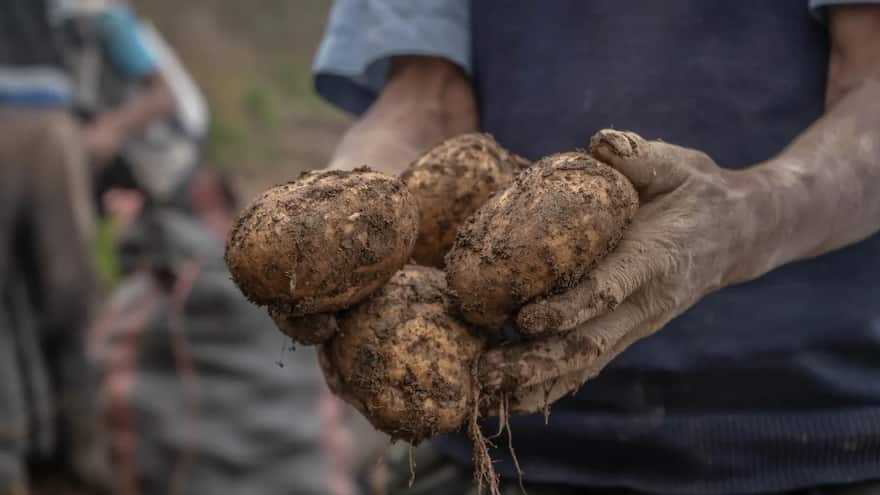
Image credit: Pexels
Ironically, several revolutionary victories and gains were reversed later, and Europe did not suddenly turn into a continent of democracies. Nonetheless, the events of 1848 demonstrated how food insecurity could intensify demands for political change. People who struggled to afford necessities had little reason to trust institutions that seemed incapable of protecting their basic rights as humans and livelihoods. The revolutionaries had political manifestos, of course, but their empty purse and the expensive and unattainable daily loaf were part of the story too.
3. The Bengal Famine Of 1943: When Colonial Governance Completely Failed Its People
For India, the Bengal famine of 1943 is a truly devastating example of how food scarcity can become a catastrophe when economic vulnerability meets utter administrative failure and conflicting personal gain interests. During the Second World War, Bengal faced everything, despite not being an active battle contender in its own right: wartime inflation, disruption to food supplies, market speculation, as well as serious failures in relief and distribution. The loss of rice imports from Burma added more fuel to the fire. While the importance and connection of these factors remains debated by historians, the disaster cannot be understood simply as a shortage of crops. The situation was so dire that some mothers begged for fyan (the starchy water left over when rice is cooked) to feed their children.
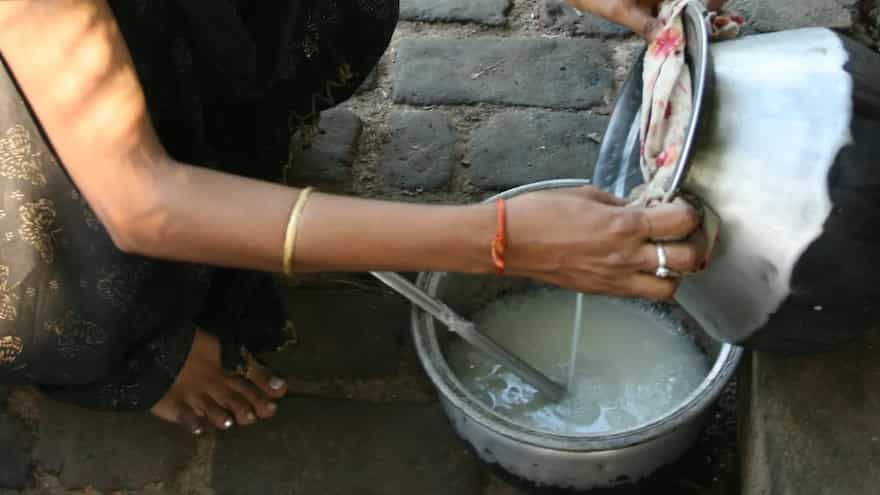
Image credit: Wikimedia Commons
This is why basic access to food and the response of the colonial administration are always crucial. Millions died, with three million commonly cited as an upper estimate of the Bengal famine mortality. The most painful part of this catastrophe is that hardly a century or a century and a half earlier, this very state of India was among its richest and most prosperous states, with its agriculture and trade peaking in that part of the hemisphere. Then the British arrived for colonial gains, eyeing the golden-egg-laying hen that Bengal was, and the rest is history. Despite multiple struggles for Independence, it took a long time for India to get rid of that particularly toxic relationship.
The Bengal famine did not end British rule, nor did it produce an immediate political outcome. But its historical significance is showcased in the terrible exposure of a system that failed to protect millions of vulnerable people during a food emergency. It deepened the moral indictment of colonial governance and remained central to subsequent discussions of poverty, entitlement, as well as the responsibility of governments in preventing starvation, even if the people under them are not “their own”, per se. The lesson is stark and solemn here: food can often exist in markets and producing regions while the people are unable to obtain or even get a glimpse of it. Availability means nothing when purchasing power and distribution cause food to be deliberately elusive for the common man.
4. The Bihar Food Crisis, 1966 To 1967: A Warning That Changed India's Agricultural Priorities
India's post-independence food crisis of 1966 to 1967 exposed the vulnerability of a nation that was struggling to deal with poor harvests, drought, and insufficient grain supplies. Bihar and parts of eastern Uttar Pradesh were badly affected by crop failures, while the country as a whole faced severe pressure on food production. A detailed study in The Journal of Asian Studies examines how the crisis was recognised and managed, including the importance of defining its severity and determining the scale and timing of relief. Thankfully, local, national and international efforts helped avert a gigantic catastrophe of a fearsome scale, but the response was uneven and the hardships severe.
The Bihar-UP crisis intensified the urgency of improving India's agricultural productivity. It formed part of the context in which high-yielding crop varieties, irrigation, fertilisers and other elements of the Green Revolution gained importance. These changes helped raise grain production and reduced India's dependence on imported food over time, although the transformation was neither immediate nor without environmental and nutritional trade-offs.
It would be misleading to claim that the Bihar crisis alone led to the creation of the Green Revolution. But the harrowing experience did teach a fundamental lesson to Indian policymakers: food security can not pin all its agricultural hope on a favourable monsoon or on the natural resilience of crops only. Back then, the country's ability to feed itself had become a question of national resilience and political responsibility, so the government had to step up to feed its own people, or succumb to its failure. And step up, they did.
Bottom Line
The common thread is not that hunger automatically produces revolution. It is that deprivation becomes politically explosive when people believe their suffering is preventable, yet their hardship is ignored, and those in power are unwilling to act. On World Food Day, celebrating agricultural innovation is important. But technology cannot substitute for affordable food, functioning distribution systems, fair livelihoods, and equal social protection.
India's previous food crisis experiences show that agricultural investment can transform and enhance food availability, but the nation’s continuing nutritional challenges highlight why production alone is not enough to bridge the gap. The future must be measured not merely by how much food the world grows, but whether people can afford and access a diverse, nutritious diet without sacrificing other basic essentials. And governments must prepare for climate shocks, protect vulnerable households, and ensure that food crises are addressed before the desperation spills into the streets.




