


 Share
Share

Editor’s note: This is the third piece in our Khapli series. We’ve looked at the grain through a chef’s technical eye — Dhruv Oberoi and the two-day kulcha. Now we turn to a different kind of Khapli convert... someone who arrived at it not through professional curiosity but through his own kitchen, his own rotis, and a genuinely personal switch.
***
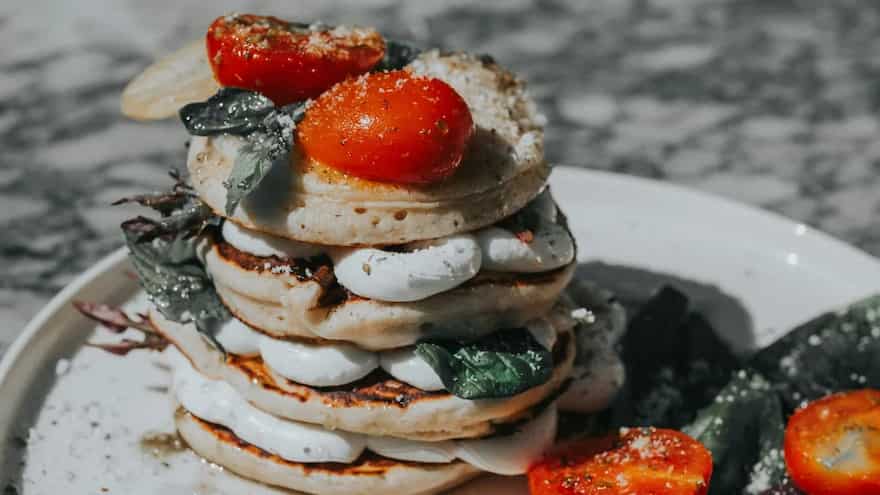
PICTURE THIS: a plate of savoury pancakes, golden and crisp, topped with a cloud of burrata, a drizzle of herb oil, and a scattering of cherry tomatoes. The flour they’re made from? The same ancient Emmer wheat your grandmother’s grandmother may have used for her daily roti. That is the kind of range Khapli atta has — and it took a food writer switching his own rotis to prove it.
Nikhil Merchant, noted food writer and F&B consultant based in Mumbai, is that kind of Khapli convert. He did not come to it through technique. He came to it through instinct — and through a genuine, daily preference for Khapli wheat flour that has stayed with him.
“Wheat has received a lot of criticism in recent years, but in its true, unprocessed form, it has been a staple of our diets for generations. Khapli wheat, in particular, is one of the most valuable ancient grains available today. Given how easily accessible it is to us compared to much of the world, we should make the most of it whenever possible. It is highly nutritious, rich in fibre, lower on the gluten index, and overall a well-balanced ingredient to incorporate into one’s daily diet. I’ve personally switched to Khapli wheat whenever I eat rotis, and beyond the health benefits, they also have a distinctly earthier, more rustic flavour that I truly enjoy," he says.
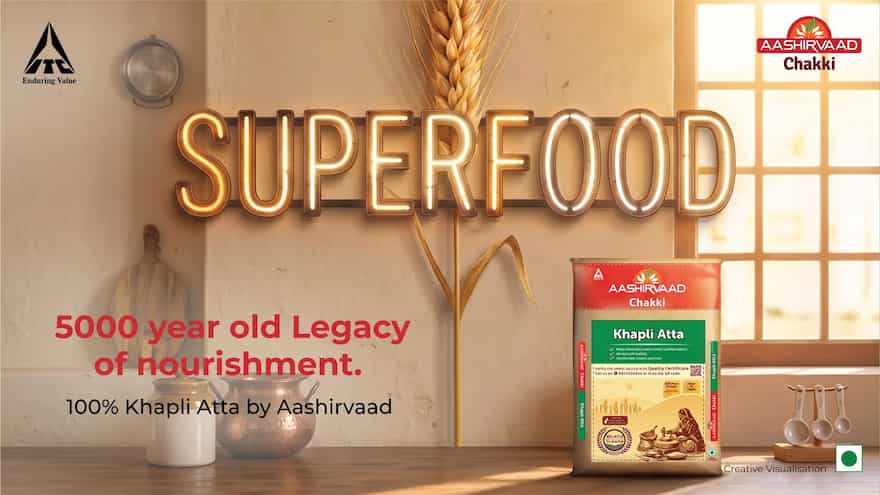
The numbers behind Nikhil’s instinct are worth knowing. For instance, one of the notable brands in space, Aashirvaad Chakki Khapli Atta contains 11.4g of dietary fibre per 100g — compared to 2.76g in refined flour. Three rotis provide approximately 34% of your daily fibre requirement and 23% of the daily protein requirement. Iron content is 3.3mg per 100g, against 1.77mg in maida. Calcium runs higher too. The grain’s lower gluten content — not gluten-free, but meaningfully lower than modern wheat — is what some people associate with feeling lighter after a meal, though the high fibre content also plays a role. None of this is incidental. It is what stone-ground, minimally processed Emmer wheat actually delivers, and what Nikhil reaches for without having to think about it.
EDITOR’S PICK: Healthy Eating Habits for Busy Indian Families
His recipe, though, is anything but predictable for a flour most people associate with rotis. Khapli Wheat Savoury Pancakes with Burrata and Herb Oil is the kind of dish that makes a case for Khapli in a completely different direction: as a breakfast flour, as a batter base, as something that works beautifully outside its traditional context.
The batter is straightforward — Khapli flour, egg, buttermilk, onion, green chilli, coriander, cumin, salt and pepper, rested for ten minutes before it hits the pan. What the resting does is let the flour hydrate fully and the flavours settle. The pancakes cook until crisp and golden on both sides, and go to the plate warm, topped with burrata or hung curd, herb oil or green chutney, cherry tomatoes and microgreens. “A wholesome, savoury breakfast,” Nikhil calls it, “that lets the nutty, earthy flavour of Khapli wheat truly shine.”
It is not a complicated dish. But that is almost the point. Khapli wheat, used simply and with a little confidence, does not need elaborate technique to show what it is. It shines on its own terms.
Nikhil Merchant’s Khapli Wheat Savoury Pancakes with Burrata & Herb Oil
A wholesome, savoury breakfast that lets the nutty, earthy flavour of Khapli wheat truly shine.
For the pancakes
1 cup Khapli wheat flour | 1 egg | ¾ cup buttermilk or watered-down yoghurt | 1 small onion, finely chopped | 1 green chilli, finely chopped | Handful of coriander, chopped | Salt and black pepper | 1 tsp cumin seeds | Olive oil or ghee for cooking
For the topping
Burrata or hung curd | Herb oil or green chutney | Cherry tomatoes | Microgreens or coriander | Cracked pepper
Method
1. In a bowl, whisk together the Khapli wheat flour, egg, and buttermilk into a smooth batter.
2. Add onion, chilli, coriander, cumin, salt, and pepper. Let the batter rest for 10 minutes.
3. Heat a pan with a little ghee or olive oil and ladle the batter into small pancakes. Cook until crisp and golden on both sides.
4. Plate warm with burrata or hung curd, spoon over herb oil, and finish with tomatoes, greens, and cracked pepper.
ALSO READ: How Often Can You Eat Khapli Atta?
***
Next in the series: Sadaf Hussain on the food mentor who introduced him to Khapli atta, the roti that looked different from every other roti on the table, and why the beauty of this flour lies in leaving it alone.
***




