


 Share
Share

For many, colocasia leaves, also known as arbi ke patte, have a warning labelled, i.e. "they'll make the throat itch." It's a thought that has spanned through generations, making many home cooks skip this monsoon-special leafy vegetable. Some avoid it totally after having encountered a slight tingling sensation, whereas others just assume it is difficult to cook perfectly. Yet, colocasia leaves are one of the most loved monsoon ingredients across India. From the famous Gujarati patra and pathrode in Karnataka to Maharashtra's alu vadis, these wide green leaves have been part of seasonal cooking for years.
Coming to the itching part, traditional Indian kitchens have long known this fact and knew how to make them the correct way, that chnaged a mistaken ingredient into delightful seasonal favourites. With a few simple steps, i.e from picking fresh leaves to cleaning and cooking them perfectly, you can relish their earthy taste without stressing about the discomfiting tingling.
Why Do Colocasia Leaves Cause Itching?
The itchy feeling comes from the calcium oxalate crystals, tiny needle-like arrangements that are naturally present in the colocasia leaves and stems. When the leaves are eaten without preparing them properly, these tiny crystals can irritate the mouth, tongue and throat, which feels like a prickly sensation. Fortunately, traditional Indian cooking has already found various tricks to handle this.
That's why many regional recipes blend colocasia leaves with lots of tamarind, curd, kokum, lemon juice or other acidic ingredients. Their acidity helps lessen the pricky effect of the tiny crystals, while cooking them softens the leaves and enhances their texture. This is also why recipes like patra, alu vadi and pathrode rarely give the itchy sensation that you might feel with raw or improperly cooked ones.
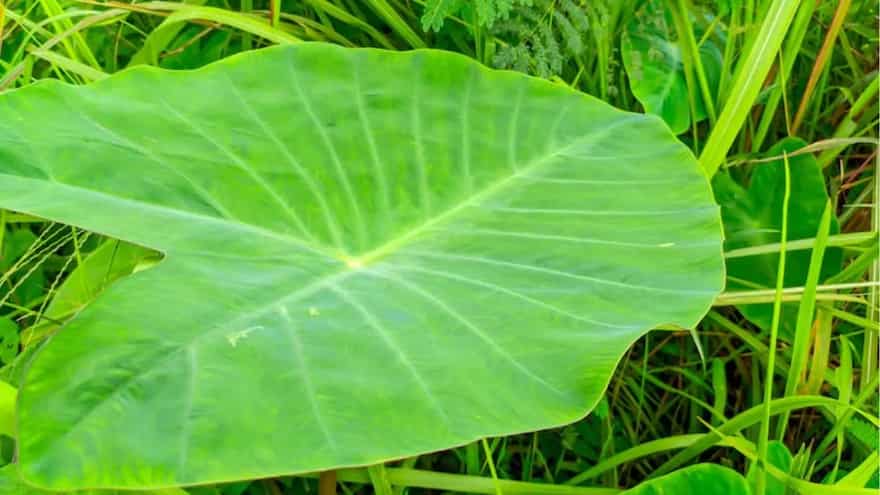
(Image credit: Freepik)
How To Buy The Best Colocasia Leaves
Buying the suitable colocasia leaves is the first step towards making a delectable dish. Always pick fresh, medium-sized leaves that are deep green in colour, have a smooth touch and do not have yellow patches or tears. Medium leaves hit the perfect balance, as they are soft enough and get cooked evenly, while still being sturdy enough for recipes such as patra or steamed rolls.
Avoid buying leaves that appear to be too mature or are too big, as they often develop thicker fibres that stay chewy even after proper cooking. Likewise, if you buy too young leaves, they can be too light and may tear while you roll or spread the batter on them. The stalks should feel tight and crisp, not sluggish or limp.
Before purchasing, flip the leaves from all over to check for insect holes, black spots or fungal patches, if any, which are a common sight during the rainy season. Freshly harvested colocasia leaves are easily available during the monsoon season, so it is advisable to shop from local vegetable markets to get better-quality leaves than older preserved stock.
Clean Them Thoroughly Before Cooking
Colocasia leaves grow close to the ground, and hence they naturally get mud, dust and tiny insects on their broad leaves and thick veins. Don't think that just a quick rinse is sufficient; rather, wash every leaf separately under running water by gently rubbing both sides with your hands to remove the dirt that can be trapped in the folds.
Many home cooks also trim the thick main vein with a sharp knife. This does not just make the leaves easy to roll, but it also helps in cooking more evenly and makes chewier parts a bit softer. There's no need to remove the vein entirely; simply shaving off its thickness is enough.
Once the leaves get washed thoroughly, scatter the leaves on a clean kitchen towel or let them air-dry on their own. The better the leaves are, the more nicely batter, spices or gram flour mixtures will stick to them, which will result in a more evenly flavoured bite.
Tips To Cook Colocasia Leaves Without Itching
A few simple kitchen tips can make all the difference, and let you enjoy your favourite version of colocasia leaves without the worry of that prickly sensation.
- Never skip adding a sour ingredient such as tamarind, lemon juice, curd or kokum, as they help in neutralising the calcium oxalate crystals that are responsible for the prickly sensation.
- Cook the leaves thoroughly by steaming, boiling or slow cooking to soften the fibres to reduce irritation.
- Before cooking, trim thick veins to ensure even cooking and also improve the overall texture, particularly in rolled dishes.
- Don't taste the leaves halfway through while you are still cooking. Undercooked colocasia leaves are far more likely to cause a prickly sensation in the mouth or throat, leaving you secptical to enjoy it later.
- Balance the flavours using gram flour or besan and spices. Many traditional recipes pair the leaves with besan, turmeric, cumin, sesame seeds and chilli, to make a balanced taste while complementing the earthy flavour.
- Let the steamed preparations such as patra or pathrode cool down a bit before slicing them. Cooling helps the rolls to firm up a bit, resulting in neat slices and they do not break apart.




