


 Share
Share

The best thing I ate in Manila during four days of conference sessions, restaurant dinners, and polite networking over drinks did not come from a kitchen with a chef. It came from a hot food counter inside a convenience store on a Makati street corner, opposite the Dusitani Hotel, at a point in the evening when I had stopped caring about what anything was supposed to mean and simply wanted something good to eat.
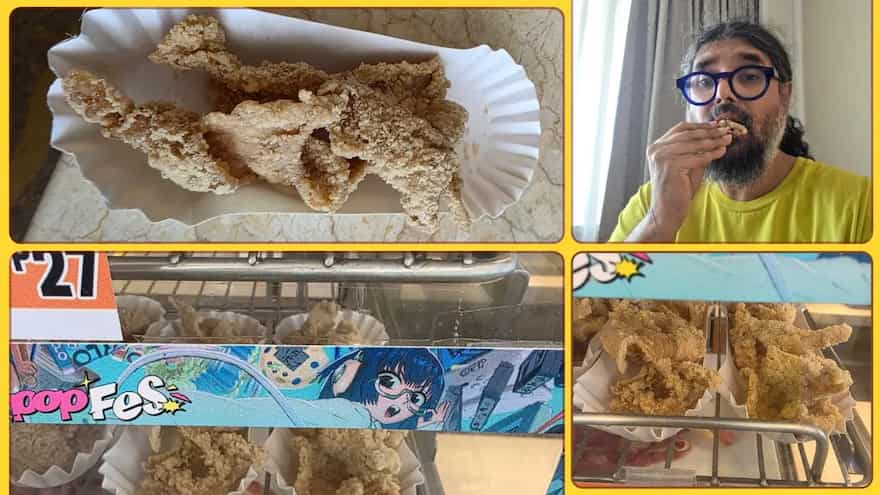
It was wasabi chicken skin from Lawson.
There is a version of this story in which that sentence is an anticlimax. A conference on the future of media. A five-star hotel across the road. And the highlight is a snack from a Japanese konbini. I understand the apparent comedy of the situation. I am also entirely unrepentant about it.
The Rise Of The Serious Convenience Store
Lawson is one of Japan's three great convenience store chains, and anyone who has spent time in Japan understands that this description barely captures what a konbini actually is. It is not a convenience store in the way that term is understood in most of the world a place of last resort, of overpriced biscuits and warm fizzy drinks. The Japanese konbini is a genuinely serious food institution. It pioneered the in-store fryer in 1979. Its hot food counter operates at a level of consistency that many restaurants cannot match. Its fried chicken the Karaage kun, the L Chiki, the seasonal specials is a subject of sustained national devotion. The quality of a konbini meal in Japan is not a compromise. It is, frequently, the point.
Lawson arrived in the Philippines in 2015, in partnership with Puregold. The Makati branch has been operating for several years now, serving the dense office population of one of Asia's most compressed business districts. It is a Japanese chain adapted to a market that already understands and deeply loves hot food served quickly, with minimal ceremony, at a price that does not require justification.
Reading The Counter With Attention
The wasabi chicken skin sat in the hot food section in the way these things do in a konbini not displayed with any particular emphasis, not described with any particular poetry, available alongside the other items with the low-key confidence of something that does not need to sell itself. I noticed it because I was looking properly, which is the only way to find anything in a konbini. You have to read the counter with attention, not with appetite.
I bought it. I ate it outside, on the street, in the mild Manila evening, with the Dusitani's facade catching the light across the road.

Image credit: Pexels
The Architecture Of The Perfect Snack
Let me be precise about what it was, because precision is deserved.
Chicken skin, rendered until the fat had almost entirely departed and what remained was structure the thin, brittle, intensely flavoured architecture of what holds the rest of the bird together. When chicken skin is cooked correctly, it becomes something entirely different from its raw self. The fat renders, the collagen tightens, the surface crisps. What you are left with is concentrated chicken flavour more purely expressive of what a chicken is than almost any other part of it in a form that is texturally unlike anything else.
The wasabi was not the lurid green paste of most sushi counters. It was seasoning precise, dry, worked into and onto the skin so that it functioned as a coating rather than a condiment. Wasabi in this application does something specific: it cuts. Not aggressively, not with the sustained heat of chilli, but with the clean upward movement of true wasabi heat, which arrives in the nasal passage and dissipates cleanly, leaving clarity rather than residue. On the chicken skin, it lifted the fat without competing with it. It gave the richness somewhere to go.
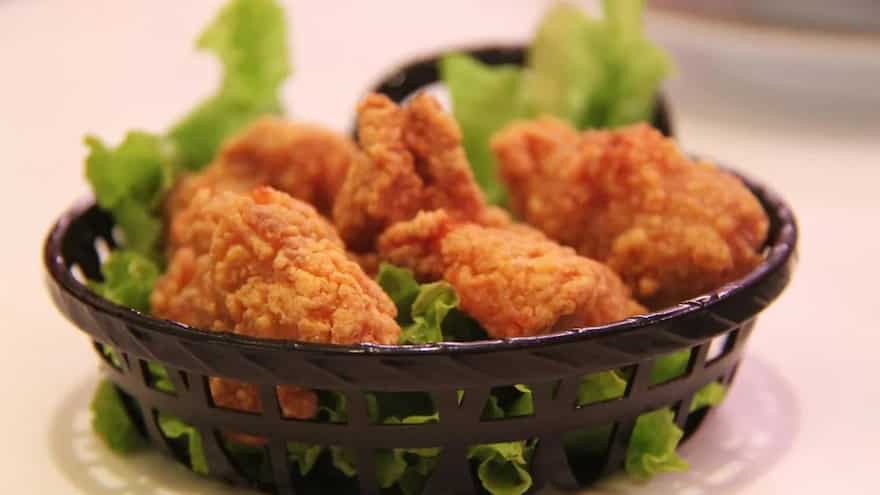
Image credit: Pexels
Food Without Performance
The result was a snack that was exactly as complicated as it needed to be, and no more. It asked nothing of me. I ate it on a street corner in Makati, outside a Japanese convenience store, opposite a hotel where I was not staying, and I thought: this is what good food actually is. Not the architecture of a tasting menu. Not the narrative of a chef's journey. Not the sourcing story or the technique explained at table. Just the correct relationship between component parts, executed without fuss, available to anyone who walks in with forty or fifty pesos and pays attention to what is in front of them.
The Most Democratic Food Institution
There is something worth saying about the konbini as an institution that I do not think gets said enough in conversations about food culture.
The Japanese convenience store is the most democratic serious food institution in the world. It does not require a reservation. It does not require a dress code, a knowledge of the menu, or a companion. It does not require that you explain yourself or perform any kind of identity. You walk in, you look at what is there, you buy what you want, and you eat it wherever makes sense on the street, in a park, on a step, in a hurry or at leisure.
Its consistency is its argument. The same Karaage kun is available at every Lawson in Japan and, by extension, at every Lawson in the Philippines. The wasabi chicken skin that I ate on a Makati street corner in late April was not a curated experience. It was a product produced to a specification, at a price point, by a system that understands that quality and accessibility are not in conflict.

Image credit: Pexels
Lessons For The Modern Industry
This is a point that is worth carrying back into any room where media and publishing are being discussed. The media industry spends a great deal of time talking about premiumisation about how to build products that command higher prices and signal higher value. There is nothing wrong with this. But it sometimes forgets that the things which achieve genuine cultural reach the things that travel, that embed themselves, that are eaten by everyone are usually not the most expensive things. They are the most consistent things. The things that show up, do what they do, and require nothing of the person consuming them except that they be present and willing.
The Lawson konbini understood this in 1979 when it put a fryer in a convenience store. It understands it now.
Insight Outside The Conference
The conference was good. The conversations were substantive. The sessions on AI, revenue strategy, and audience distribution were frank and well-argued. I spoke, I listened, I exchanged cards, I sat through the kind of multi-speaker panel that benefits from editing but serves a purpose.
And then I walked out on the second evening, crossed a quiet stretch of pavement in Makati, went into a Lawson opposite the Dusitani Hotel, bought wasabi chicken skin from the hot food counter, ate it on the street, and felt entirely at peace.
Not every insight comes from the stage.
Some of them come from paying attention at the counter.




