


 Share
Share

With the first spell of rain, local markets across West Bengal start selling vegetables that vanish as quickly as they come. One of them is kolmi shaak, a leafy green vegetable that has remained part of Bengali home cooking for ages. It seldom gets featured on restaurant menus, yet it persists in holding a special place in everyday meals across Bengali houses.
Whether it is simply stir-fried or paired with prawns and everyday dals, kolmi shaak showcases that exceptional flavour does not always come from complicated recipes. Kolmi shaak is rooted in wetlands, local markets and the home kitchens that have maintained its legacy long before seasonal eating evolved as a culinary trend.
What Exactly Is Kolmi Shaak?
Kolmi Shaak is the Bengali term for water spinach, a semi-aquatic leafy vegetable that grows on its own in ponds, marshes, canals and low-lying fields during the rainy season. Identified by its crisp hollow stems and narrow green leaves, it grows fast in naturally damp states and needs very little intervention.
This easy adaptability has made it a reliable kitchen staple for farming communities across eastern India. Unlike spinach, which turns silky when it is cooked, kolmi shaak maintains a light bite while having a pleasantly mellow taste.
Why Kolmi Shaak Continues To Be A Kitchen Favourite
The charm of kolmi shaak is as much in its usefulness as its taste. Since it gets cooked quickly and needs only a handful of everyday pantry staples, it fits effortlessly into everyday Bengali-style cooking. Cooked mainly in mustard oil, a few cloves of garlic or a bit of panch phoron bring out its naturally earthy taste.
Unlike many other leafy vegetables that dominate the other ingredients that are mixed with it, kolmi shaak mixes easily with fish, prawns, every type of lentil, and also seasonal vegetables, without masking the taste of other ingredients.
Traditional Kolmi Shaak Dishes Enjoyed During Season
Here are some traditional kolmi shaak dishes that are generally enjoyed by the people while it's in season:
Kolmi Shaak Bhaja
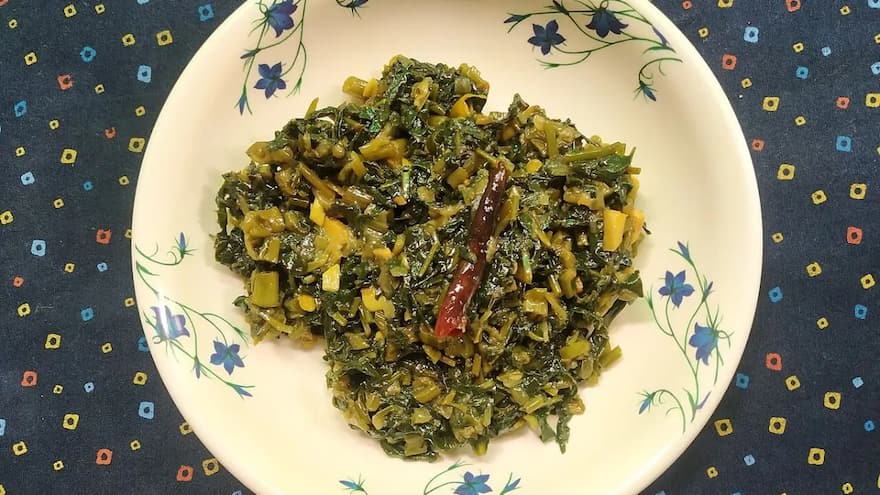
Possibly the most usual and also the simplest preparation, kolmi shaak bhaja honours the vegetable in its most uncomplicated form. Fresh greens are chopped and then stir-fried with mustard oil, garlic, dried red chillies and nigella (kalunji) seeds. The short cooking span maintains the delicate crunch of the stems while letting the leaves soften just enough that they feel pleasant while eating.
Kolmi shaak bhaja has a slight earthiness that is perfectly balanced by the smoky fragrance of mustard oil and a hint of garlic. Served usually with steamed rice and dal, it makes an everyday meal option in many households.
(Credit: Wikimedia Commons)
Kolmi Shaak Chorchori
Chorchori changes kolmi shaak into a more decadent dish by blending it with cubed potatoes, pumpkin, brinjal or ridge gourd. Everything gets cooked together slowly with panch phoron and mustard oil until they turn soft and blend their flavours naturally.
Unlike a dry stir-fry, chorchori has a lightly mashed consistency where every bite has the sweetness of vegetables with the freshness of the kolmi shaak. It is generally served with hot rice and stays one of the most enjoyable home-style Bengali dishes enjoyed in the season.
Kolmi Shaak With Prawns
Seafood and leafy greens have long been a loved combination and have shared a common plate in Bengali cooking. Small freshwater prawns are fried lightly before cooking them with chopped kolmi shaak, garlic, chopped onions and green chillies.
As the greens release their moisture while cooking, they soak up the sweetness of the prawns, resulting in a savoury dish that does not feel heavy. The thin stems maintain their texture, whereas the prawns add richness that makes this preparation particularly popular for a festive lunch.
Kolmi Shaak Bata
In this preparation, lightly cooked kolmi shaak is ground to make a coarse paste with mustard, green chillies and garlic, then finished with mustard oil. Unlike other smoother purees, the texture remains a bit rustic, making every bite feel more satisfying.
The mustard adds a gentle sharpness that flawlessly complements the soft greens, making an extremely flavourful dish despite using just a handful of every ingredient.




