


 Share
Share

Paneer has recently come under the food-safety limelight, but the terminology around its alternatives can be a bit confusing. Artificial paneer, non-dairy paneer and plant-based paneer may look the same on the plate, but they are not synonymous terms. The discussion strengthened after Maharashtra and other states took strict action against analogue or non-dairy paneer, with Telangana becoming the latest to set a one-year ban on its manufacture, sale and distribution from September 10, 2026.
The confusion partially comes from the fact that a product can be prepared without milk for very different reasons. An analogue paneer is prepared to mimic a dairy product and produce a paneer-like texture and also the cooking behaviour. FSSAI itself differentiates dairy analogues from milk products and has been looking at stronger labelling and regulatory provisions for them.
A plant-based paneer, meanwhile, is intentionally made as a dairy-free food, usually for people who follow vegan or dairy-free diets. So before choosing which one is suitable for a curry, grilling or as an everyday protein source, it helps to know what is actually in the pack.
Artificial Or Analogue Paneer: Made To Mimic Dairy Paneer
Artificial or analogue paneer is not just “cheap paneer”. It refers to a product where some or all milk ingredients are replaced with non-milk ingredients while the finished product is prepared to resemble paneer in appearance, texture or even process. FSSAI's definition covers products in which non-milk components replace milk components partly or fully.
Vegetable oils or fats, starches, plant proteins, emulsifiers and stabilisers can be used depending on the formulation. The attraction for food businesses is useful: such products can be prepared to withstand cooking and also cost less than dairy paneer. That is also why looking for the ingredient list is important, more than just examining a cube by appearance.
For consumers, analogue paneer is especially relevant when eating at restaurants, bulk-cooked dishes or very low-priced paneer preparations, where the menu may not make the difference obvious. In recent orders, FSSAI has proposed clearer declarations on the menu when dairy analogues are used by restaurants and caterers.
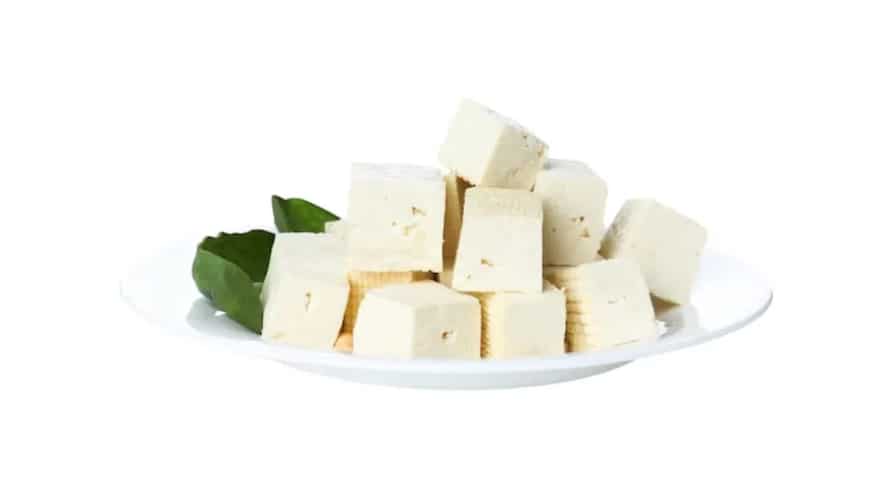
(Image credit: Freepik)
Non-Dairy Paneer: A Broader Category
'Non-dairy paneer' is a broader definition rather than a promise of a precise recipe. It simply tells you that the product does not depend totally on milk as its base. It can hence have analogue products as well as deliberately formulated dairy-free options.
The important question is what has replaced the milk. One product might depend heavily on vegetable fat and starch for structure, whereas another may use soy or another plant protein as its main base. Their protein, fat, and calcium profiles can thus be very different.
This is why 'non-dairy' alone is not sufficient information when selecting one for regular consumption. Check the protein content, fat source, calcium and ingredient order. A well-formulated non-dairy product can fit a specific dietary purpose, but it should not be considered to have the same nutritional profile as milk-based paneer.
Plant-Based Paneer: Designed As A Dairy-Free Alternative
Plant-based paneer is made especially from plant-derived ingredients, such as soy, legumes, nuts, coconut or combinations of plant proteins and solids that are used in different formulations. Its purpose is not just to pass as a dairy paneer; it is also to provide a paneer-like food for people who avoid animal-based ingredients or follow a specific diet.
That makes it useful to be used in vegan curries, tikka, grilling, wraps, stir-fries and crumbled fillings. However, the cooking behaviour varies greatly. Some varieties hold their shape well when grilled, while the softer versions work better when used in gravies or crumbled preparations.
Nutritionally, there is no single profile for the plant-based paneer. One soy-based product may deliver substantial protein, whereas a coconut-heavy version can have a very distinct fat and protein profile. Some products are strengthened with calcium or vitamin B12, so the label is worth looking at.
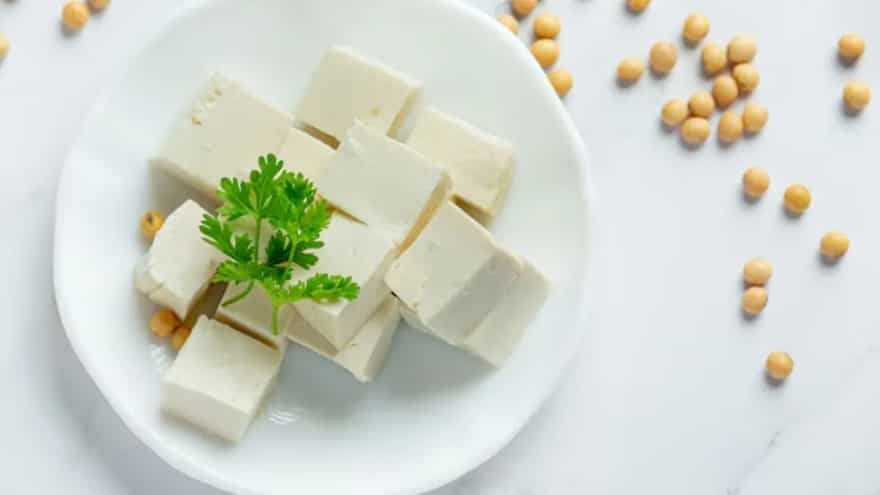
(Image credit: Freepik)
The Key Difference To Remember
The easiest way to separate the terms is this: analogue paneer is determined by its imitation of a dairy product; non-dairy paneer represents the absence or replacement of milk; plant-based paneer determines the source of the ingredients. The categories can coincide, but they should not be treated as interchangeable.




