


 Share
Share

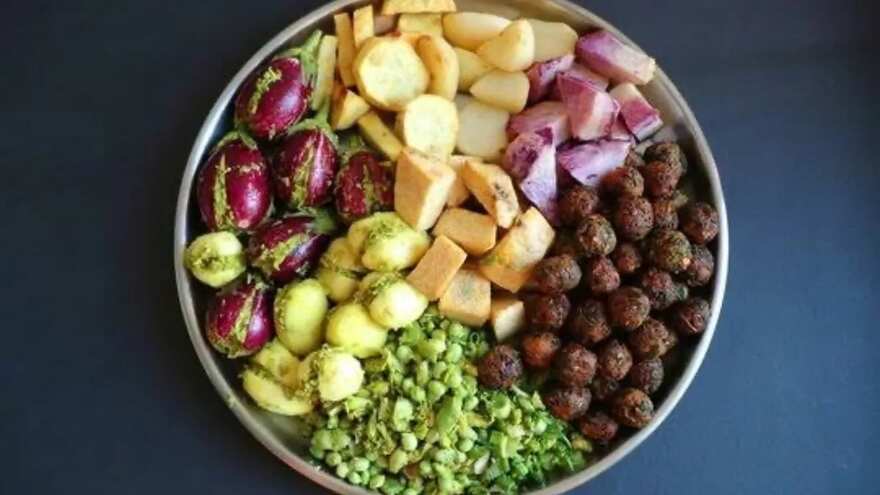
When people speak about Undhiyu, they often imagine a heavy dish served in January. It is slow-cooked, full of oil, and loaded with purple yam, ripe banana, and Surti papdi. Most households prepare it once a year during the kite festival. The vegetables used in it are seasonal, and they come into the market mostly in winter. That is when farmers dig them out, clean them, and send them to cities.
But this is not the only version of Undhiyu that exists. In many towns and villages, people make different forms of Undhiyu during the rainy season. These are not festival meals, and they are not made for guests. They are made on quiet evenings when the air is cold, and there is less sunlight in the kitchen. These rainy-day Undhiyus are made with simpler vegetables. They are steamed or cooked with green masala, and they are not greasy. Some are dry, some are very soft. Ultimately, they are all based on what is growing in the rain.
These variations are not widely seen in restaurants. They do not look as rich or colourful, but they have a clear place and purpose in the memory of older Gujaratis. Most people remember them from their grandmother’s home. These are the flavours that match the season. When it rains for hours, and the house smells like wet earth, a hot bowl of soft, green Undhiyu feels just right.
Below are three types of Undhiyu made during the monsoon in Gujarat. Each one is made with what grows during the rains and has a clear reason for existing. These dishes do not follow a written recipe as they change slightly from one family to another.
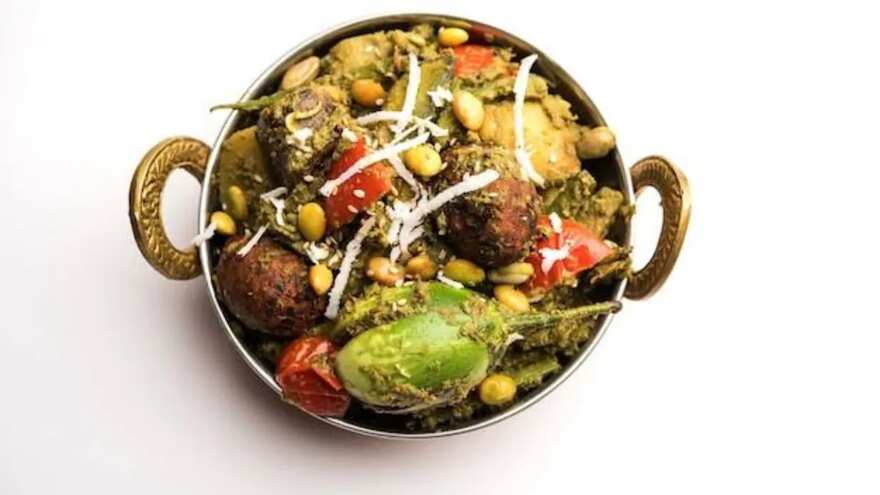
1. Leelu Undhiyu (Green Masala Undhiyu)
This version is often made in homes that grow fresh coriander during the rainy season. The masala is entirely green. It is made from coriander, garlic, green chillies, and a small piece of ginger. Some people also add lemon juice. There is no use of dry coconut or ripe banana in this dish. It is soft, fresh, and slightly spicy.
Most women use only a small amount of oil. The vegetables are cut small and tossed gently with the green paste. Common vegetables in this dish include small potatoes, fresh papdi, raw banana, and sometimes brinjal. In some parts of South Gujarat, people also add green tuver or young val beans if they are available.
The vegetables are placed in a thick pan and covered with a steel plate. The dish cooks slowly on a low flame. Water is added just once. After that, the steam inside the vessel cooks the food. People usually eat this with bajra rotla or soft phulkas. It is also eaten with plain rice and khatti-meethi dal in many homes.
What makes this version special is the taste of coriander and garlic. It does not feel oily. It feels earthy and light. Most homes make it in small quantities. It is not meant for storing or reheating.
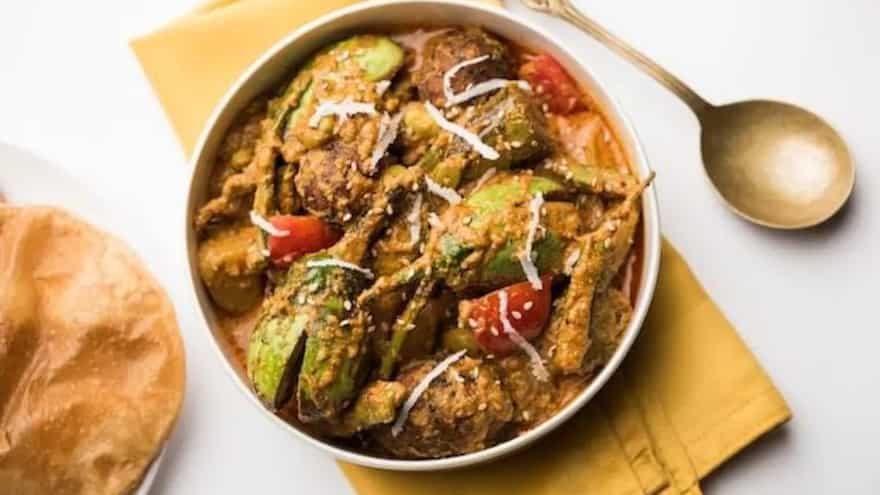
2. Bhookhi Undhiyu (Dry Undhiyu With Methi Muthiya)
This version is known more in the Saurashtra region. The word bhookhi means dry or without gravy. It is made during the monsoon when the body needs warmth but not too much fat. It is eaten for dinner on days when people avoid rice or liquid foods.
In this style, the vegetables are cut into small pieces. No water is used during cooking. The base of the dish is a set of masala-coated vegetables tossed in sesame oil or groundnut oil. The masala contains coriander powder, red chilli powder, turmeric, ajwain, and salt. Garlic is optional. Some families also add grated ginger.
The highlight of this dish is the methi na muthiya. These are made fresh using besan and chopped methi. Some people steam the muthiya before frying, and others fry them directly. The muthiya soaks up the spices and holds the oil. They are added last so that they do not break while cooking.
People eat this type of Undhiyu with dry rotis or bajra na rotla. Sometimes they add plain curd or buttermilk on the side. It is considered a warming food. It is made when the rain is strong and the day is dull.
This Undhiyu keeps well. It can be packed in a tiffin. Some people eat the leftover version as breakfast with chai. The dish has no banana, yam, or heavy root vegetables.
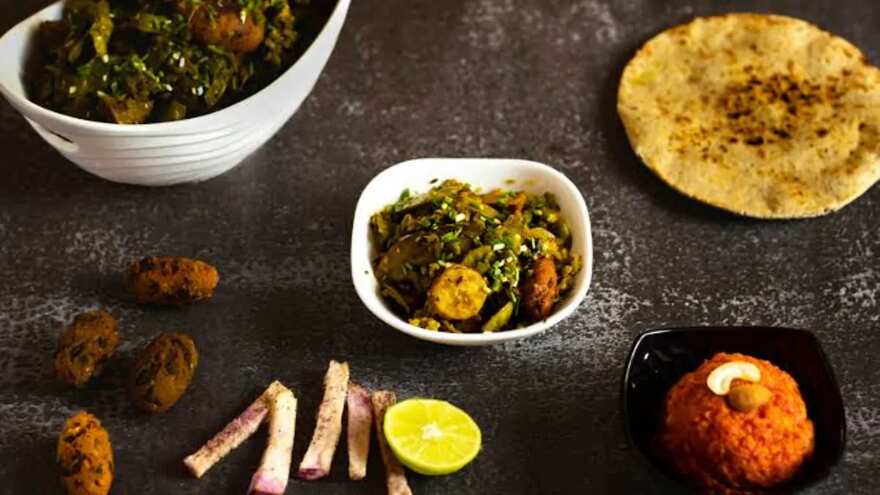
3. Jowar Undhiyu (Millet-Infused One-Pot Dish)
This variation is common in households where millets are part of the daily diet. It is not made with a separate rotla and Undhiyu. Instead, the jowar flour is added directly into the vegetable mix. It turns the dish into a thick one-pot meal. It is almost like a porridge but made of vegetables and spiced millet flour.
Jowar flour is mixed with spices and a little water to form a thick paste. This paste is added to half-cooked vegetables. The vegetables in this version are usually simple. Most homes use lauki, raw banana, small brinjals, and a few beans. People do not use oil in large quantities. Most of the flavour comes from ajwain, hing, garlic, and the natural taste of the flour.
The whole dish is cooked slowly. The jowar thickens the liquid and holds the vegetables together. The texture is soft and filling. People eat this hot, and it is not served cold or stored in the fridge. It is not made for taste alone. It is made to fill the stomach when there is less variety in the kitchen.
Older people say that this type of Undhiyu was once common during the rainy season, especially in farming homes where jowar was grown in the back field. It was made when workers returned home wet, and there was little time to cook. It gave energy and was easy to digest.
Conclusion
These three types of Undhiyu may not appear on menus. They are not shown in cookbooks with glossy photos. But they are real, and they are a part of how Gujarat eats when it rains. Not everything needs to be heavy or fried. Sometimes a bowl of green, soft, or dry Undhiyu with simple flatbread is enough.
These dishes show how tradition is not fixed; it moves with time and season. Undhiyu is not only a winter festival dish. It has other forms, and these versions are not new; they were just pushed to the back.




