


 Share
Share

Over time, India's eating habits have undergone a remarkable transition, reflecting a dynamic country that strikes a balance between the demands of a modern lifestyle and deeply ingrained culinary traditions. Growing tolerance for cuisines from around the world, creative cooking methods, and a variety of dining arrangements that go beyond conventional home-cooked meals are characteristics of India's evolving food culture. A more connected, fast-paced, and experience-driven customer base is driving this change, which affects not only what people eat but also how, when, and where they choose to eat. With trends coming up through social media platforms and channels, the reach has gone beyond borders, with everyone giving a mix of their own twist to already existing dishes. This also brings the conversation around how the South Asian and Southeast Asian food cultures and traditions have always been interlinked. So, when you take a bite of anything remarkably similar, the flavour profiles feel deeply rooted in your taste buds.

Image Credits: Pexels
One such dish is the chicken satay, a popular street food of Indonesia. This dish is full of exotic flavours and aromatic deliciousness. Satay is a Southeast Asian dish of seasoned, skewered or grilled meat that is served with a sauce. The earliest preparation of satay is believed to have originated from Javanese cuisine. Satay is now one of Indonesia's national dishes that is sold and consumed in every part of the country. This grilled dish is also quite popular in neighbouring countries such as Malaysia, Philippines, Brunei, Singapore, Thailand and our homeland India. Besides Indonesia, the dish has become a staple of the local diet in Sri Lanka, owing to the influences from the local Malay community. Satay may consist of diced chicken, goat, mutton and beef that are threaded onto large bamboo skewers and grilled over heat. Usually, it is accompanied by a bowl of piquant peanut sauce. The peanut sauce is often called satay sauce in Indonesia and other Southeast Asian countries. Its close analogues are kao rou chuan from China, yakitori from Japan, seekh kebab from India and shish kebab from Turkey. But this is where it gets interesting, this dish has its origins in the Tamil culinary tradition as well. Today, you’ll get to know how, why and when of Satay and its Tamil roots.
Origin & History Of Chicken Satay
The name of this traditional Indonesian dish is thought to have come from the Tamil word ‘catai,’ a regional variation of ‘tacai,’ which means meat. But according to an Indonesian newspaper, the Javanese word ‘sak beteng,’ which means ‘one stick,’ is where satay got its start. This dish's precise origin is still unknown. According to @sizzleroom on Instagram, it has been around since the fifteenth century. It is also commonly accepted that Javanese street vendors created this cuisine by modifying Indian kebabs. Some claim that the Indian kebab introduced by the Muslim traders is where satay originated. For us, it was a remnant of Middle Eastern influence, even though India does not claim its origin. Since the beginning of time, people have travelled between Java, Sumatra, and the Malay Peninsula. In order to work as bonded labourers on plantations, Javanese migration to Singapore peaked between the late 1800s and the 1920s.

Image Credits: Unsplash
They sold their produce in two baskets on a bamboo pole draped over their shoulders. The peanut sauce and little serving bowls were in one basket, while the satay and a tiny charcoal stove were in the other. Customers perched on little chairs around the stall to eat the skewered meat, which was barbecued on the spot. Sate gained enormous popularity in every community. It came to be recognised by its Malay name, satay, in Singapore. The "Satay Club at the Esplanade" was Singapore's most well-known location for satay. The majority of the 28 food stalls there sold satay.
Satay In Today’s World
One of the most well-known and popular foods in Southeast Asia is satay, which is a delectable blend of skewered meat and rich, spicy sauces that is typically grilled and served with a seasoned peanut garnish. The origins of satay are far deeper, and the variations are genuinely fascinating, even though many people in the UK have only encountered it through their local Chinese or Thai takeaway. Satay is more than just what's on the skewer. It's also about the sauce, the marinade, and the dish's backstory. We'll cover everything we know in this guide, including how it's prepared in our kitchen, how it's served in other cuisines, and why it's become one of the most popular dishes.
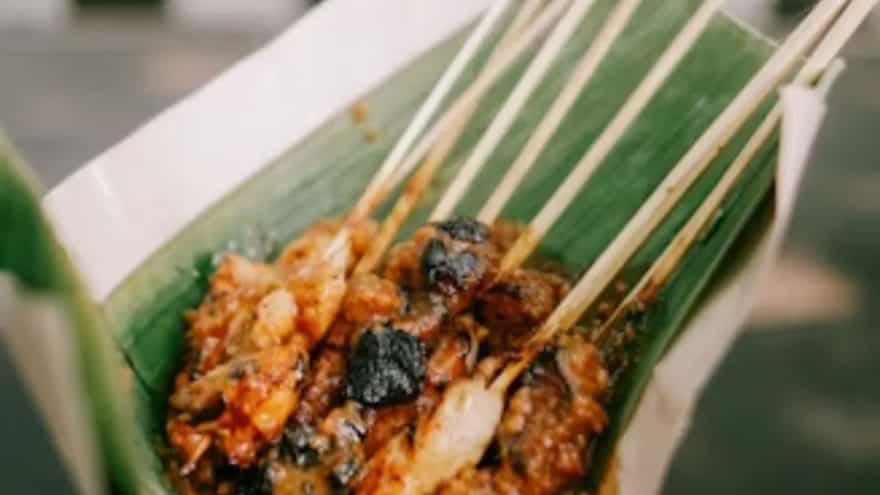
Image Credit: Unsplash
Three main factors contribute to satay's popularity– taste, texture, and adaptability. The meat is given a savoury-sweet dimension by the marinade, which typically contains garlic, turmeric, coriander, lemongrass, and soy sauce. The skewers get a little char when they are cooked, which gives them a smoky edge. Then there is the sauce, which is typically mixed with peanuts, coconut milk, and a mixture of spices. It is nutty, creamy, and slightly spicy. It is immediately reassuring, rich, and moreish. Whether you dip the skewers in the sauce or pour it over rice, it’s a combination that’s hard to resist.




